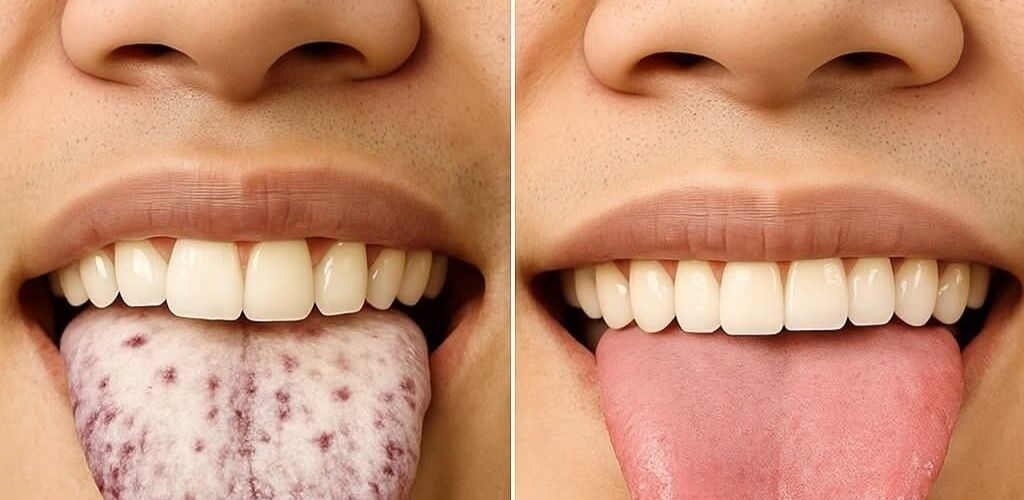
It’s one of those little everyday signs you notice when you brush your teeth… and then forget about. Yet, a white tongue can be the first warning signal your body sends you. Don’t worry too much: it’s not always a serious problem. But if it persists, it’s best to know how to react and when to ask for help. Ready to learn more about what your tongue is trying to tell you?
Why does your tongue turn white?
Normally, the tongue is a uniform light pink. Sometimes, however, it becomes covered with a whitish coating, varying in extent. This may be accompanied by unpleasant breath, a metallic taste, or a dry mouth. The cause? Bacteria, dead cells, or food debris that accumulate in the folds of the tongue.
Common (and often benign) causes
Here are the most common causes of white tongue:
Poor oral hygiene: Many people forget to clean their tongue, and that’s a shame.
Dehydration: A mouth that’s too dry can cause a whitish coating to appear.
Cold or passing fever: The body is fighting an infection, and the tongue can react as well.
Tobacco or alcohol: These irritate the tongue and alter the balance of oral flora.
Coated or geographic tongue: These harmless conditions can cause temporary white spots.
When should you worry?
In most cases, the situation returns to normal within a few days with improved hygiene. However, there are some warning signs:
Despite regular brushing, your tongue remains white for more than a week.
You may experience discomfort, burning, or pain.
The thick plaque doesn’t disappear with brushing.
You have a fever or other unusual symptoms.
More serious conditions to be aware of (without causing alarm).
Sometimes a white tongue is linked to a deeper imbalance:
A weakened immune system (in immunocompromised people).
Poorly controlled diabetes, which promotes oral infections.
Oral thrush: a fungal infection that commonly occurs after taking antibiotics.
Leukoplakia: persistent white patches (often present in smokers).
A sexually transmitted infection, such as syphilis (rare, but possible).
If in doubt, don’t hesitate to consult a healthcare professional, who will be able to diagnose and reassure you.
How to get a healthy, pink tongue?
A few simple gestures can make the difference:
Brush your tongue daily with a soft toothbrush or scraper.
Hydrate regularly.
Limit alcohol, tobacco, and sugary foods.
Use a gentle, alcohol-free mouthwash.
And above all, consult a doctor if symptoms persist.
A mirror, a minute of attention… and your tongue could become a true ally of your well-being.