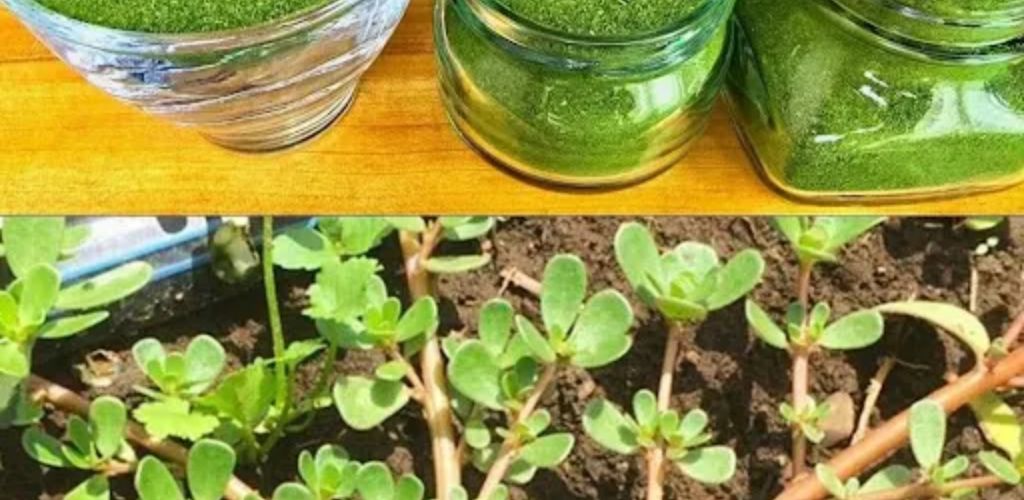
You might call it a weed.
But in kitchens and traditional medicine systems around the world, purslane is celebrated as a nutritional powerhouse.
This humble, succulent plant grows in cracks in sidewalks, garden beds, and backyards across the globe — often dismissed as a nuisance.
Yet it’s one of the richest plant sources of omega-3 fatty acids, loaded with antioxidants, and used for centuries in Mediterranean, Mexican, and Chinese cuisine and herbal practices.
Let’s explore what science says about purslane — so you can decide whether to pull it… or plate it.
Because real nutrition isn’t always found in expensive superfoods. Sometimes, it’s growing right under your feet.
🥬 What Is Purslane?
Purslane (Portulaca oleracea) is an edible leafy green with:
- Thick, juicy stems
- Small, tender green leaves
- A slightly tangy, lemony flavor
✅ It’s easy to grow — and often self-seeds in gardens
✅ Both wild and cultivated varieties are safe to eat (just avoid polluted areas)
✅ Eaten raw in salads, sautéed like spinach, or added to soups and stews
🌍 Popular in Greek spanakopita, Mexican verdolagas, and Middle Eastern dishes.
🔬 10 Science-Supported Benefits of Purslane
1. Rich in Omega-3 Fatty Acids (ALA)
- One of the highest plant sources of alpha-linolenic acid (ALA) — essential for heart and brain health
- Important for vegetarians/vegans who don’t eat fish oil
📌 Note: ALA must be converted to EPA/DHA in the body — conversion rate is low, so it doesn’t replace marine omega-3s entirely.
2. High in Antioxidants
- Contains glutathione, melatonin, vitamin E, and flavonoids
- Helps combat oxidative stress linked to aging and chronic disease
🧠 Animal studies suggest anti-aging and neuroprotective effects — human research is limited.
3. Excellent Source of Vitamin E
- More vitamin E per gram than spinach or broccoli
- Supports skin health and immune function
💡 Just 100g covers ~15–20% of daily needs.
4. Contains Vitamin C
- Boosts immunity and collagen production
- Enhances iron absorption from plant foods
✅ Best eaten raw to preserve vitamin C content.
5. Good Source of Magnesium & Potassium
- Supports muscle relaxation, nerve function, and blood pressure regulation
- Often lacking in modern diets
🥬 Add to smoothies, salads, or cooked greens for a mineral boost.
6. May Support Blood Sugar Control
- Animal and lab studies show potential for lowering blood glucose
- Linked to improved insulin sensitivity
🩺 Human trials are small and preliminary — promising, but not conclusive.
7. Natural Anti-Inflammatory Properties
- Compounds like betalains and omega-3s may reduce inflammation
- Could benefit people with arthritis or metabolic syndrome
⚠️ Not a replacement for medication — supportive role only.
8. Supports Gut Health
- Mucilaginous texture soothes the digestive tract
- Traditionally used for mild digestive irritation
🌱 May act as a prebiotic — feeding beneficial gut bacteria.
9. May Aid Wound Healing (Topical Use)
- Crushed leaves applied traditionally to minor cuts, burns, or insect bites
- Anti-inflammatory and antimicrobial properties observed in lab studies
🩹 Not a substitute for medical care — but may offer soothing relief.
10. Low-Calorie, High-Nutrient Food
- Only ~20 calories per 100g
- Packed with nutrients relative to its energy content
🥗 Perfect for nutrient-dense eating without excess calories.
✅ How to Eat Purslane Safely
| Raw in Salads | Toss with tomatoes, cucumber, olive oil, and feta |
| Sautéed or Steamed | Cooks like spinach — great with garlic and lemon |
| In Soups & Stews | Adds thickness and nutrition |
| Pickled | Tangy condiment option |
🚫 Avoid if:
- You have kidney stones (purslane contains oxalates)
- You’re allergic to succulents or related plants
- Grown in contaminated soil (roadsides, sprayed lawns)
❌ Debunking the Myths
| ❌ “Purslane cures diabetes” | False — may support blood sugar control, but not a treatment |
| ❌ “It detoxifies your liver” | No evidence — your liver already detoxifies naturally |
| ❌ “Eat it daily for instant health” | No food works that way — balance matters more than any single item |
| ❌ “Wild means safer” | Not true — wild plants can absorb pollutants or pesticides |
Final Thoughts
You don’t need to believe in miracle plants to appreciate nature’s wisdom.
With purslane, we see how something dismissed as a “weed” can be deeply nourishing — if we’re willing to look closer.
So next time you’re weeding your garden… pause.
Look down.
And ask:
“Could this actually be food?”
Because real wellness doesn’t come from expensive labels. It grows from curiosity, tradition, and the quiet abundance of the earth.
And sometimes, the best nutrition isn’t bought. It’s foraged, fried, and shared with joy. 💛