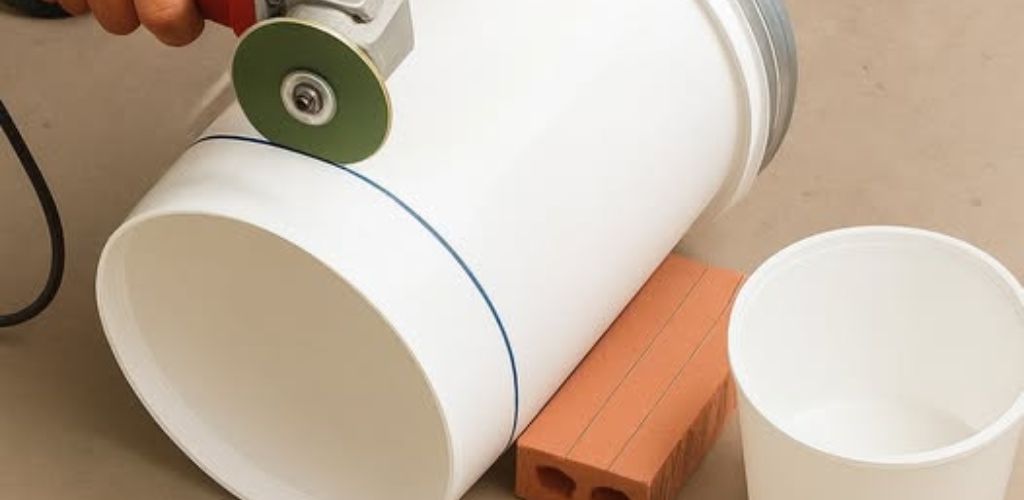
Why cut the paint bucket?
Paint buckets are made of durable plastic, making them excellent for recycling and reusing . With proper cutting, you can transform them into truly useful items, such as:
- Tool or material organizers.
- Containers for washing brushes or rollers.
- Containers for mixing cement, plaster or cleaning products.
- Large pots or storage buckets.
- Trays for draining paint or varnish.
The secret is in how and where to make the outer cut , keeping the structure firm and secure.
Materials needed:
To perform this cut efficiently and safely, you will need:
- An empty paint bucket or pail , preferably 4 to 5 gallons.
- Angle grinder (grinder or sander) with disc for plastic or thin metal.
- Safety gloves and protective glasses .
- Permanent marker to mark the cutting line.
- Ruler or tape measure to measure the desired height.
- Fine sandpaper or a utility knife to smooth the edges after cutting.
Step by step to cut the cube:
- Pre-cleaning:
Wash the inside and outside of the bucket thoroughly to remove any dried paint or solvents. Let it dry completely. - Marking the Outside Cut
Using a ruler, mark a line around the bucket at the height where you want to make the cut. If you want to make a shallow tray or container, cut closer to the bottom. - Use the grinder with caution
. Put on gloves and safety glasses. Turn on the grinder and follow the marked line with smooth, firm movements.
Don’t press too hard; let the disc work on its own to avoid burning or breaking the plastic. - Smooth the Edges
Once you’ve finished cutting, use fine sandpaper or a utility knife to remove any burrs or sharp edges. This will prevent accidents and give a cleaner finish. - Repurpose your cut cube
Depending on the shape of the cut, you can use the resulting piece as an organizer, flower pot, cleaning bucket, or even as a painting tray.
Additional tips:
- If the bucket has a metal handle , you can keep it for easy transport.
- Avoid using buckets that have contained toxic products or strong solvents.
- You can paint or decorate the new container with acrylic or spray paint to make it more attractive.
- For more precise cuts, use a jigsaw with a plastic blade instead of a grinder.
Reusing is also innovating
What many see as trash can be transformed with a little creativity and the right tools. Cutting your paint bucket correctly not only saves you money, but also reduces waste and creates useful everyday items.