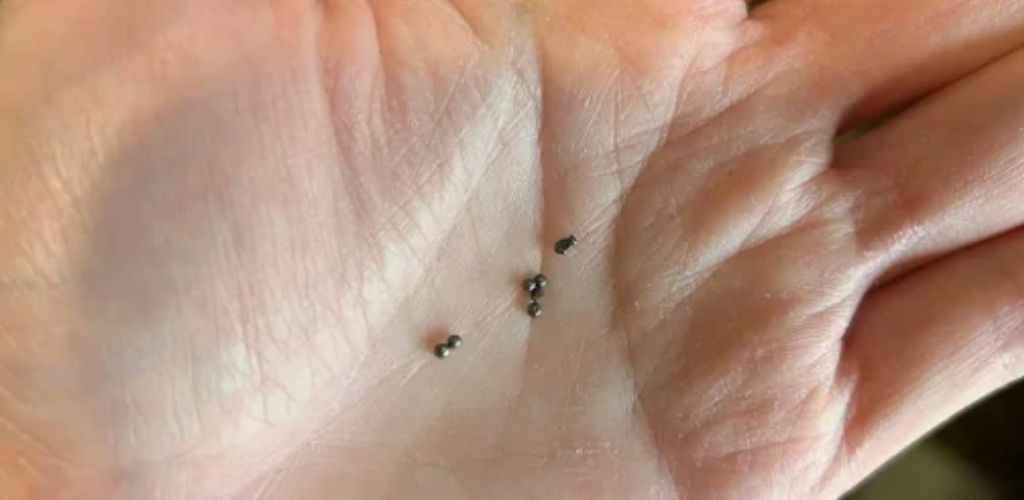
You’re cleaning under the sink, wiping down bottles and organizing sponges… when suddenly, you spot them:
Tiny metal balls, some shiny, some slightly rusty, rolling around in the cabinet below.
“Where did these come from? Are they dangerous? Is my sink falling apart?”
Don’t panic.
Those little metal spheres aren’t signs of a home emergency — they’re likely clues pointing to one very specific place:
👉 Your pull-out kitchen faucet.
Let’s uncover the mystery — and what you should do next.
🚰 The Real Culprit: Your Pull-Out Faucet’s Retracting Weight
If your kitchen faucet has a pull-out or pull-down spray hose, it likely uses a retracting mechanism to smoothly snap the hose back into place after use.
And inside that mechanism?
A small counterweight — often filled with steel or iron beads (those “metal balls”) — that helps balance the hose and guide it back without tangling.
How It Works:
- When you pull out the spray nozzle, the weight slides down a track or channel
- When you release it, gravity pulls the weight back down, gently retracting the hose
It’s a simple, clever design — but over time, it can wear out.
⚠️ Why the Metal Balls End Up Under Your Sink
Over years of daily use, the retaining casing or mesh bag holding the metal beads can:
- Crack from constant movement
- Corrode due to moisture exposure
- Split open, spilling beads into the sink base or cabinet
This is especially common in older faucets or models exposed to hard water or frequent heavy use.
✅ Finding a few metal balls under your sink is usually a sign that:
“The faucet’s retraction system is failing — not that your home is in danger.”
✅ What You Should Do Next
1. Check Your Faucet Hose
- Pull out the spray nozzle and look for:
- A bulge or weight near the base
- Signs of cracking, rust, or loose parts
- If the hose doesn’t retract smoothly, the weight is likely damaged
2. Clean Up the Beads
- Use a magnet or vacuum to collect all loose metal balls
- Prevent them from rolling into drains or damaging pipes
⚠️ Don’t flush them — they can clog plumbing!
3. Repair or Replace the Weight
| Replace the weight unit | Many brands sell replacement weights (check manufacturer) |
| Upgrade the entire faucet | If old or leaking, consider a new pull-down model |
| Switch to a non-weighted hose | Some modern faucets use spring-loaded or magnetic retraction systems |
🔧 Pro Tip: Take a photo of the weight or bring a metal ball to a hardware store for help finding a match.
❌ What NOT to Do
| ❌ Ignore the problem | Can lead to poor hose function or water leaks |
| ❌ Flush the beads | Metal can damage pipes or septic systems |
| ❌ Keep using a broken hose | May cause internal damage or flooding |
| ❌ Assume it’s a pipe issue | These beads come from the faucet — not your plumbing |
💡 Prevention Tips for the Future
| Wipe down the faucet base weekly | Spot early leaks or corrosion |
| Avoid yanking the hose | Gentle use extends lifespan |
| Clean with mild soap | Harsh cleaners accelerate wear |
| Inspect every 6 months | Catch issues before they spill |
Final Thoughts
Finding mysterious metal balls under your kitchen sink might feel alarming — but now you know the truth:
👉 They’re not a sign of disaster.
👉 They’re not dangerous.
👉 They’re just tiny messengers from your aging faucet saying, “I need a little attention.”
So take a breath.
Clean up the beads.
And give your trusty kitchen companion the care it deserves.
Because sometimes, the smallest clues lead to the simplest fixes.
And that’s something worth celebrating — one tiny metal ball at a time.