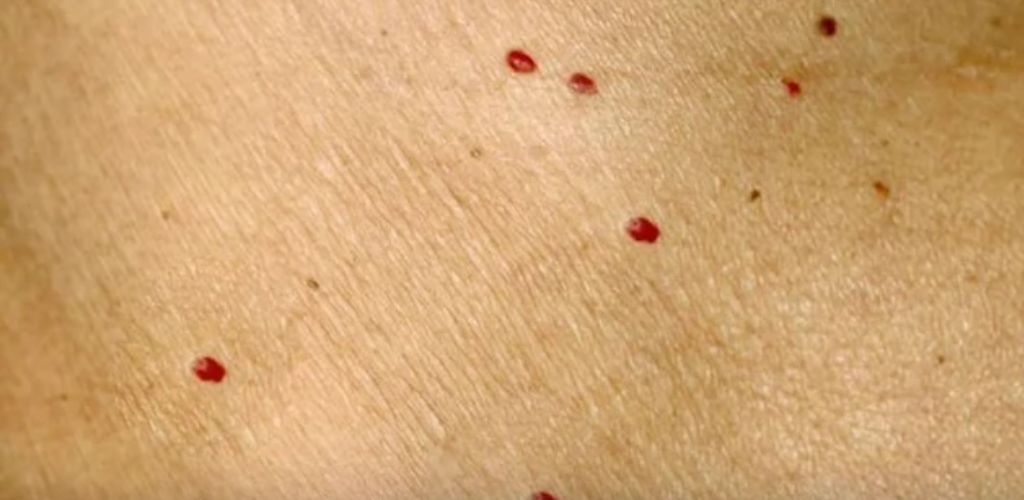
If you’ve noticed small red dots appearing on your skin — on your arms, legs, torso, or face — you’re not alone.
These tiny spots can be surprising, even alarming… but in most cases, they’re harmless.
From broken blood vessels to insect bites or common skin conditions, there are many reasons why red dots appear — and only a few require medical attention.
Let’s explore 11 common causes of red dots on the skin, what they mean, and when it’s time to see a doctor.
Spoiler: Most are normal, treatable, or temporary.
🔍 What Are Red Dots on the Skin?
Red dots can take different forms:
- Tiny pinprick spots (petechiae)
- Slightly raised bumps (papules)
- Flat or dome-shaped
- Isolated or clustered
They may be caused by:
- Blood vessel changes
- Allergic reactions
- Infections
- Aging
- Irritation
✅ The key is not just what they look like — but how they behave and whether other symptoms are present.
✅ 11 Common Causes of Red Dots on the Skin
1. Cherry Angiomas (Campbell de Morgan Spots)
- Small, bright red to purple dots
- Caused by clusters of dilated blood vessels
- Appear more often with age (over 30)
✅ Harmless — no treatment needed unless for cosmetic reasons
📌 One of the most common benign growths.
2. Petechiae – Tiny Bleeding Under the Skin
- Pinpoint red, purple, or brown spots that don’t blanch (fade) when pressed
- Caused by minor trauma, straining, or tight clothing
⚠️ Can also signal low platelets, infection, or medication side effects
🚨 See a doctor if widespread, growing, or accompanied by fever/bruising
3. Heat Rash (Miliaria)
- Clusters of tiny red bumps, often in sweaty areas (neck, chest, underarms)
- Caused by blocked sweat ducts
✅ Clears up on its own in cool, dry conditions
💡 Common in hot weather or after intense exercise.
4. Insect Bites (Mosquitoes, Fleas, Bed Bugs)
- Raised, itchy red dots, sometimes in lines or groups
- May swell or blister
✅ Usually resolve within days; use antihistamines or hydrocortisone cream
🔍 Look for patterns or signs of pests in bedding/furniture.
5. Allergic Reaction or Contact Dermatitis
- Red, itchy rash from soaps, lotions, detergents, metals (like nickel)
- May blister or peel
✅ Stop using the irritant; try fragrance-free products
🚫 Patch test new skincare items before full use.
6. Folliculitis
- Red, pimple-like bumps around hair follicles
- Caused by friction, shaving, or bacterial/fungal infection
✅ Keep skin clean and dry; avoid tight clothing
🧼 Often clears with gentle hygiene.
7. Keratosis Pilaris (“Chicken Skin”)
- Rough, sandpaper-like texture with tiny red or flesh-colored bumps (often on upper arms, thighs)
- Genetic and harmless
✅ Moisturize regularly; use creams with lactic acid or urea
💡 Worse in dry weather — improves with hydration.
8. Viral Infections (Like Rubella, Fifth Disease, or Hand-Foot-Mouth)
- Red rash with dots or blotches, often with fever or cold-like symptoms
- Parvovirus B19 (fifth disease) causes “slapped cheek” appearance in children
✅ Most resolve on their own; rest and fluids help
🩺 See a doctor if pregnant or immunocompromised.
9. Sun Damage or Actinic Keratosis (Early Warning Signs)
- Reddish, scaly patches from long-term sun exposure
- Can progress to skin cancer if untreated
✅ A dermatologist should evaluate any persistent rough patch
🛡️ Always wear sunscreen and check your skin monthly.
10. Spider Angiomas
- Red center with radiating blood vessels (like a spider web)
- Linked to sun exposure, hormones (pregnancy), or liver disease
✅ Often fade after pregnancy; persistent ones can be treated with laser therapy
⚠️ Multiple spider angiomas? Ask about liver function testing.
11. Purpura – Larger Bruise-Like Spots
- Purple or red patches that don’t blanch when pressed
- Caused by aging skin, medications (steroids, blood thinners), or clotting issues
🚨 Seek care if sudden, spreading, or with easy bruising
📌 Common in older adults — called “senile purpura.”
🚨 When to See a Doctor
Seek medical advice if you have:
- Red dots that don’t fade when pressed (could be petechiae or purpura)
- Spots that are spreading rapidly
- Fever, fatigue, joint pain, or other systemic symptoms
- History of bleeding disorders or recent medication changes
- Sores that won’t heal or look irregular (possible skin cancer)
✅ A dermatologist or primary care provider can examine your skin and determine the cause.
❌ Debunking the Myths
| ❌ “Red dots always mean cancer” | No — most are benign; skin cancer usually looks different (irregular border, color change) |
| ❌ “Only dirty people get rashes” | False — allergies, genetics, and environment play bigger roles |
| ❌ “You should pop them” | Never pick or scratch — risk of infection and scarring |
| ❌ “Home remedies will fix everything” | Some help (like oatmeal baths), but serious causes need diagnosis |
Final Thoughts
You don’t need to panic every time you spot a red dot.
Most causes are normal, harmless, and manageable.
But your body does communicate through your skin.
So pay attention. Monitor changes. And trust your instincts.
Because real health isn’t about fear —
it’s about understanding, caring, and knowing when to ask for help.
And that kind of awareness?
It starts with looking closely — and responding wisely.