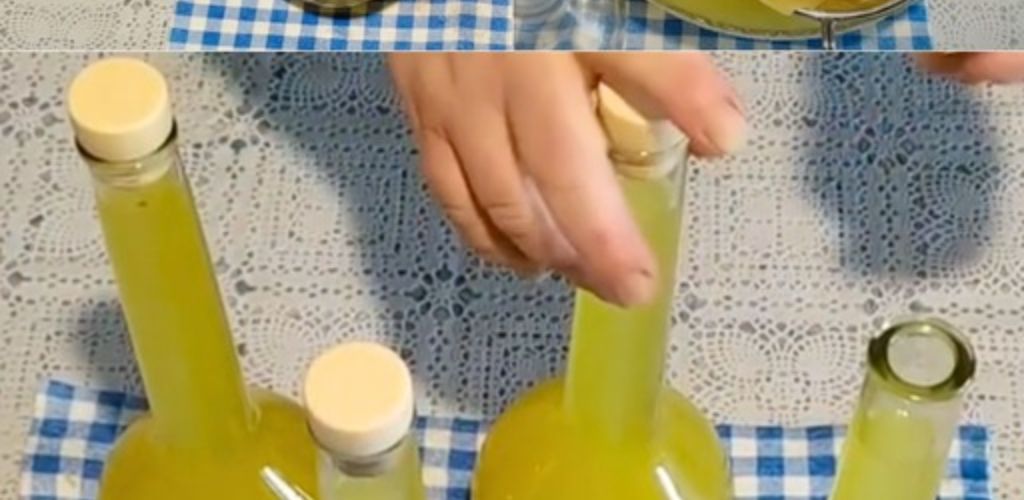
Limoncello is a sweet and fragrant liqueur , typical of Campania, but appreciated throughout Italy and around the world. Making it at home is surprisingly simple, and with just ten quality lemons you can achieve an exceptional result, perfect enjoyed chilled as a digestif or to offer to guests. This step-by-step recipe will guide you through the creation of a limoncello that releases all the aroma and flavor of freshly picked lemons.
Ingredients:
- 10 untreated lemons
- 1 l of pure 96° alcohol
- 1 l of water
- 600 g of sugar
- 300 g of dark chocolate
Preparation:
1. Peel the lemons with a vegetable peeler.
Take the untreated lemons and, using a vegetable peeler, carefully remove only the yellow part of the peel, avoiding the bitter white pith underneath (pith). Try to obtain thin, long peels.
2. Place the peels in a large glass container and cover with alcohol.
Transfer the lemon peels to a glass container large enough to comfortably hold them and pour in the 96° pure alcohol until they are completely covered.
3. Close and leave to macerate for 30 days.
Seal the glass container tightly and store it in a cool, dark place for at least 30 days. During this time, the alcohol will extract the essential oils and aroma from the lemon peels , turning them a deep yellow. Shake the container gently occasionally.
4. Pour the sugar and water into a saucepan, then melt over low heat.
Pour the water and sugar into a saucepan. Place the saucepan over low heat and stir constantly with a spoon until the sugar has completely dissolved and you have a clear syrup. Let the syrup cool completely.
5. Combine the water and sugar mixture with the alcohol and lemon zest.
Once the sugar and water syrup has cooled, pour it into the glass container with the alcohol and lemon zest . Stir gently to combine the liquids well.
6. Mix and let it rest for 30 minutes, then filter the mixture and transfer the liqueur into glass bottles.
Stir the mixture once more and let it steep for about 30 minutes. Then, strain the liqueur through a fine-mesh strainer or cheesecloth to remove the lemon peel and any impurities. Transfer the resulting limoncello to clean, dry glass bottles.
7. Melt the chocolate in a bain-marie and dip the peels used for the limoncello in it.
In a small saucepan set over another containing boiling water (double boiler), slowly melt the dark chocolate, stirring occasionally. Once melted and smooth, take the lemon peels you used for the limoncello , drain them well, and dip them in the melted chocolate. Let the chocolate peels cool on a sheet of parchment paper. These can be a delicious accompaniment to your limoncello .
Advanced Techniques
To take your limoncello making to the next level, consider some advanced techniques. The quality of the lemons is crucial: choose untreated, organic lemons , preferably the Sfusato Amalfitano or Sorrento variety, known for their peel rich in essential oils and intense aroma. Maceration is a crucial step; some experts suggest extending it up to 40-60 days for even more complete extraction of the aromas. Make sure the alcohol is of the highest quality; a 96% pure alcohol specifically designed for food use is ideal.
Another interesting technique involves making the syrup. Instead of a simple syrup of water and sugar, you can further flavor it by adding a vanilla pod, a few mint leaves, or a small piece of ginger during cooking. Remember to remove the flavorings before combining the syrup with the alcohol. Temperature is another factor not to be underestimated: both the alcohol with the zest and the syrup must be completely cold before mixing to avoid altering the final flavor of the limoncello .
For a more intense version, some people add extra alcohol to the final mixture, adjusting the ABV to their liking. Experimenting with different ratios of water and sugar can result in a sweeter or lighter limoncello , depending on personal taste. A trick to achieving a particularly clear limoncello is to filter it several times using paper or fine cloth filters.
Finally, presentation plays an important role. Serving limoncello in chilled glasses enhances its freshness and intensifies its flavor. Garnishing the glass with a lemon slice or mint leaf adds a touch of elegance. Lemon peels dipped in dark chocolate, as suggested in the basic recipe, are a sophisticated and delicious accompaniment.
Storage Tips
Proper storage is essential to maintain the quality of your homemade limoncello . Once bottled, limoncello should be stored in a cool, dark place, away from heat and direct light, which could alter its color, flavor, and aroma. A cellar or a closed kitchen cupboard are ideal places.
Limoncello doesn’t have a specific expiration date when stored properly , thanks to its high alcohol content, which acts as a natural preservative. However, it’s best to consume it within 6-12 months of production to fully appreciate its fresh aromas. Over time, the color and aroma may fade slightly, but the liqueur will still be safe to drink.
Once opened, it’s best to store it in the refrigerator. Cool temperatures help preserve the flavor and keep the limoncello pleasantly cool for tasting. Refrigerated limoncello can last several months without significant deterioration.
It’s important to use clean, dry glass bottles for bottling. If the bottles aren’t perfectly clean, they could contaminate the liquor and reduce its shelf life. Make sure the caps are tightly closed to prevent oxidation and alcohol loss.
If you notice sediment forming at the bottom of the bottle, don’t worry: this is a natural phenomenon due to the presence of lemon essential oils . If this happens, gently shake the bottle before serving.
For optimal preservation, avoid transferring limoncello to plastic containers, which could release unwanted substances into the liqueur and alter its flavor. Glass is the ideal material for storing alcoholic beverages.
Finally, remember to label the bottles with the production date. This will help you keep track of how much time has passed and ensure you consume the limoncello at the best time to fully appreciate its qualities.
Dietary Adjustments
Limoncello in its traditional recipe doesn’t lend itself easily to many dietary adaptations due to its main ingredients: alcohol, sugar, and lemons . However, we can explore some variations to accommodate specific dietary needs, while maintaining as much of this liqueur ‘s distinctive character as possible .
For a lower-sugar version, you can reduce the amount of sugar in the syrup. However, it’s important to consider that sugar contributes not only to the sweetness but also to the consistency of the liqueur . Reducing it too much could make the limoncello less dense and more tart. You could experiment with alternative low-glycemic sweeteners, such as erythritol or stevia, but it’s essential to use them carefully, as their sweetening power is different from traditional sugar and could slightly alter the final flavor.
For those following a vegan diet, traditional limoncello is already suitable, as it contains no animal-derived ingredients. The only potential concern could arise if refined sugars containing animal charcoal are used in the bleaching process, although this practice is increasingly uncommon. To be absolutely sure, you can opt for raw cane sugar or organic sugar.
Adaptations for people with gluten intolerance are unnecessary, as none of the traditional ingredients in limoncello contain gluten. Pure alcohol, water, sugar, and lemons are naturally gluten-free.
For people with lactose intolerance, traditional limoncello does not present any problems, as it does not contain milk or dairy products.
It’s more complex to create a completely alcohol-free version of limoncello while maintaining a similar flavor. You could try a concentrated infusion of lemon peels , water, and sweetener, perhaps adding an agent that imparts a slight “warm note” similar to that of alcohol, such as ginger extract or a very mild chili pepper. However, the result would be more like a concentrated, aromatic lemonade than a true limoncello .
Finally, for those who must limit their sugar intake for health reasons such as diabetes, making sugar-free limoncello is a challenge. As mentioned, artificial sweeteners can be used, but the flavor profile may differ significantly from the original. In these cases, it’s always advisable to consult a doctor or nutritionist to evaluate whether and how to consume alcoholic beverages or sweetened alternatives.
Common Errors and Troubleshooting
When making homemade limoncello , you can make some common mistakes. One of the most common mistakes is removing the white pith (albedo) of the lemon peel. This part is bitter and can give the final liqueur an unpleasant flavor . To avoid this, use a vegetable peeler and peel only the outer yellow pith.
Another common mistake is not using untreated lemons . The pesticides and waxes on the peel of treated lemons can contaminate the alcohol during maceration, altering the flavor and making the limoncello potentially harmful. Always make sure to purchase organic or untreated lemons and wash them thoroughly before peeling.
Insufficient maceration is another mistake that can compromise the result. Thirty days is the minimum recommended to allow the alcohol to extract all the aromas and essential oils from the lemon peels . A longer maceration (up to 40-60 days) can intensify the flavor of the limoncello .
The temperature of the syrup when you combine it with the alcohol is also important. If the syrup is still hot, it can “cook” the alcohol, altering its properties and flavor. Make sure the syrup is completely cooled before adding it to the flavored alcohol.
Improper filtration can leave residue in the limoncello , making it cloudy. Use a fine-mesh strainer lined with cheesecloth or a paper filter to obtain a clear, impurity-free liqueur . If necessary, filter the limoncello several times.
If the limoncello is too bitter, it could be due to the presence of pith in the peel or excessive maceration. In this case, there’s not much you can do to reverse the bitterness. Next time, pay more attention to the peel and the maceration time.
If the limoncello is too sweet, you can try adding a small amount of fresh lemon juice at the end, carefully straining it. This will help balance the sweetness with a hint of tartness. For the next recipe, reduce the amount of sugar in the syrup.
If the limoncello is too alcoholic, you can dilute it with a little distilled water. Add the water gradually, tasting until you reach the desired alcohol content. Keep in mind that adding water may make the limoncello slightly less clear.
Sugar crystals may form at the bottom of the bottle if the syrup wasn’t completely dissolved or if the limoncello was stored at too low a temperature. To resolve this problem, you can try gently warming the bottle in a double boiler to dissolve the crystals, being careful not to overheat the liqueur . Make sure the sugar is completely dissolved when preparing the syrup to prevent this from happening.
FAQs
- Can I use any type of lemon ? It’s best to use untreated lemons with a thick, fragrant peel, such as Sfusato Amalfitano or Sorrento lemons . Avoid treated lemons , as their peel contains pesticides and waxes.
- How long does homemade limoncello keep? If stored properly in a cool, dark place, limoncello can last 6-12 months without significantly losing its flavor. Once opened, it will keep in the refrigerator for several months.
- Is it necessary to use pure 96% alcohol? Yes, pure alcohol is ideal for extracting essential oils from lemon peels . If you can’t find it, you can use a high-proof grappa, but the result may be slightly different.
- Can I reduce the amount of sugar? Yes, you can reduce the sugar to your taste, but remember that it also contributes to the consistency of the liqueur . Reducing it too much could make it less dense.
- What can I do with lemon peels after using them for limoncello ? As suggested in the recipe, you can dip them in melted chocolate. Alternatively, you can dry them and use them to flavor desserts or infusions.
- My limoncello is cloudy, what can I do? It probably wasn’t filtered properly. Re-filter it using a paper filter or cheesecloth.
- Why is my limoncello too bitter? It could be due to the presence of pith in the peels or to the maceration time being too long. Pay more attention to these steps next time.
- Can I freeze limoncello ? Freezing limoncello is not recommended , as it may alter its consistency and flavor. It’s best to store it in the refrigerator or freezer to chill before serving.
- Can I use lemon juice to make limoncello ? No, limoncello is made with lemon zest , which contains the aromatic essential oils. The juice is not used in the traditional recipe.
- How long should I soak lemon peels ? At least 30 days is recommended, but longer soaking (40-60 days) can intensify the flavor.
- Should I store limoncello in the refrigerator? It’s best to refrigerate it once opened to keep it fresh and preserve its flavor.
- Can I use artificial sweeteners instead of sugar? Yes, you can experiment with sweeteners like stevia or erythritol, but the final flavor may be slightly different.
- What happens if I use lemons with seeds? Be sure to remove all the seeds from the peels before macerating them, as they can make the limoncello bitter.
- Can I add other flavorings to the limoncello ? The traditional recipe calls for only lemons , but you can experiment by adding a vanilla pod or a few mint leaves when making the syrup.