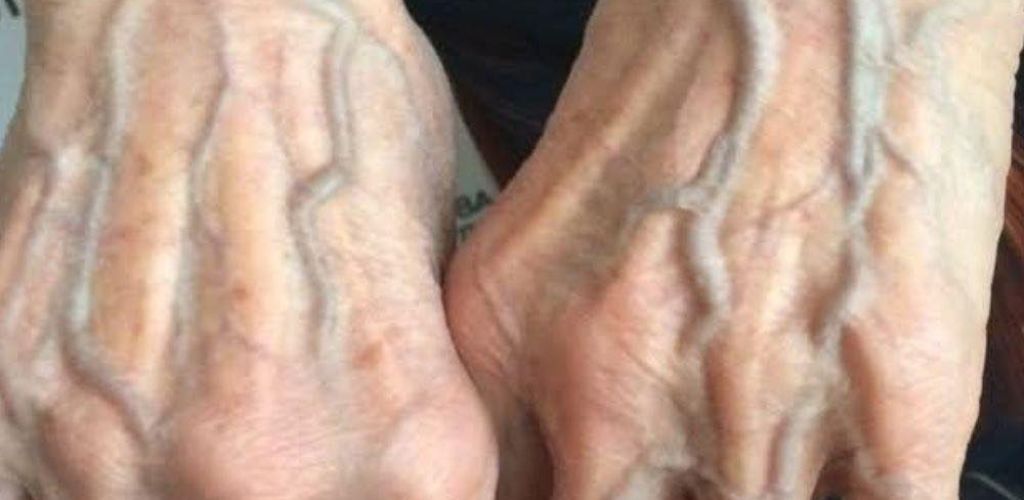
Why do veins become more visible?
The main function of veins is to return blood to the heart. Normally, they are soft and barely visible. However, if your skin has become thinner, you’ve lost weight, or you’re dehydrated, they become more noticeable.
However, if veins are swollen, twisted, or painful , this may indicate a blood flow problem.
Possible causes and diseases
1. Varicose veins in the arms.
Although more common in the legs, varicose veins can also affect the arms. They occur when the valves in the veins stop working properly, causing blood to pool. If swelling develops suddenly, it may be an early sign of venous disease.
2. Venous insufficiency.
Poor circulation causes blood stagnation and increased pressure in the veins. This is often accompanied by a feeling of heaviness, tingling, or slight swelling in the fingers.
3. Rapid weight loss or dehydration.
When the fat layer under the skin thins rapidly, veins become more visible. This isn’t always dangerous, but it requires monitoring.
4. Heart and liver problems.
In rare cases, swollen veins signal problems with the heart or liver. These can then be accompanied by fatigue, skin discoloration, swelling, and weakness.
When to see a doctor
Don’t delay your visit if you notice:
- pain, burning, or throbbing along the veins;
- swelling of the hands or fingers;
- redness and increased temperature of the skin;
- numbness or weakness in the arms;
- rapid increase in the size of veins.
The doctor will conduct an ultrasound examination of the vessels to rule out thrombosis or varicose veins.
How to Maintain Healthy Veins
- Move more often: Physical activity improves blood circulation.
- Drink water: dehydration makes blood vessels less elastic.
- Avoid prolonged inactivity: When you sit at work, raise your arms above heart level from time to time.
- Take care of your skin: Moisturizing maintains tissue elasticity.
- Get regular checkups , especially if you have a family history of cardiovascular disease.
Conclusion
Don’t ignore changes, even if it seems like just age.
Swollen veins that persist for a week or longer are not a cosmetic issue , but a possible sign of venous insufficiency, varicose veins, or circulatory problems.
Early diagnosis will help avoid complications and maintain healthy blood vessels.