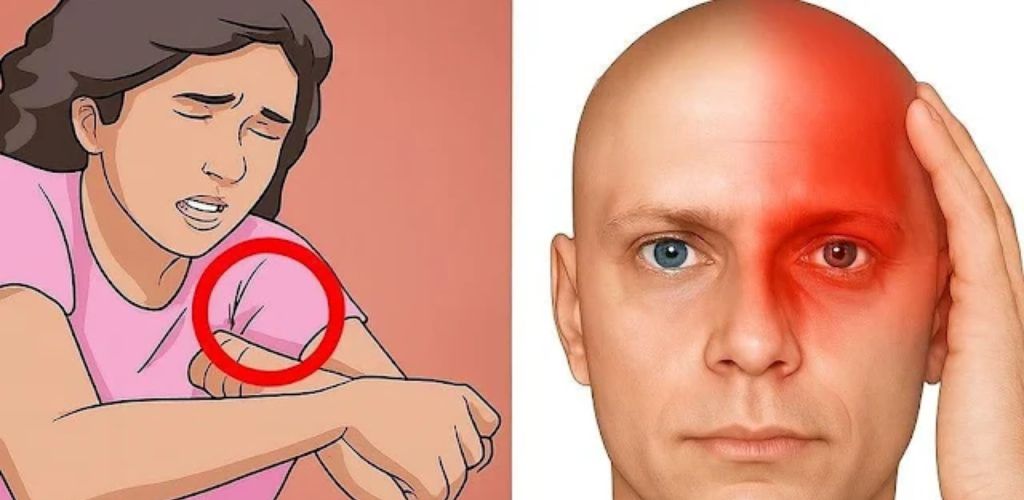
You don’t wake up one day and suddenly have a stroke.
In many cases, your body gives a warning. Not always weeks in advance — but often hours or days before, through a transient ischemic attack (TIA) — sometimes called a “mini-stroke.”
Unlike a full stroke, a TIA doesn’t cause permanent brain damage. But it’s a huge red flag: People who experience a TIA are at dramatically increased risk of a major stroke within 48 hours to 90 days.
And here’s the good news: 👉 If caught early, treatment can prevent a life-altering event.
Let’s explore what a stroke really is, the true warning signs, and what you must do if you or someone else shows them.
Because real survival isn’t about luck. It’s about acting fast — before it’s too late.
🔬 What Is a Stroke?
A stroke happens when blood flow to part of the brain is cut off, depriving brain cells of oxygen. Within minutes, neurons begin to die.
There are three main types:
| Type | Cause |
|---|---|
| ✅ Ischemic Stroke (87% of cases) | A clot blocks an artery in the brain — like a kinked garden hose |
| ✅ Hemorrhagic Stroke | A blood vessel bursts, causing bleeding in the brain |
| ✅ Transient Ischemic Attack (TIA) | A temporary blockage that resolves on its own — but still dangerous |
🩺 Think of a TIA as a “warning shot” — not a scare tactic, but a chance to act.
⚠️ The Real Warning Signs (Minutes to Days Before a Stroke)
These symptoms can appear suddenly — and may last just minutes before disappearing. Never ignore them.
Use the FAST acronym — recommended by doctors worldwide:
| Letter | Meaning |
|---|---|
| F – Face Drooping | One side of the face sags or feels numb — ask the person to smile |
| A – Arm Weakness | One arm drifts downward when raised — can’t hold it up |
| S – Speech Difficulty | Slurred speech, confusion, or inability to speak clearly |
| T – Time to Call Emergency Services | Even if symptoms go away — call 911 immediately |
⏱️ Every minute counts. Over 1.9 million brain cells die every minute during a stroke.
🔍 7 Key Signs That Could Signal a Coming Stroke
These can happen minutes, hours, or even days before a major stroke — especially after a TIA.
1. Sudden Confusion or Trouble Understanding Speech
- Can’t follow a conversation
- Mixes up words
- Seems “out of it”
🧠 Often mistaken for dementia or fatigue — but onset is sudden.
2. Sudden Vision Problems
- Blurry or blackened vision in one or both eyes
- Double vision
- Sudden loss of peripheral vision
👁️ May come and go — but always take it seriously.
3. Sudden Severe Headache
- “Thunderclap” headache — intense pain out of nowhere
- Often with nausea or vomiting
- More common in hemorrhagic strokes
🚨 Not typical migraine — this hits instantly.
4. Dizziness, Loss of Balance, or Coordination
- Stumbles when walking
- Can’t walk straight
- Falls without reason
⚠️ Especially concerning if combined with other symptoms.
5. Sudden Numbness or Weakness
- In the face, arm, or leg — usually on one side of the body
- May feel tingling or pins-and-needles
❗ Even if it lasts only seconds, get help.
6. Trouble Swallowing (Dysphagia)
- Feels like food is “sticking”
- Coughing or choking while eating
- New-onset drooling
🩺 Can indicate brainstem involvement.
7. Sudden Behavioral or Mood Changes
- Unexplained agitation
- Apathy
- Sudden depression or emotional lability (crying/laughing uncontrollably)
🧠 The brain controls mood — changes can signal disruption.
🛡️ Who Is at Higher Risk?
| Risk Factor | Why It Matters |
|---|---|
| ✅ High Blood Pressure | #1 cause — damages blood vessels over time |
| ✅ Smoking | Narrows arteries and raises clot risk |
| ✅ Diabetes | Increases vascular damage and inflammation |
| ✅ High Cholesterol | Plaque builds up in arteries — can break off and block blood flow |
| ✅ Atrial Fibrillation (AFib) | Irregular heartbeat → clots form in the heart |
| ✅ Family History | Genetic predisposition to stroke or heart disease |
| ✅ Age Over 55 | Risk doubles every decade after 55 |
💡 But remember: Strokes can happen at any age — even in young adults and children.
✅ How to Reduce Your Risk
| Habit | Benefit |
|---|---|
| ✅ Control blood pressure | Keeps arteries healthy — aim for <120/80 mm Hg |
| ✅ Quit smoking | Reduces risk significantly within 2 years |
| ✅ Exercise regularly | At least 150 mins/week of moderate activity |
| ✅ Eat a heart-healthy diet | Rich in fruits, vegetables, whole grains, and omega-3s |
| ✅ Manage diabetes & cholesterol | With medication and lifestyle |
| ✅ Treat AFib properly | Anticoagulants can prevent clots |
🩺 After a TIA, doctors may prescribe blood thinners, statins, or recommend surgery (like carotid endarterectomy).
❌ Debunking the Myths
| Myth | Truth |
|---|---|
| ❌ “If symptoms go away, it wasn’t serious” | Dangerous myth — TIA is a medical emergency |
| ❌ “Only older people get strokes” | False — rising in younger adults due to obesity, vaping, poor diet |
| ❌ “I’d know if I was having a stroke” | Not true — some people deny symptoms or sleep through them |
| ❌ “There’s nothing you can do to stop a stroke” | False — treatment within 3–4.5 hours can dissolve clots and save brain tissue |
🚨 When to Seek Emergency Care
Call 911 or your local emergency number if you or someone else experiences any of the FAST symptoms — even if they disappear.
💬 Say this to dispatchers:
“I think this might be a stroke.”
Do not:
- Drive yourself to the hospital
- Wait to see if it gets better
- Take aspirin unless told by a doctor
🚑 Paramedics can start life-saving protocols before arrival.
Final Thoughts
You don’t need to wait for disaster to pay attention.
But you do deserve to know the truth about your brain.
So next time you’re talking to a loved one… watch closely.
Ask:
Did their smile look uneven? Was their speech slurred?
Then act — fast, calmly, and without delay.
Because real health isn’t about hoping for the best. It’s about responding in the moment that matters most.
And that kind of courage? It saves lives.