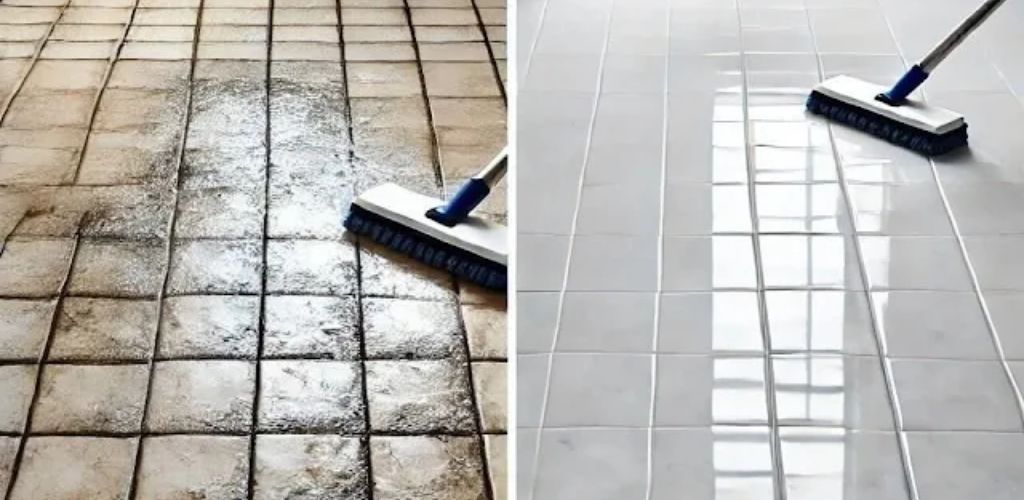
- 1/2 cup (120 ml) white distilled vinegar
- 1 gallon (3.8 liters) hot water
- 1-2 tablespoons of blue or clear liquid dish soap (e.g., Dawn, Seventh Generation)
Instructions:
- Sweep or vacuum the floor thoroughly to remove loose debris and grit.
- In a large bucket, add the hot water.
- Add the dish soap and vinegar. Swirl gently to mix. Avoid creating excessive suds.
- Dip a microfiber mop or cloth into the solution, wring it out very well so it’s only damp—not soaking wet.
- Mop the floor in sections, rinsing your mop head frequently in a separate bucket of clean water to avoid redepositing dirt.
- Let the floor air dry. The faint vinegar smell will dissipate completely once dry.
For “Black Joints” (Grout) – A More Targeted Approach
For discolored grout, a paste is more effective than a liquid mop solution, as it allows the cleaning agents to stay in contact with the stain.
Paste Ingredients:
- 1/2 cup baking soda
- 1/4 cup hydrogen peroxide (3%)
- 1-2 teaspoons liquid dish soap
Instructions (For Grout Lines):
- In a small bowl, mix the baking soda and dish soap.
- Add the hydrogen peroxide to form a thick, spreadable paste.
- Wearing gloves, apply the paste directly onto the grout lines using an old toothbrush or a grout brush.
- Let it sit for 10-15 minutes (no longer, to avoid potential damage).
- Scrub vigorously with the brush.
- Rinse thoroughly with clean water and wipe dry with a cloth.
For extensive, old, or moldy grout discoloration, this paste may lighten but not fully “restore” it. Professional regrouting or a dedicated grout cleaner may be necessary.
What the “Experts” Really Say: Managing Expectations
- “Powerful” is relative: This is an excellent maintenance and surface cleaner. It is not a miracle chemical strip for decades of neglect.
- “White Again” may mean “noticeably cleaner and lighter” for mildly dirty grout, not necessarily “brand new.”
- The single most important cleaning step is always mechanical action: sweeping, vacuuming, and scrubbing. No solution works without some elbow grease for problem areas.
- Prevention is key: Regularly sweeping and damp mopping with a simple cleaner prevents dirt from becoming deeply embedded in the first place.
Conclusion: A Smarter, Not Harder, Cleaning Strategy
This 3-ingredient solution is a fantastic, non-toxic tool for your regular cleaning routine that can effectively tackle everyday dirt and leave sealed floors gleaming. For deep stains and historical grout discoloration, view it as a helpful first step rather than a guaranteed cure-all. The true secret to white floors is consistent, proper care with the right tools and realistic expectations.
For persistent, severe problems, consulting a professional flooring cleaner is always the safest and most effective option to avoid damaging your floors.