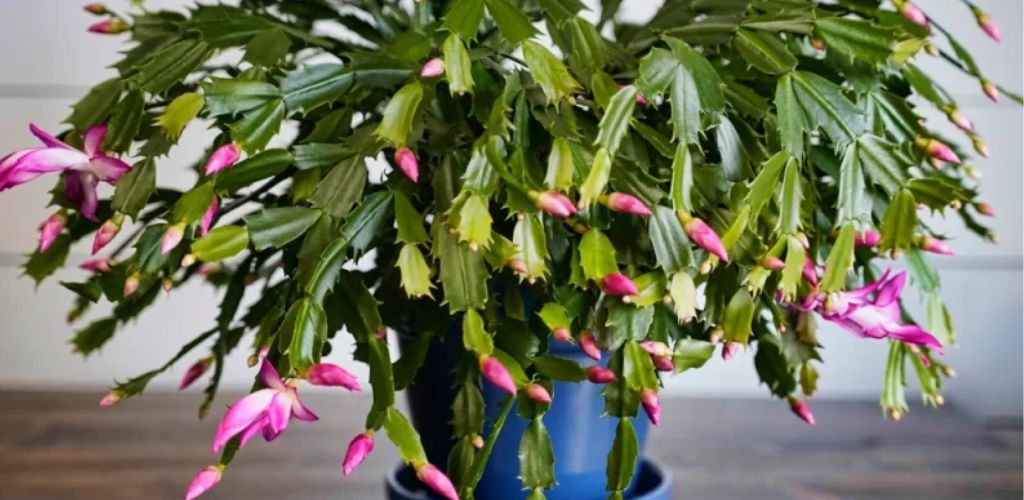
Unveiling the Secret of the Festive Cactus
Festive cacti confuse indoor gardeners. A persistent myth claims that these plants are either finicky bloomers or have their own flowering calendar.
Many people fondly remember a relative, often their grandmother, who had one of these plants, seemingly passed down through generations. Sharing cuttings of these beloved plants with loved ones is a cherished tradition. Yet somehow, it seems only the grandmother had the magic touch to make it bloom.
Solve the mystery
However, the secret of these plants isn’t as difficult to uncover as it seems. Once you know, you’ll be rewarded year after year with a spectacular display of blooms. You might even find yourself sharing your own cuttings with loved ones. (And no, you don’t have to earn the title of ‘grandmother’.)
A common complaint from festive cactus gardeners is the unpredictable or seemingly ‘unplanned’ flowering.
The different types of festive cacti
The so-called ‘Christmas cactus’ comprises three different cacti, all from the genus Schlumbergera. They may appear identical to the untrained eye, but a closer look reveals subtle differences.

They received their festive nicknames because of their flower patterns:
- Thanksgiving-Kaktus – Schlumbergera truncata
- Christmas cactus – Schlumbergera Buckleyi
- Osterkaktus – Schlumbergera gaertneri
The Thanksgiving cactus is the usual suspect you’ll see in nurseries or home and garden stores in November. This is simply because these plants best align with growers’ schedules for producing buds in time for the holiday season.

Caring for festive cacti: Tips for healthy blooms and vibrant health
Location and climate
One characteristic of festive cacti is their preference for bright, but indirect sunlight. They thrive in temperatures of 60-75°F (approximately 15-24°C).
In regions where temperatures don’t drop below 50°F (approximately 10°C), these cacti can thrive outdoors, ideally in sheltered spots like porches or under trees that protect them from intense sunlight. As autumn approaches and cooler days arrive, make sure they are brought indoors before temperatures fall below 50°F.
Irrigation habits
Unlike their desert relatives, festive cacti have tropical preferences. When watering, the soil should be thoroughly soaked and then allowed to dry out before watering again.
It is important to ensure that their roots are not sitting in water, as they are susceptible to root rot. If there is a saucer under the pot, be sure to remove any accumulated water.
These plants prefer moisture. If their natural environment doesn’t provide this, you can simulate a humid environment by placing the pot on a tray filled with water and gravel.
Growth medium
In their natural habitat, these cacti don’t thrive in ordinary soil, but rather in natural niches with organic detritus. A specially formulated cactus soil with good drainage is ideal.

Nutritional requirements
After flowering, when the plant develops new leaves, it should be fertilized every two weeks with a high-quality houseplant fertilizer. During the flowering period, fertilizing once a month is sufficient.
The Flower Riddle
Their enchanting blossoms come in colors like pink, orange, and white. However, producing these blossoms requires some skill.
After a dormant period of about four weeks before their respective flowering time, these cacti awaken to bloom. This can be replicated by ensuring longer, cooler nights.
Propagation art
After flowering, and after a rest period of one or two months, the plant can be shaped. Using sterilized scissors, cut the leaves at the base to achieve the desired shape.

These cuttings can become new plants! Let them dry for a few days, then insert them about an inch deep into fresh soil. Water sparingly until roots appear, then water regularly.
Animal-friendly, pest-free, and care of festive cacti
Festive cacti are pet-friendly plants and pose no danger to cats or dogs.

Generally, these cacti remain unaffected by pests and retain their vitality.

Distinguishing the Festive Cacti
To identify which festive cactus you have at home, you should look at the leaves.

- The Thanksgiving cactus has sharp protrusions on its segments.
- The Christmas cactus has a box-like shape with gently curved sides.
- The Easter cactus is distinguished by its soft, rounded segments and subtle notches.
Their flowers provide further clues. Thanksgiving and Christmas cacti have tubular flowers, while the Easter cactus has a flower-like bloom.
With attentive care, these cacti can enchant with their blossoms year after year and are ideal for sharing and cherishing.