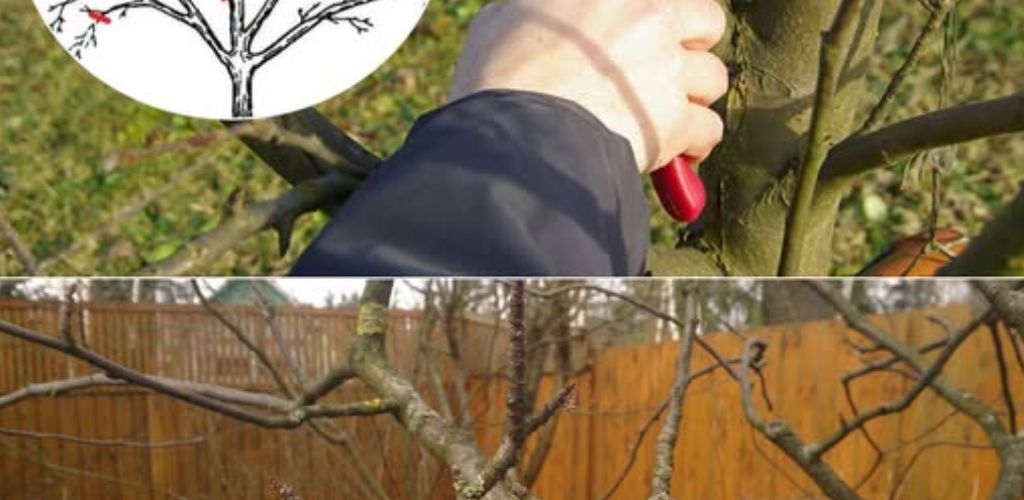
Autumn is the ideal time to prepare apple trees for the next season, ensuring healthy growth and abundant fruit production.

Autumn pruning is an important procedure that helps form a beautiful and healthy crown, improve the illumination of branches, stimulate the growth of young shoots and, as a result, increase yield.
Why do fall pruning?
Pruning apple trees in the fall has several undeniable advantages:
- Less stress on the tree: After the leaves fall, the tree slows down, which makes pruning easier.
- Excellent Visibility: The lack of foliage provides excellent visibility, allowing you to better see the canopy structure and make optimal decisions about the need for branch removal.
- Disease prevention: Pruning damaged and diseased branches reduces the risk of spreading infections.
- Preparing for winter: Pruning improves crown ventilation, reducing the risk of fungal diseases and increasing resistance to winter conditions.
Types of autumn pruning of apple trees
Pruning apple trees in autumn can be done in various ways, depending on the age and condition of the tree:
- Sanitary pruning: Dry, diseased and damaged branches, as well as shoots growing into the crown, are removed.
- Formative pruning: Aimed at creating an optimal crown shape, which promotes better access to sunlight and ventilation.
- Thinning pruning: Reduces crown density, which improves the quality and quantity of fruits.
- Rejuvenation pruning: Carried out on old trees to stimulate the growth of new shoots and renewal of fruiting.
Pruning Features for Apple Trees of Different Ages
- Young apple trees: The main focus is on forming the correct crown for subsequent growth.
- Mature trees: Combined pruning is used: sanitary, formative and thinning.
- Old trees: Rejuvenating pruning is carried out gradually over several years.
Time for autumn pruning
The optimal time for fall pruning is late October to early November. By this time, the leaves have already fallen and the air temperature has dropped, but severe frosts have not yet set in.
Necessary tools and materials
To prune apple trees you will need:
- Pruning shears – for cutting small branches
- Loppers – for removing thicker branches
- Hacksaw – for large branches
- Garden varnish – for sealing cuts
- Disinfectant solution (for example, 3% copper sulfate solution) – for processing instruments
Basic rules and techniques for pruning
- Clean Cuts: Cuts should be made clean and smooth, at a 45 degree angle, to prevent rot and disease.
- Sealing wounds: All large cuts should be sealed with garden pitch to protect the tree from infection.
- Disinfection of tools: Be sure to disinfect tools before and after work to prevent the spread of diseases.
Important points
- Do not prune during the growing season: Do not prune during flowering or fruiting to avoid harming the tree.
- Don’t remove too many branches: Don’t remove more than a third of the crown at one time to avoid weakening the tree.
- Pruning young shoots: Cut young shoots back by a third of their length to stimulate their growth.
- Removing old branches: Remove old, diseased branches completely down to healthy wood.
Result
Fall pruning of apple trees is an important step in preparing them for the next season. When done correctly, it increases yield, improves fruit quality, and extends the tree’s life.
Before pruning, it’s important to consult recommendations from experienced gardeners or study specialized literature. Well-maintained apple trees are the key to a bountiful and delicious harvest that will delight you and your family!