You open the fridge.
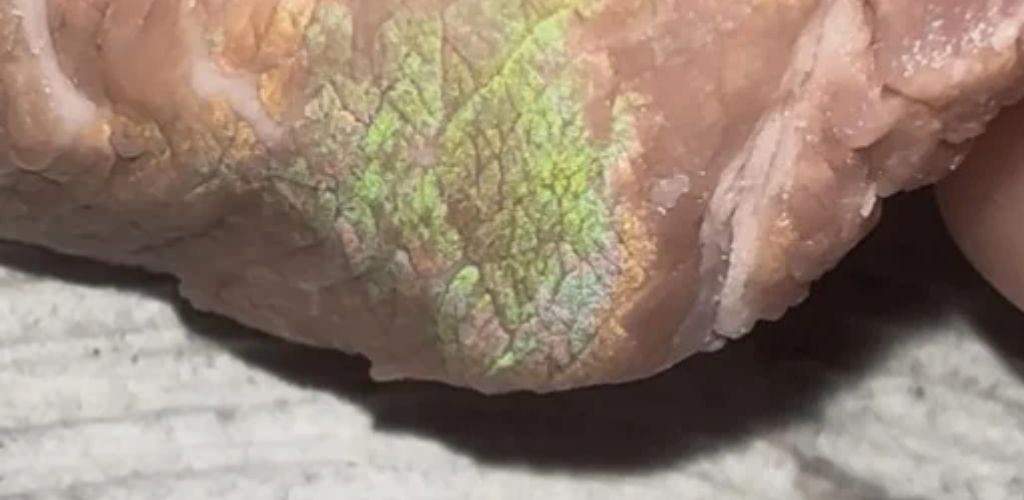
Pull out the deli tray. And there it is — a slice of roast beef or turkey shimmering like oil on water, glowing with rainbow hues of green, purple, and gold.
Wait… Is this meat? Or a disco ball?
Don’t panic. Your lunch isn’t haunted. It hasn’t gone bad. And no, you’re not seeing things.
That iridescent sheen on your meat is completely normal — and it has nothing to do with spoilage or chemicals.
It’s called light diffraction — a stunning example of physics playing hide-and-seek on your sandwich plate.
Let’s uncover why some meats turn into tiny rainbows — so you can enjoy your meal without side-eyeing your turkey.
Because real food science isn’t boring. It’s beautiful — right down to the wavelength of light.
🔬 What Causes the Rainbow Effect on Meat?
The colorful glow you see is known as structural coloration — meaning the color comes from the structure of the meat, not pigments or dyes.
Here’s how it works:
1. Tightly Packed Muscle Fibers
Meat is made of long, parallel muscle fibers — like microscopic ropes bundled together.
When meat is:
- Cooked
- Cured
- Sliced thin (especially “against the grain”)
…those fibers get cut cleanly at the surface, creating tiny grooves — almost like the ridges on a vinyl record.
2. Light Hits the Grooves → Diffraction Happens
When white light (from the sun, fridge bulb, or overhead lamp) hits these grooved surfaces:
- It reflects off each ridge
- The waves interfere with each other
- Different wavelengths (colors) bend at different angles
This is called diffraction grating — the same effect seen in:
- CDs and DVDs
- Soap bubbles
- Peacock feathers
💡 The result? A shimmering rainbow pattern on your roast beef.
✅ Is Rainbow Meat Safe to Eat?
✅ Yes — 100% safe.
The iridescence is purely optical — not a sign of bacteria, mold, or chemical residue.
How to Confirm It’s Just Light Play:
| ✅ Change the viewing angle | Colors shift or disappear |
| ✅ Shine a flashlight from another direction | Rainbow moves |
| ✅ Touch the surface | No slime, odor, or stickiness? It’s fine |
🚫 Only toss meat if it smells sour, feels slimy, or has visible mold.
🥩 Which Meats Show This Most Often?
Not all meats rainbow — but some are more prone due to texture and preparation.
| ✅ Deli turkey & chicken | Thinly sliced across fibers; smooth surface |
| ✅ Roast beef | Denser fibers create regular grooves |
| ✅ Ham | Cured and sliced precisely — ideal for diffraction |
| ✅ Bologna & salami | Especially when highly processed and polished |
🥩 Bonus: Raw steaks rarely show this — their rougher surface scatters light differently.
❌ Debunking the Myths
| ❌ “Rainbow means it’s spoiled” | False — spoilage causes slime and smell, not rainbows |
| ❌ “It’s from artificial dyes or preservatives” | No — even organic, uncured meats can shimmer |
| ❌ “Only processed meats do this” | Not true — homemade roasted beef can too |
| ❌ “It’s a sign of freezer burn” | No — freezer burn looks dry, leathery, and grayish |
🍽️ Fun Fact: Nature Loves Iridescence
You might be surprised to learn that many foods and animals use structural color instead of pigment:
| ✅ Peacock feathers | Meat slices |
| ✅ Butterfly wings | Oil slicks |
| ✅ Fish scales | CDs |
| ✅ Beetles | Metallic paint |
🧠 Evolution and cooking both lead to grooved surfaces — just on very different timelines.
Final Thoughts
You don’t need to fear the rainbow.
But you can appreciate the science behind your sandwich.
So next time you’re staring at a glittering slice of ham… smile.
It’s not magic. It’s not mold. It’s physics — dancing on protein.
And that kind of wonder? It doesn’t come from a lab. It comes from dinner.
Because real beauty isn’t always quiet. Sometimes, it glows right back at you — one delicious wavelength at a time.