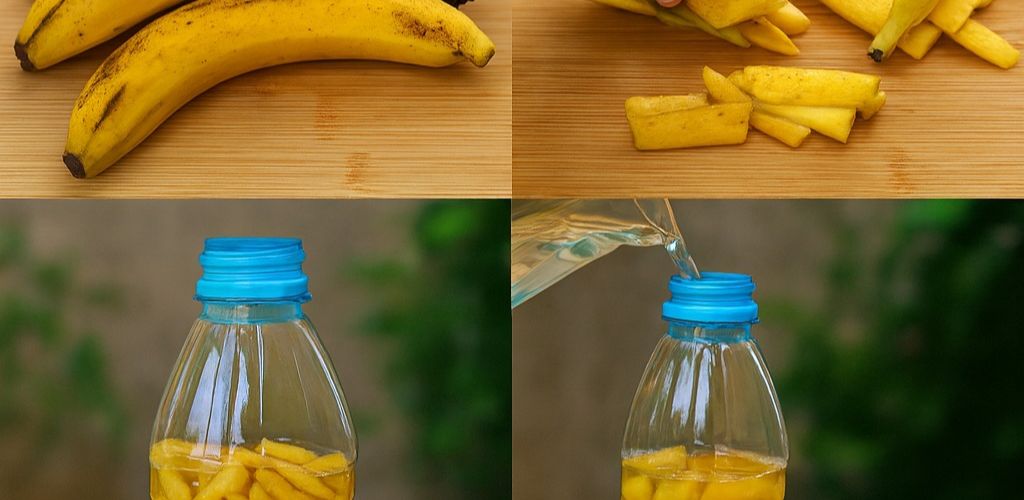
Banana peels, which often end up in the trash, have great potential. They are packed with nutrients that can benefit your plants in a simple and eco-friendly way.
Here’s how to use it effectively.
Why use banana peels?
The peel contains important nutrients for healthy plant growth: potassium, phosphorus, calcium, and magnesium. These elements promote root development, flowering, fruit formation, and plant resistance.
Furthermore, it can improve soil structure, increase water retention, accelerate compost decomposition, and even aid in the rooting of cuttings.
Ingredients / Materials needed
- Banana peels (the amount depends on the size of the container)
- Water
- A container or bottle for maceration
- (Optional) Pieces of peel to add directly to the soil or compost
Preparation of nutrient liquid for plants
- Place several banana peels in a clean container.
- Add water until they are completely covered.
- Let it sit for a few days so that the nutrients “infuse” into the water.
- Once ready, dilute this “infusion” in clean water (for example, one part infusion to several parts normal water).
- Water your plants’ soil with this nutrient solution, allowing them to absorb potassium, phosphorus, calcium, and magnesium from the shell.
Other ways to use banana peels in the garden
- Source of calcium : By burying small pieces of peel, calcium is released which strengthens plant cells and prevents problems such as “blooming rot” in tomatoes, for example.
- Improves water retention : When the husk is mixed into the soil or used as mulch, it helps the soil retain moisture better, which is useful in dry periods.
- Faster composting : Adding banana peels to compost accelerates decomposition thanks to their rich organic content, resulting in more nutritious fertilizer for your plants. Pest repellent : Some gardeners report that placing pieces of peel around or burying them near plants can help repel pests such as aphids or slugs.
- Rooting cuttings : If you soak plant cuttings in water that previously contained banana peel, the natural substances in the peel can stimulate root development more quickly.
- Feeding earthworms (vermicomposting) : Earthworms enjoy banana peels; adding them to the system generates high-quality worm castings, excellent as fertilizer. It’s helpful to chop the peels into pieces to facilitate digestion by the worms.
Practical tips:
- Use fresh or recently discarded peels, not completely dry or badly damaged.
- Make sure the container where you macerate is clean to avoid contamination.
- When diluting the infusion, do so moderately so as not to “overload” your plants with nutrients.
- Observe how your plants react: if you notice improvement in shoots, flowers or fruit, it’s a sign that it works.
- In composting or vermicomposting, chop up the peels to accelerate their decomposition.
- Apply the nutrient solution every few weeks or as needed by your garden.
By implementing these methods, you can take advantage of a part of the fruit that is normally thrown away and turn it into a valuable resource for your plants. Your banana peels will no longer go to waste!