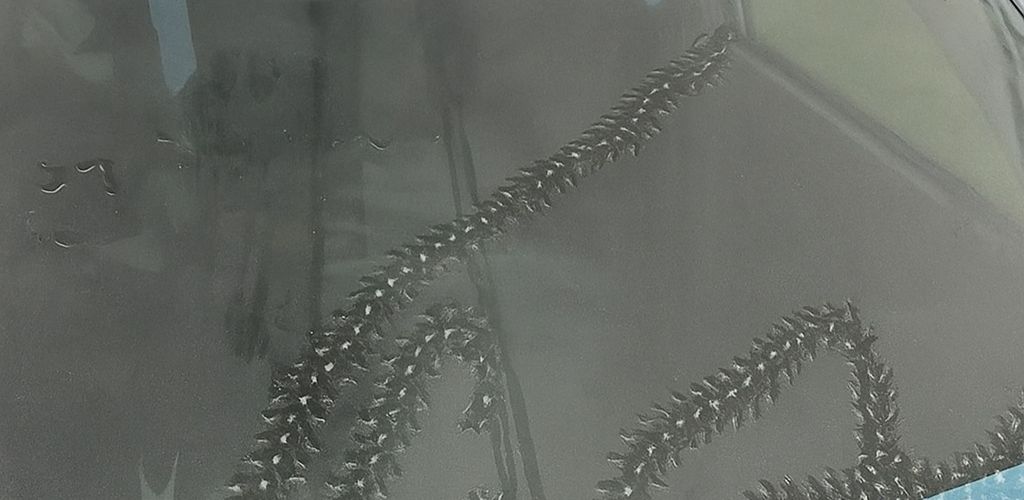
This morning I left home, as usual, heading to work. But when I approached my car, something caught my eye: the windshield was covered in strange marks , as if someone or something had walked on it during the night.
At first glance, I thought they were scratches, or maybe the tracks of some small animal. But upon closer inspection, I noticed an irregular pattern, with a curious, somewhat sticky texture.
I won’t lie: I was terrified . We live in a quiet area, and the idea that someone or something had been lurking around my car while we slept sent chills down my spine. Curiosity won out over fear, and I decided to investigate what could have caused those mysterious marks.
What are these strange markings?
After reviewing security camera footage and consulting some nature forums, I discovered something surprising: the marks weren’t human-made or the product of vandalism , but rather the work of small, harmless creatures— tree frogs .
During warm, humid nights, these frogs often seek out smooth, warm surfaces, such as windshields or windows, where they adhere thanks to the sticky pads on their feet .
As they move, they leave behind those characteristic marks that resemble “wet trails” or suction cup-like tracks. They don’t damage the glass or the vehicle; they simply move, attracted by the light or the residual heat from the engine.
The mysterious sticking power of tree frogs
What’s most fascinating is how they manage to stick even to completely vertical or wet surfaces . Their legs are covered with thousands of tiny hexagonal cells that produce a viscous, elastic substance. This allows them to create a kind of natural suction that gives them effortless grip.
This ability not only allows them to climb trees and slippery leaves, but also to move across glass, metal, or even walls. Scientists have studied this mechanism to develop adhesives inspired by their biology , capable of adhering without leaving residue, even underwater.
Where do tree frogs live?
Tree frogs are common in humid, wooded areas or near bodies of water . They prefer temperate or tropical climates and can be found in rural areas as well as suburban gardens with dense vegetation.
At night, they come out to hunt insects and take advantage of the humidity to move with ease. Sometimes, the search for food or shelter leads them to unexpected places: parked cars, windows, or illuminated patios.
What to do if you find one in your car or house
- Don’t hurt or frighten it. Tree frogs are completely harmless and, in fact, very beneficial: they feed on mosquitoes and other insects.
- Use gloves or a damp cloth to gently remove it if you need to move it.
- Avoid spraying harsh chemicals or cleaners on the area where it was; they could upset your sensitive skin.
- Keep the area dark and quiet. If you turn off the outdoor lights at night, you’ll reduce the likelihood of them approaching in search of insects.
- If you love nature, leave it alone. They are excellent indicators of a healthy and balanced ecosystem.
An unexpected visit that teaches you to see things differently.
What began as a scare turned into a fascinating lesson about the wildlife that surrounds us. Sometimes, what seems mysterious or frightening is simply another part of nature trying to coexist with us.
The next time you see similar markings on your car, it might not be something sinister, but a small nocturnal frog that decided to pay you a visit.
Because, in the end, curiosity always triumphs over fear when we learn to observe with respect.