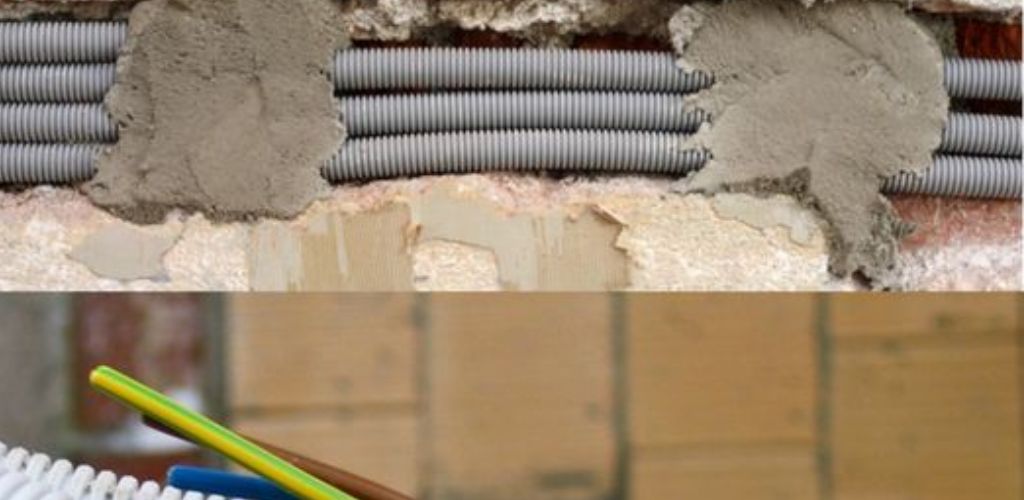
Plastic Corrugated Conduits for Electrical Wiring: Useful Protection or Just a Marketing Trick?
In recent years, plastic corrugated conduits have become increasingly popular for installing electrical wiring. Many installers actively recommend them, claiming improved safety, durability, and protection. But does this solution really provide meaningful benefits, or is it simply another way to increase the final cost of renovation work? Let’s take a closer, practical look at where corrugated conduits are useful—and where they are completely unnecessary.
oisture
Manufacturers often state that corrugated conduits protect electrical cables from mechanical damage and water. In typical city apartments, however, wiring is hidden inside solid walls. Under normal conditions, it is extremely difficult to mechanically damage a cable once it is plastered or concreted in place. Only extreme events, such as serious structural damage, could affect it—and in such cases, a thin plastic conduit would not provide real protection anyway.
Modern electrical cables already have double insulation, which offers sufficient resistance to moisture. Problems with water usually occur at sockets, switches, or junction boxes, not along the cable itself. And importantly, corrugated conduits are not installed in those vulnerable say areas, so they do not solve the real issue.
Where Corrugated Conduits Can Actually Be Useful
There are situations where corrugated conduits make sense. For example, in country houses, garden buildings, garages, or summer cottages, wiring is often installed externally rather than inside walls. In these cases, additional protection from sunlight, moisture, and accidental impact can be helpful.
They can also be useful in partially hollow ceilings or technical cavities where cables are more exposed. For outdoor wiring, wrapping cables in a protective conduit may add a small but real layer of safety. In standard urban apartments with concealed wall wiring, however, corrugated conduits bring no real benefit and only increase material and labor costs.
Fire Safety: Non-Flammable or Just a Myth?
Another popular argument in favor of corrugated conduits is fire resistance. This claim raises serious doubts. In real-world practice, most plastics either burn or melt when exposed to high temperatures. Electrical fires usually start at connection points—sockets, switches, or distribution boxes—where oxygen is present. Corrugated conduits are not installed at these points, so they cannot prevent such fires.
During underfloor heating installations or concrete pouring, additional protection may be justified. However, in those cases, it is far more reasonable to use rigid plastic pipes or metal conduits instead of thin PVC corrugation, which can easily deform under pressure.
What Real Tests Show About Plastic Corrugated Conduits
Independent experiments comparing different types of corrugated conduits reveal surprising results. Standard gray PVC conduits do not burn openly, but they shrink and melt under flame exposure. Black HDPE conduits, on the other hand, burn intensely and produce flaming droplets, which can spread fire.
Even HDPE conduits labeled as flame-retardant have shown a tendency to ignite, though less aggressively. This leads to a clear conclusion: some types of corrugated conduits not only fail to protect wiring from fire but can actually make a fire spread faster—especially in private houses.
Final Thoughts for Homeowners and Renovators
In modern apartments with wiring embedded in walls, plastic corrugated conduits are unnecessary and offer no real safety advantages. In many cases, they are simply an upsell tactic. For outdoor wiring or specific technical situations, they may provide limited benefits, but choosing the right material is critical.
If you found this information helpful, follow our page for more practical home and renovation tips. Don’t forget to like and share this article so others can avoid unnecessary expenses and make smarter decisions 👍