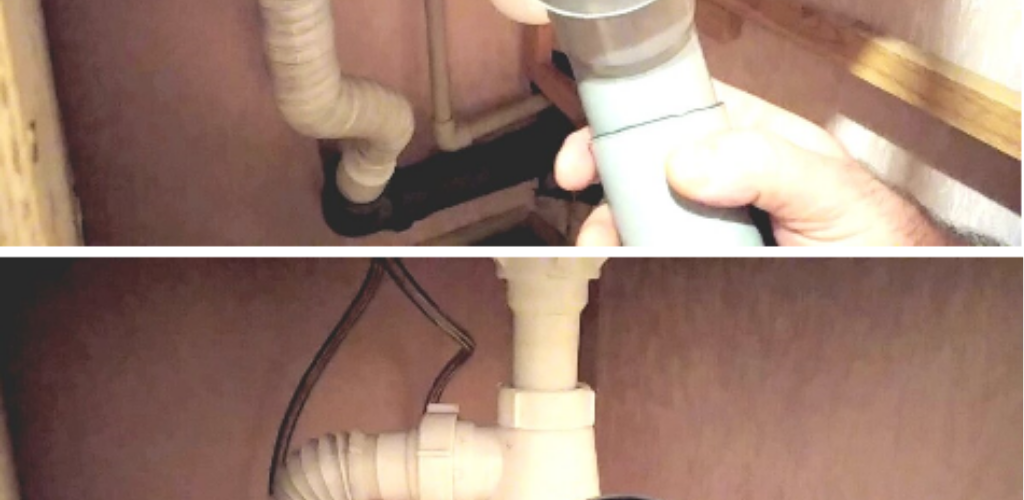
The decision to replace the corrugated pipe under the sink with a smooth pipe was prompted by the accumulation of dirt in the accordion and the gradual slowing of drainage in the corrugated pipe itself and throughout the entire sewer system.
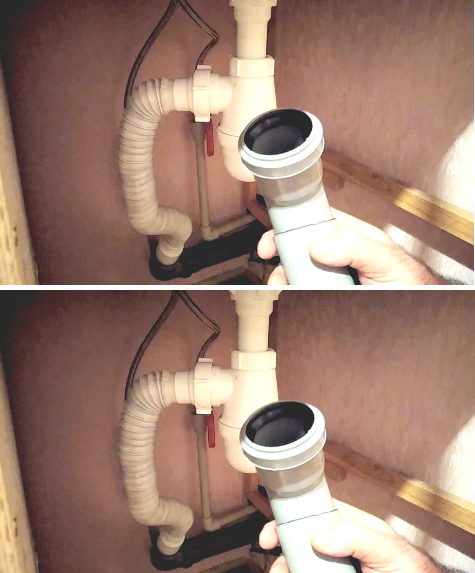
This also causes grease to accumulate in the pipes. I cleaned the trap and flexible pipe six months ago, but now it’s full of deposits again, so I’m installing a plastic assembly made from 50mm PVC pipe scraps. However, there’s one minor difficulty with the installation.
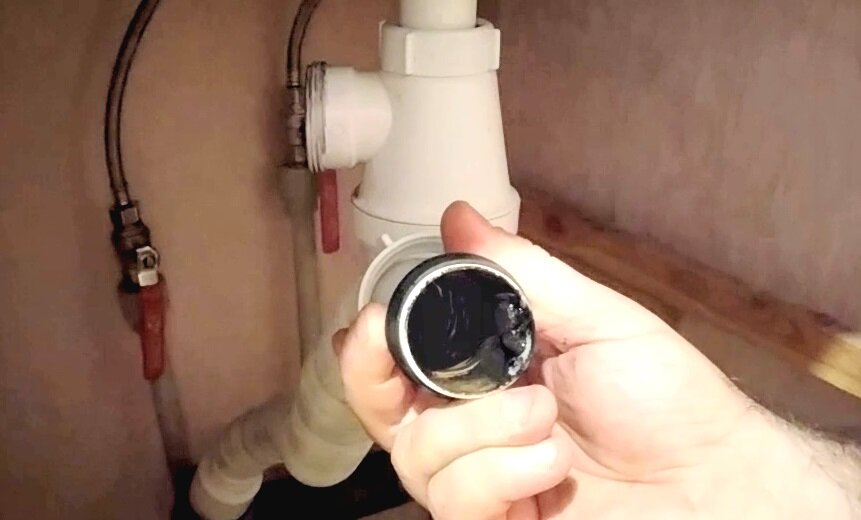
This is what it’s like inside.
I won’t focus on assembling the pipes and fittings, as each case is different. I’ll just note that I purchased a separate 45-degree elbow to install the transition from the trap bowl to the sewer line.
And here is where it gets most interesting, since the diameter of the socket on the elbow is 50 mm, and the outlet from the flask is about 45 mm, and the seal in the socket when they are connected does not provide the necessary tightness.
Along the way, I connected plastic pipe scraps without sockets by heating them (see separate article and video at the link).
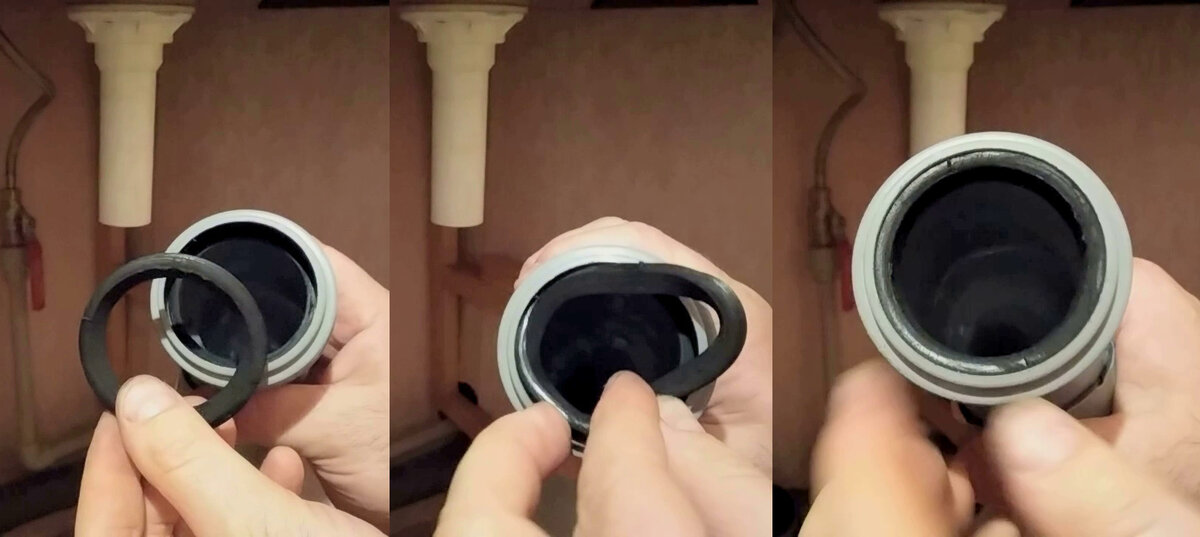
We install two ring seals
To solve the issue of different diameters, I do the following:
- I pull out the seal in the 45 degree elbow socket and put it back the other way around, with the back facing out;
- I take another identical ring and place it on the narrowed edge of the bell in front of the first ring, with the back facing inward and the conical part facing outward.
- I push the second ring dry and straighten both rings well, as a result they rest against each other with their backs and sit very tightly.
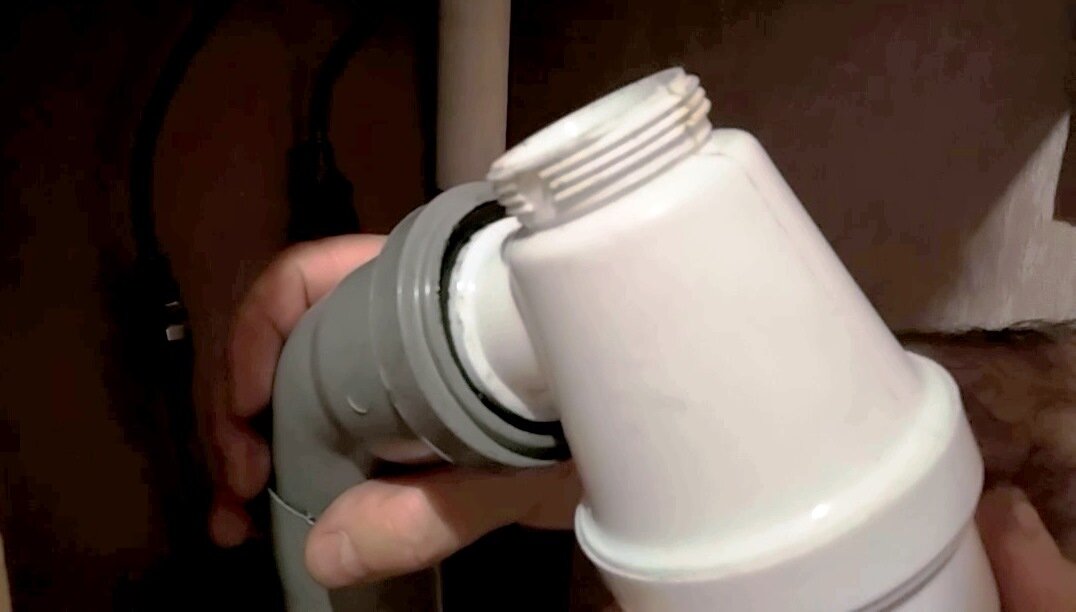
Already mounted connection.
True, the second seal fits with difficulty, but it does fit. It’s good if it’s new, as the used one is already stretched and unlikely to fit.
Even if it fits, it will jam during installation. This method allows you to slightly reduce the diameter and securely connect the flask to the pipe.
It is better to do this as if screwing it in along the thread, having lubricated the seals and the flask with detergent.
This connection requires a lot of effort, so it is better to do it before installing the flask on the sink.
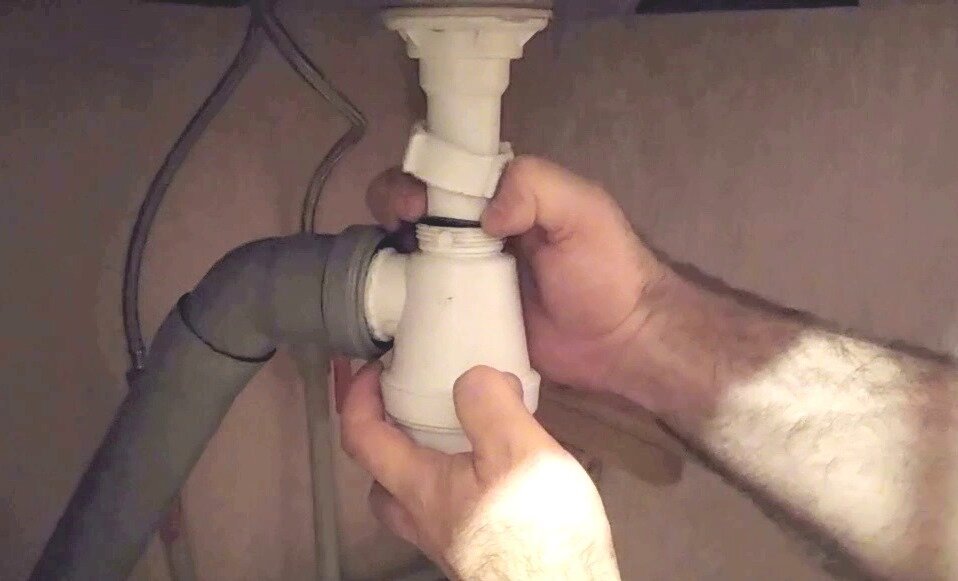
The black seal on the tube goes inside the flask.
All that remains is to fit the remaining parts of the pipes and connect them to the socket into which the corrugated pipe entered.
Well, the flask needs to be put back in place correctly, making sure that the thin part of the sealing ring goes inside it (photo 5) and only then tighten the nut.
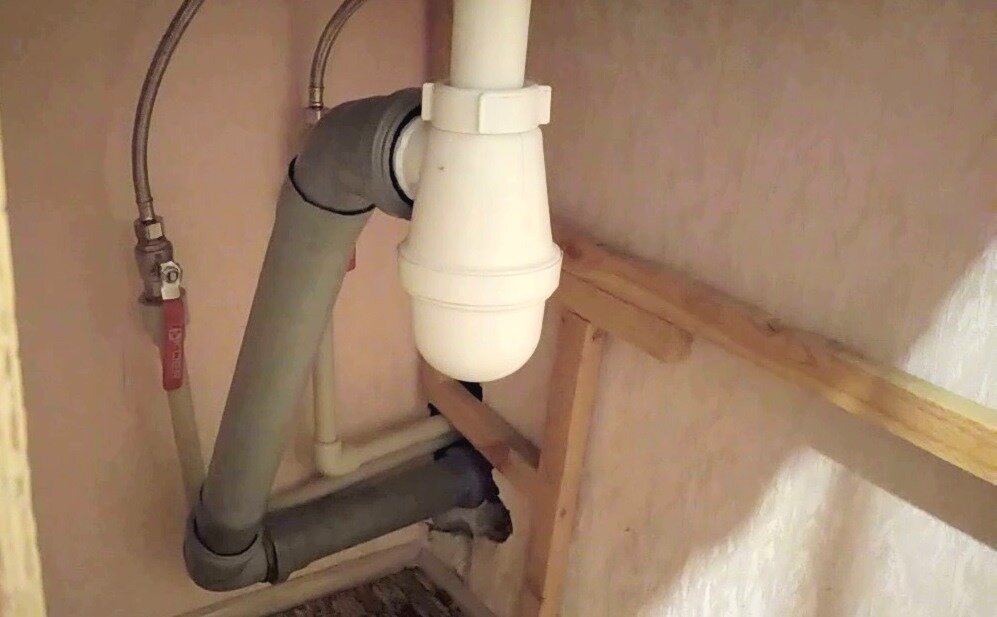
Complete assembly, leak tested.
If water still drips at the junction of the flask and the pipe, which sometimes happens, then, as an option, you can wrap a little FUM tape around the threads of the flask and seal it with sealant.
This is how you can solve the corrugated pipe problem and forget about clogged drains. What do you think?