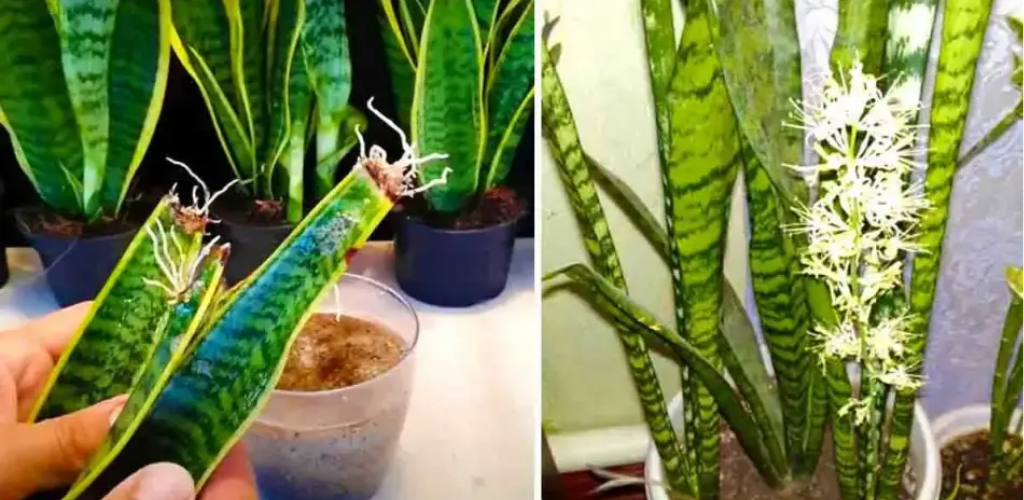
Sansevieria, also known as snake plant or mother-in-law’s tongue, is an easy-to-care-for houseplant. This perennial succulent is characterized by its evergreen foliage arranged in a stiff, tufted shape. Sansevieria is grown in pots or planters. However, it is slow-growing and takes many years to flower. Propagation of this plant is done, among other methods, by cuttings. Discover how to propagate snake plant from a leaf.
If your sansevieria is starting to wilt or you simply want more, you can propagate it using leaf cuttings. This means taking a leaf from the parent plant to obtain new sansevierias.
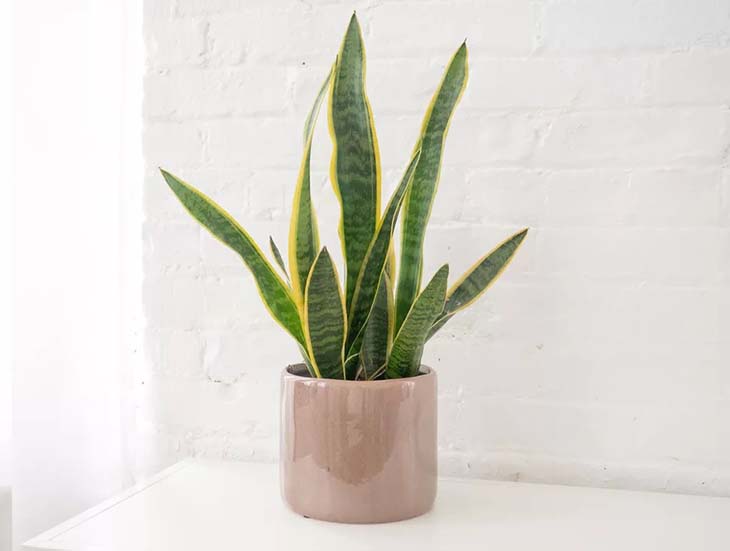
How to propagate sansevieria from a leaf?
- Leaf cuttings in the soil
Stage 1:
Using pruning shears that have been previously cleaned and disinfected, take a leaf from your plant and place it on a board.
Step 2:
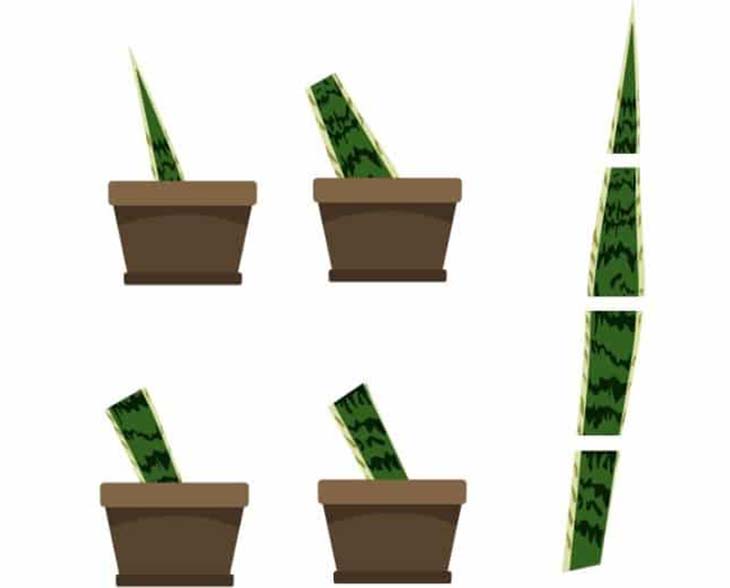
Cut the removed leaf into small sections, about 8 cm long, and make a small incision at the base of each section, and more precisely at the tip . This mark will help you know which end to plant in the soil. In fact, to successfully root the cuttings, the end of the cutting that was closest to the pot should be planted in the soil before the cut, respecting the direction of leaf growth.
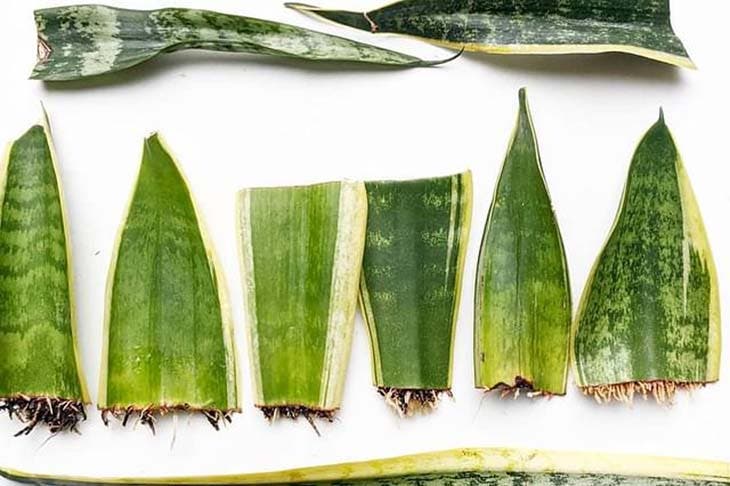
Allow your cuttings to dry for one to three days to prevent rotting. If desired, you can spray a little rooting hormone on the end of these cuttings to heal the cut and promote rooting.
Step 3:
Choose a terracotta pot and place clay pebbles at the bottom to promote drainage. Then prepare your potting mix by combining potting soil with sand.
Step 4:
Plant the cuttings in the center of the pot and lightly water the substrate.
Step 5:
Create a mini greenhouse for your plant. To do this, cut a plastic bottle in half and place the top half over the jar, keeping the cap closed. Remember to remove the cap for at least 10 minutes a day to prevent condensation from forming inside the bottle . Take this opportunity to lightly mist the potting mix. After a month, you’ll notice small leaves emerging. At this point, remove the bottle and transplant the young shoots into new pots.
- Leaf cuttings in water
Take a leaf from your sansevieria and cut it into sections. Place the cuttings in a container of water, being careful not to turn them over. They should be placed in the water in the same orientation they were before you cut them. Keep the container in daylight, but avoid direct sunlight . Change the water as soon as it becomes cloudy.
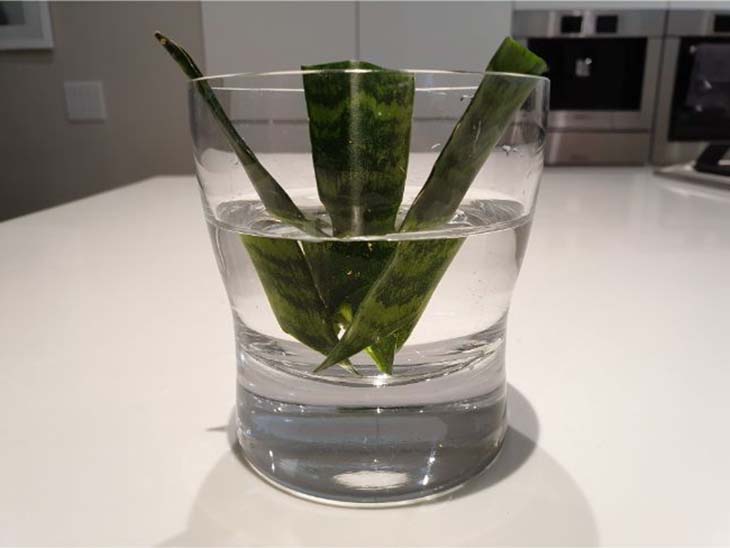
New roots will appear in the second to fourth week. Wait until there are more roots before transplanting the cuttings into pots.
Keep in mind that even if you take leaf cuttings from a variegated sansevieria, you will end up with a completely green sansevieria without yellow stripes. To propagate a sansevieria with variegated foliage, you must use a different propagation technique, namely, dividing the clumps and rhizomes.
How to care for a sansevieria?
- irrigation
Only water your plant when the soil is completely dry. In fact, this succulent has the ability to retain water thanks to its fleshy tissues , and therefore can survive in arid climates or dry soils. That said, in winter you can reduce watering to once a month. Also, remember to remove any standing water from the saucer or pot. Too much water can cause the roots to rot.
- Temperature and humidity
The snake plant likes warmth and humidity. Keep your plant away from drafts and heat sources such as radiators or fireplaces, which dry out the surrounding air.
- Soil and fertilizer
Snake plants (Sansevieria) prefer sandy soil. Choose a potting mix for your plant that includes some sand. Fertilize your plant during its growing season, preferably with a cactus fertilizer or a slow-release liquid fertilizer diluted in the watering can. Avoid fertilizing during the winter.
- Exposure
The snake plant appreciates light, but not direct sunlight. Insufficient light can cause its foliage to wilt.
- Diseases and Parasites
Sansevieria is resistant to disease, but can be attacked by mealybugs. In case of infestation, clean its foliage with a cloth soaked in rubbing alcohol or soapy water and then rinse with clean water.
You can propagate your sansevieria from a single leaf. Besides adding a tropical touch to your home, this decorative plant is also effective at purifying and cleaning the air inside.