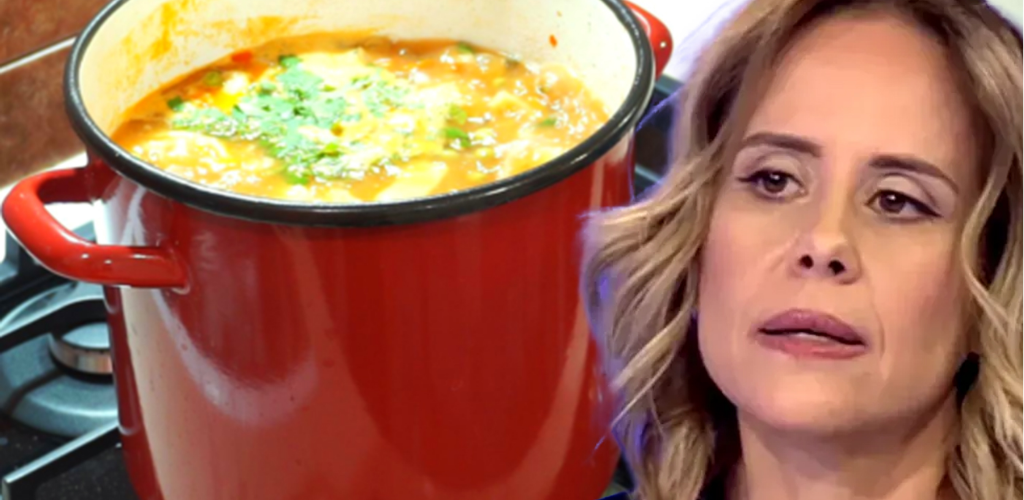
In Romanian cuisine, soup has an almost intangible status : it’s “light”, it’s “homemade”, it’s “good for the stomach”. This is where the trap starts. Because, when a dish is automatically considered healthy, no one checks the details that can turn it from an ally into a problem .
In public, Mihaela Bilic periodically returns to the same idea that irritates and, at the same time, makes you think: not all soups are equivalent. On the plate, the difference between “it keeps me going” and “it makes me heavier” can be hidden in a single extra spoonful of something, in a seemingly banal association, in a habit “that’s how it’s done here”.
The paradox is simple: soup may seem like a safe choice precisely because it’s liquid. And when you’re busy, hungry, and want to “put something in your stomach,” the warm liquid quickly gives you the feeling that you’ve finished the meal. It’s just that the body doesn’t read tradition, but composition.
Why it fills you up quickly but doesn’t keep you going
Beyond the myth of the “complete meal,” the physiological perspective changes the scene: soup takes up volume, but volume is not the same as nutritional consistency. In practice, you may feel like you’ve eaten “enough,” but soon find yourself searching the kitchen for something else—that moment when satiety evaporates and only cravings remain.
“Soup is essentially water with vegetables and meat, which takes up volume in the stomach and creates the feeling of satiety. The problem is that hunger returns quickly, because liquids leave the stomach much faster than solid foods,” explains the nutritionist.
Here comes the important question: if it “holds you” for a while, what do you do next? Many supplement — reflex, not strategy — with bread, with cream, with “something else,” and the soup, from the beginning of the meal, becomes the basis of an accumulation that is not immediately visible, but is felt over time.
Where the balance breaks: when the soup becomes too much
There comes a point where, in the desire to make it “satisfying,” the soup starts to add filler ingredients . We’re not talking about vegetables or herbs, but about those additions that suddenly raise the caloric density and make digestion difficult, as if you were moving lunch into a single pot.
And there’s another detail you recognize immediately, even if you don’t name it: the shiny layer on the surface. When the dish is made with a lot of oil or very fatty meat, the “go ahead, it’s soup” feeling quickly changes to that after-meal heaviness that drags you down, doesn’t lift you up. Instead of being light , it becomes a mixture that demands the digestive system.
Mihaela Bilic insists on simplicity as a golden rule: one direction for carbohydrates, leaner meat, little fat and lots of vegetables. Taste should not be bought in excess, but built intelligently — with borscht or lemon juice and fresh herbs, which bring flavor without being unnecessarily “burdened”.
And the combination that gets the label of the unhealthiest is not an “exotic soup”, but a very familiar one: the one where you put potatoes and add noodles or rice in the same pot, then “enrich” it with a lot of fat (oil or very fatty meat) until it floats to the surface.