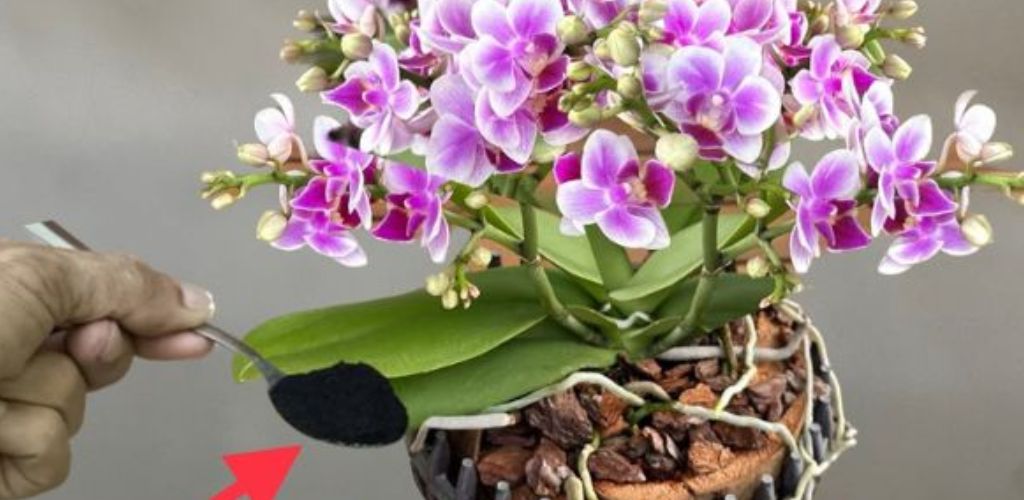
Orchids are admired for their elegant flowers, yet many owners struggle to achieve long-lasting and repeated blooms. Professional florists rely on a few precise principles that consistently trigger abundant flowering. Below is a practical, proven guide you can apply at home.
1. Light: Bright, Filtered, and Consistent
Orchids need bright but indirect light. Direct sun burns leaves; insufficient light results in lush foliage without flowers.
Best placement: near an east or west window with sheer curtains.
Indicator: light green leaves mean correct lighting; dark green usually means too little light.
2. Temperature Difference – the Bloom Trigger
Florists use a simple trick: a slight day–night temperature difference.
- Day: 22–25 °C
- Night: 16–18 °C
A difference of 4–6 °C for 2–3 weeks often stimulates flower spikes, especially in Phalaenopsis orchids.
3. Watering: Less Is More
Overwatering is the most common mistake.
- Water only when roots turn silvery-gray.
- Use room-temperature water.
- Let excess water drain completely.
Standing water suffocates roots and stops flowering.
4. The Florist’s Feeding Rule
During active growth, feed orchids every 2–3 weeks with a balanced orchid fertilizer (20-20-20 or similar), diluted to ½ strength.
When flower spikes appear, switch to a bloom-boosting formula higher in phosphorus.
5. Roots Must Breathe
Healthy roots equal abundant blooms.
- Always use transparent pots.
- Choose coarse orchid bark, not soil.
Roots need air and light to function properly.
6. Humidity Without Rot
Ideal humidity is 50–70%.
- Place the pot on a tray with pebbles and water (pot bottom must not touch water).
- Avoid misting flowers directly; it shortens bloom life.
7. Pruning After Flowering
Once flowers fall:
- If the spike is green, cut above the second or third node to encourage a side bloom.
- If brown and dry, cut it at the base to redirect energy into new growth.
8. Patience Is Part of the Secret
Florists know that orchids bloom on their own schedule. With stable conditions and proper care, many orchids bloom once or twice a year, lasting several months each time.
Final Thought
The real secret is consistency: stable light, careful watering, gentle feeding, and temperature variation. Follow these steps, and your orchid will reward you with strong spikes and spectacular, long-lasting blooms.
Would you like this adapted for a Facebook post, blog format, or localized for a specific country or language?