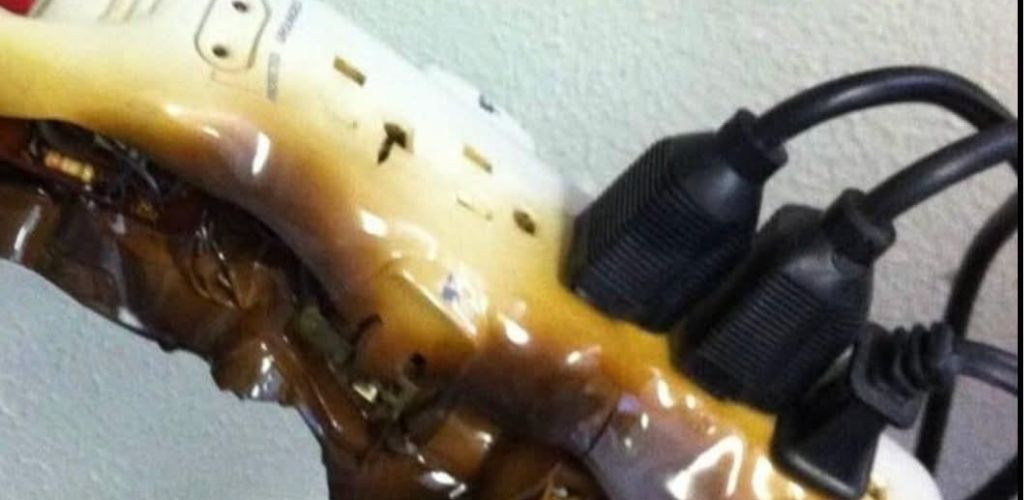
As the coldest months of the year approach in the Northern Hemisphere, heating systems are turned on, and in some cases, space heaters are pulled out of storage. Fire officials advise never connecting these appliances to an extension cord.
Never connect a heater to a surge protector.
When it’s cold outside, people all over the world turn to space heaters. We all want to stay warm and cozy when the wind is biting outside. Ahead of space heater season, Oregon firefighters published an important safety post. Their top tip? Never plug a space heater into a surge protector. “Never plug a space heater into a surge protector,” warned Umatilla Fire District 1 in Hermiston, Oregon, on Facebook. “These appliances are not designed to handle the high current required by a space heater and can overheat or even catch fire due to the increased load.”
Danger: Connecting to a surge protector
The Oregon Fire Department isn’t the only one warning about space heater safety. Firefighters in Toledo, Ohio, issued a similar statement after a misused space heater caused a couch to catch fire, quickly engulfing the entire house in flames. Space heaters can reach temperatures of up to 600°F (about 315°C), so it’s crucial to use them with caution.
Recommendations for the safe use of heaters:
- Never connect to a surge protector – always plug directly into a wall outlet
- Maintain at least three feet (≈ 1 m) of clearance around the heater.
- Always supervise the heater while it is running; do not leave it on while sleeping or in another room.
- Place the appliances on a flat, stable surface.
- Never place the heater on cabinets, tables, furniture or carpets.
How to Prevent Electrical Fires in Your Home
Even in the coldest winter months, electrical fires can be prevented. Here are our top safety tips:
Do not use damaged power cords.
If the cord is frayed, torn, or has a broken or loose plug pin, do not use it.
Unplug all heat-producing appliances when not in use.
This includes hair dryers, electric kettles, space heaters, and other devices. Any heat-generating appliance can overheat and catch fire if left on for long periods or due to a malfunction.
Extension cords are intended for temporary use only.
Do not leave them plugged in 24/7. If you need more outlets, contact an electrician to install additional ones.
Maintain the grounding contact (third prong).
The third prong in a plug protects against power surges and short circuits. Consider replacing old two-prong outlets with modern grounded ones.
Update your electrical wiring.
Older homes often have outdated electrical systems, which are more susceptible to overheating and fire. Have them inspected and upgraded by a professional.