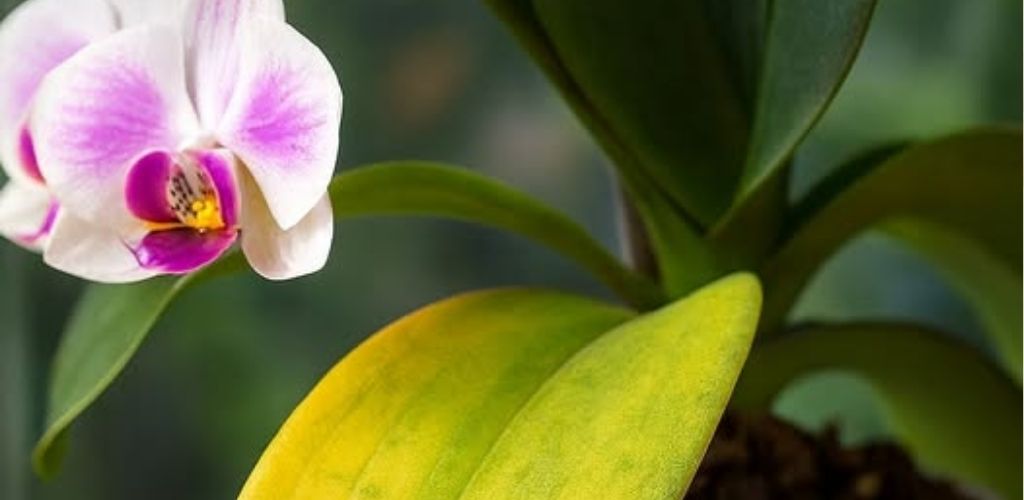
Orchids are spectacular, yet delicate flowers. If the leaves start to turn yellow or dry, it’s a sign that the plant needs help. The good news? You can intervene in time and save it!
Let’s see the most common causes and the appropriate solutions for each:
1. Inappropriate lighting
- Too much sun: Leaves may burn.
➤ Move the plant to a location with filtered light , not direct light. - Too little light: The orchid can no longer photosynthesize.
➤ Provide it with diffused natural light , ideally near an east-facing window.
2. Incorrect watering
- Watering too frequently: Roots may rot → leaves turn yellow.
➤ Let the substrate dry out partially between waterings. - Too little water: The plant dehydrates.
➤ Water regularly, but not excessively.
3. Water quality
- Hard or chlorinated water: Can damage the roots.
➤ Use filtered , rainwater, or still water. If using tap water, let it sit for 24 hours before.
4. Extreme temperatures
- Orchids prefer a mild climate, without sudden changes.
➤ Maintain the temperature between 18–26°C . Avoid cold drafts.
5. Diseases and pests
- Fungal infections: Spots, yellowing, and falling may occur.
- Pests: Aphids, mealybugs or thrips can attack the plant. ➤ Solutions:
- Remove the affected leaves.
- Apply a bio treatment or a suitable insecticide/fungicide.
- Isolate the plant if you have other flowers in the house.
How to help your orchid recover:
Move it to a space with adequate light and a stable temperature.
Adjust watering – not too often, not too rarely.
Use chlorine-free water .
Regularly check the roots and leaves for signs of disease or pests.
Add special orchid fertilizer once a month.
Cut off severely affected leaves, but carefully, using a disinfected tool.
Final tip:
Be patient. Orchids have their own rhythm, but with proper care, they will bloom again and reward your effort!