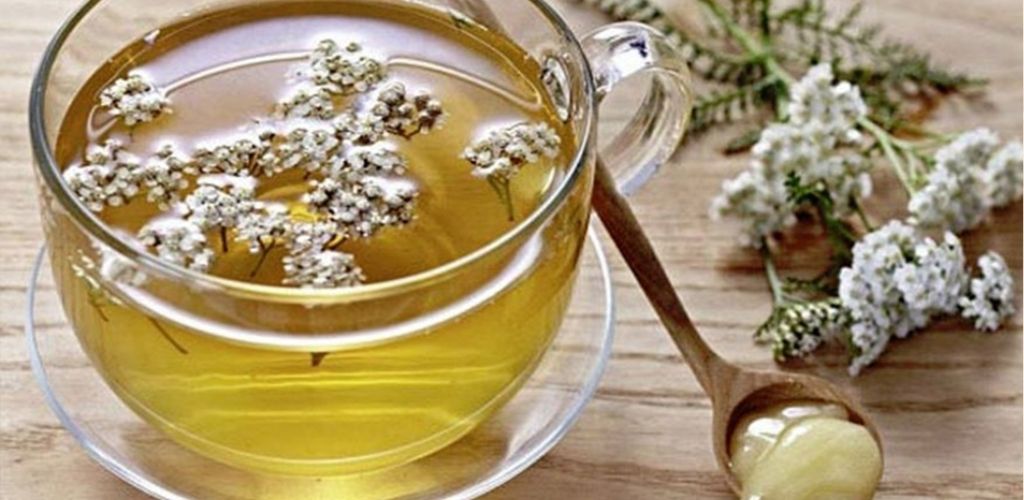
Yarrow tea (Achillea millefolium) can be very helpful in internal and external treatments.
It can be used for both preventive and healing purposes, having been used in natural medicine since ancient times.
Yarrow’s tail tea
Preparation method
It is prepared from the upper parts of the stem with inflorescences (Herba millefolii).
Pour 250 ml. of boiling water over 2 tablespoons of dried and coarsely chopped plant, cover, leave to infuse for 30 minutes, then filter. Sweeten to taste with honey.
Administration
Drink 3 cups of tea per day, as needed or in 30-35 day courses, with a 2 week break.
Internal treatments
Stomach diseases – gastritis, gastric ulcer, dyspepsia, regurgitation, stomach cramps, bloating, vomiting
Intestinal diseases – irritable bowel syndrome, flatulence, intestinal colic, diarrhea
Pancreatic diseases – acute pancreatitis (as a complementary therapy; tea is drunk after meals)
Liver diseases – drug-induced hepatitis
loss of appetite
Diseases of the genital tract and its appendages – vulvovaginitis, mastodynitis
Dermatological diseases – dermatitis, dermatoses, staphylococcal and streptococcal infections, fungal infections, seborrheic dermatitis, eczema
ENT diseases – tonsillitis, rhinitis, sinusitis, epistaxis, pharyngitis, laryngitis, tracheitis
Oral cavity diseases – thrush, gingivitis, mycoses, dental extractions or abscesses
Diseases of the anus and rectum – hemorrhoids, anal fissure, anal itching, proctitis.
External treatments
– Oral cavity diseases: canker sores, gingivitis, stomatitis, gingival bleeding, dental abscesses: gargle after each meal with yarrow tea
– Burns, wounds, suppurations, oozing eczema, chronic leg ulcers, bruises, nipple cracks, irritated and reddened skin: apply compresses with concentrated infusion (50-60 g of dried flowers per 1 liter of boiling water)
– Hemorrhoids, cracks in the palms and soles: local baths with an infusion of a mixture of yarrow and nettle leaves
– Burns, festering wounds, eczema, varicose ulcers and hemorrhages: local baths with a mixture of yarrow and tansy root (30-60 g per 1 liter of water)
– Old and infected wounds: wash with an infusion prepared from 2 tablespoons of dried flowers per 250 ml. boiling water.
– Inflammation of the ovaries, uterine fibroids, uterine prolapse: sitz baths with concentrated decoction (100 g of dried plant per 1 liter of cold water); macerate overnight, and the next day reheat to boiling and add to the bath water
– Neuroses, dizziness, headaches, eye pain and tearing: hand and foot baths, with a calming effect
– Bronchitis and bronchial asthma: inhalations with yarrow tea.
Contraindications
Pregnancy; breastfeeding; allergy to chrysanthemums, daisies, and ragweed. May interact with antacids, lithium.