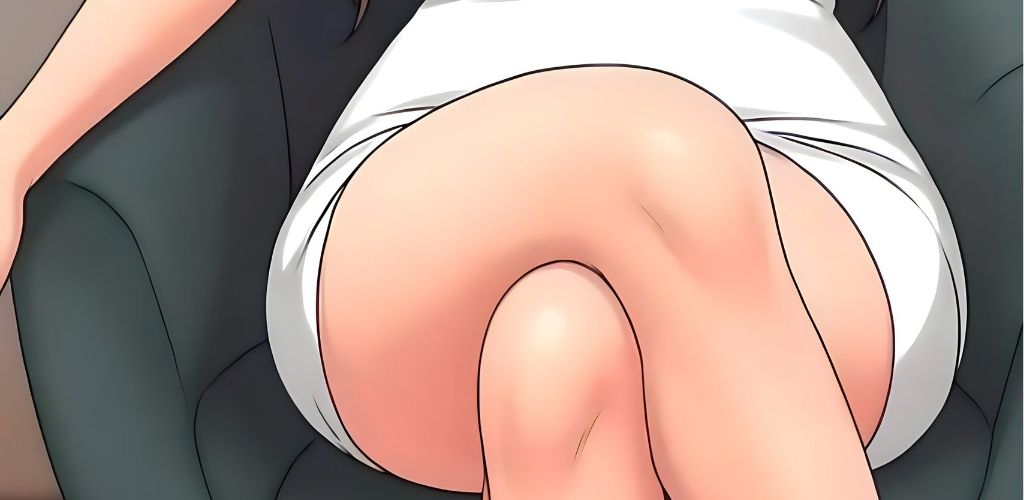
You see it everywhere. A woman sits down and, almost instinctively, crosses one leg over the other. The gesture seems simple, but behind it lie learned habits, cultural rules, and psychological mechanisms that shape how you express your identity in public. Posture conveys order, modesty, and control. It functions as a silent language through which you regulate your space, emotions, and presence.
If you look closely, you’ll notice that the same posture can have different meanings depending on the location, the attire, and the inner state. There’s no single explanation, but a set of factors that combine. The gesture persists because it provides you with comfort, protects your privacy, and, in some situations, clearly defines your social role.
Cultural roots and norms that shaped behavior
For centuries, the way women sat was heavily influenced by fashion and social status. In the Victorian era, the correct posture was one in which the knees were close together and the ankles were crossed. Bulky outfits and stiff fabrics dictated a compact posture. This was how decency was conveyed. This was how education was confirmed.
In the 20th century, when skirts got shorter, the position evolved to cross the knees. The rule was the same. Keep it elegant. Take up some space. Stay composed. Even though the rules are more relaxed today, the reflexes that come from this culture don’t disappear. You see them in the postures automatically adopted in formal spaces.
Cultural differences complete the picture. In Japan, the seiza posture reflected care and politeness. In the West, crossing the legs has become a symbol of professionalism in public appearances. In younger generations, the pressure of these norms is decreasing. Comfort is gaining ground. Many choose natural positions, without trying to adhere to a visible code. However, social reflexes remain. If you are in a formal situation, posture changes instinctively.
How clothing influences your posture
The outfit plays a major role. When you wear skirts or dresses, crossing your legs protects your privacy. It becomes a natural reaction. Later, even if you choose loose clothes, the reflex persists. High heels also accentuate the gesture. After hours of pressure on your ankles and calves, the position offers you a quick point of relaxation.
It’s not just fashion. It’s also body memory. Repeating the same gesture in social contexts turns it into a habit. The more you’re exposed to public situations, the more standardized your posture becomes.
What message does your posture convey in nonverbal psychology?
Your body communicates even before your words. The direction you point your knees can suggest interest or distance. If they are pointed toward the other person, you are signaling an active presence. If you tilt them to the side and close your posture, it is a sign of self-protection.
When you cross your legs tightly, with your shoulders slightly forward, your body is sending a message of security. It’s a subtle signal that you need space. When your posture is relaxed, with your torso facing those around you, the message is one of openness.
The rhythm of the foot in this position also says a lot. If you constantly swing your foot, your body is releasing pent-up energy. It could be impatience. It could be tension. In a professional context, the movement can contradict the message you want to convey. For this reason, many people consciously control their posture in meetings, interviews, or presentations.
Crossing the legs as a self-regulation mechanism
The gesture also has a practical function. Resting one thigh on the other knee creates a small frame around you. You feel stable. You control your energy. It’s a way to sit in space when you need inner anchoring.
Not everyone uses this gesture in the same way, but for many it is a form of emotional self-regulation. In tense situations or crowded rooms, the posture helps your body enter a state of calm. When you sit down in a new environment, the position functions as a minimal comfort zone.
Position in the professional space
In a professional environment, your posture is immediately interpreted. A straight back, relaxed shoulders, and a natural cross of the legs convey organization and control. If your leg swings, the message becomes different. It seems that you are impatient or unsure. That is why many people adjust their posture depending on the context.
In a meeting room, adopting a stable, neutral posture makes your colleagues perceive you as a calm person. In an interview, posture conveys confidence. At a public event, the way you sit on your chair is part of your image.
How posture transforms depending on space
Context changes meaning. On a crowded bus, crossing your legs can be a gesture of protecting personal space. At a casual dinner, the gesture can express relaxation. At a presentation, it becomes part of your professional style.
The direction your knees are pointing, the tension in your ankles, or the way you place your hands on your thighs are all cues that your interlocutors interpret unconsciously. Your body creates a complete message that presents you before your words.
A simple gesture with many layers
Crossing your legs isn’t just a reflex. It’s the result of a combination of upbringing, history, clothing, and psychology. Your body adopts a posture that gives you confidence, elegance, or control, depending on the moment.
It’s not a universal rule. It’s not a mandatory norm. It’s a gesture that says something about you the second you make it. It shows your comfort. It marks your presence. It organizes your thoughts.
When you notice these details, you understand that body language is not accidental. Posture has memory, matters in relationships, and influences how people perceive you. The discreet gesture of crossing one leg over the other becomes a clear message about who you are and how you choose to position yourself in the world.