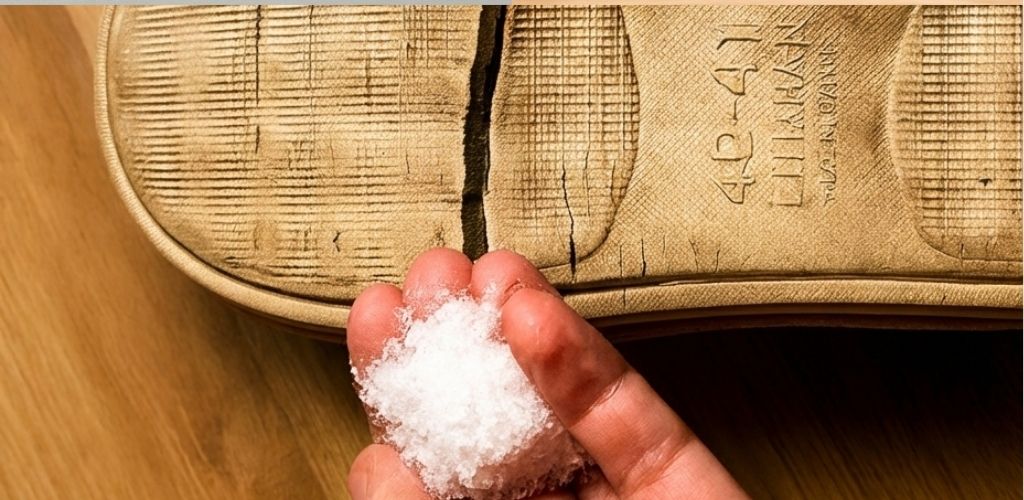
Repairing a Cracked Sole with Salt: A Shoemaker’s Proven Method
When a crack appears on the sole of your favorite pair of shoes, it’s hard to throw them away, and a trip to a shoe repair shop is often both time-consuming and expensive. However, there’s a simple homemade remedy using just two simple ingredients: table salt and a suitable adhesive. While this method sounds unusual, it actually produces excellent results and can truly extend the life of your shoes.
What you will need:
* strong universal glue, preferably special shoe glue or Moment glue;
* fine salt;
* a toothpick, spatula or any thin stick;
* clamps or a heavy object for fixing.
1. Why it works:
Salt works in several ways. It acts as a mild abrasive, helping the adhesive bond more deeply to the surface. When salt crystals penetrate the adhesive layer, they strengthen the seam, making it tighter and reducing the risk of re-breaking.
2. Surface preparation.
The cracked part of the sole must be thoroughly cleaned of all dirt. It’s better not to limit yourself to simple dry cleaning; instead, degrease the area with alcohol or acetone—this will ensure a stronger adhesive bond.
3. Applying the adhesive:
Carefully inject the adhesive directly into the crack, ensuring it covers all the inner walls of the gap. The more evenly the adhesive is distributed, the stronger the bond will be.
4. Adding salt:
While the glue is still liquid, sprinkle a small amount of salt into the seam. Using a toothpick or skewer, distribute the crystals along the entire length of the tear so that the salt forms an even layer and strengthens the entire bond.
5. Fixation:
After the crack is filled, the edges of the sole are tightly connected together and secured with a clamp or placed under a weight. It is important to maintain a constant pressure.
6. Drying Time
: Depending on the type of adhesive, leave the shoes undisturbed for 12 to 24 hours. During this time, the adhesive will fully harden, and the salt will form a strong bond within the seam.
Thanks to the salt, the adhesive forms a tight, reinforced bond as it hardens, significantly increasing the strength of the area. This type of repair is especially useful in dry weather and under moderate loads.
7. When the method is effective:
* for damage to rubber, plastic and polyurethane soles;
* if the crack is no more than a few centimeters long;
* when it is important to quickly restore the shoes and postpone a visit to the specialist.
This simple method using salt and glue really does help quickly restore the functionality of shoes. Of course, for a perfect result, a professional repair shop remains the best option, but as a temporary fix, this method works great.