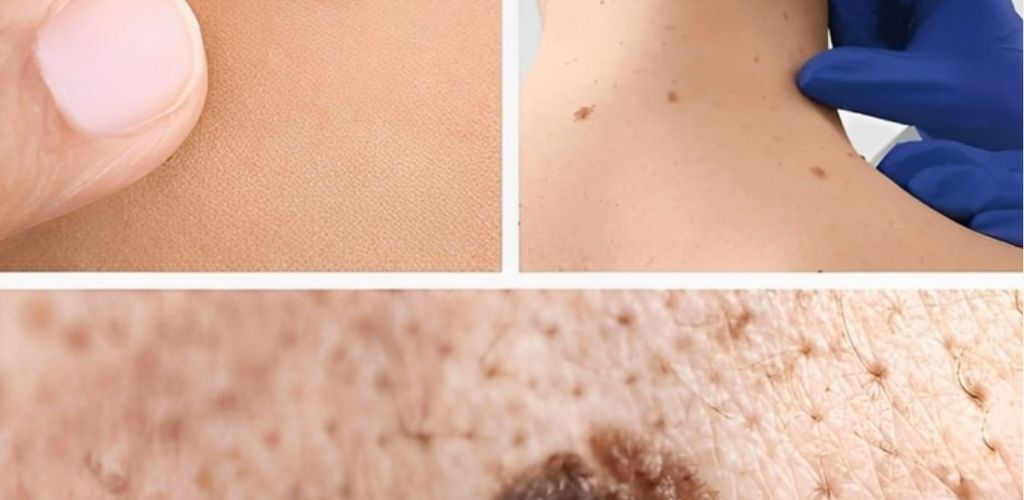
It has been haunting you since childhood or has appeared recently, without warning. Small, dark, sometimes hairy or slightly convex…
Moles are as interesting as they are disturbing. Is they common?
Is this a sign of health or an indicator of risk?
In this article, we will lift the veil of mystery and explain what having a mole really means and, above all, when you should start paying attention to it.
What is a mole?
A mole, also called a nevus, is a small cluster of pigment cells (melanocytes) located in the skin. These cells produce melanin, the pigment responsible for skin color. Therefore, having several moles is completely normal, especially if you have fair skin.
They may be present from birth or appear throughout life, usually by the age of 30 or 35. Some remain barely noticeable, while others become more noticeable over time, especially with sun exposure.
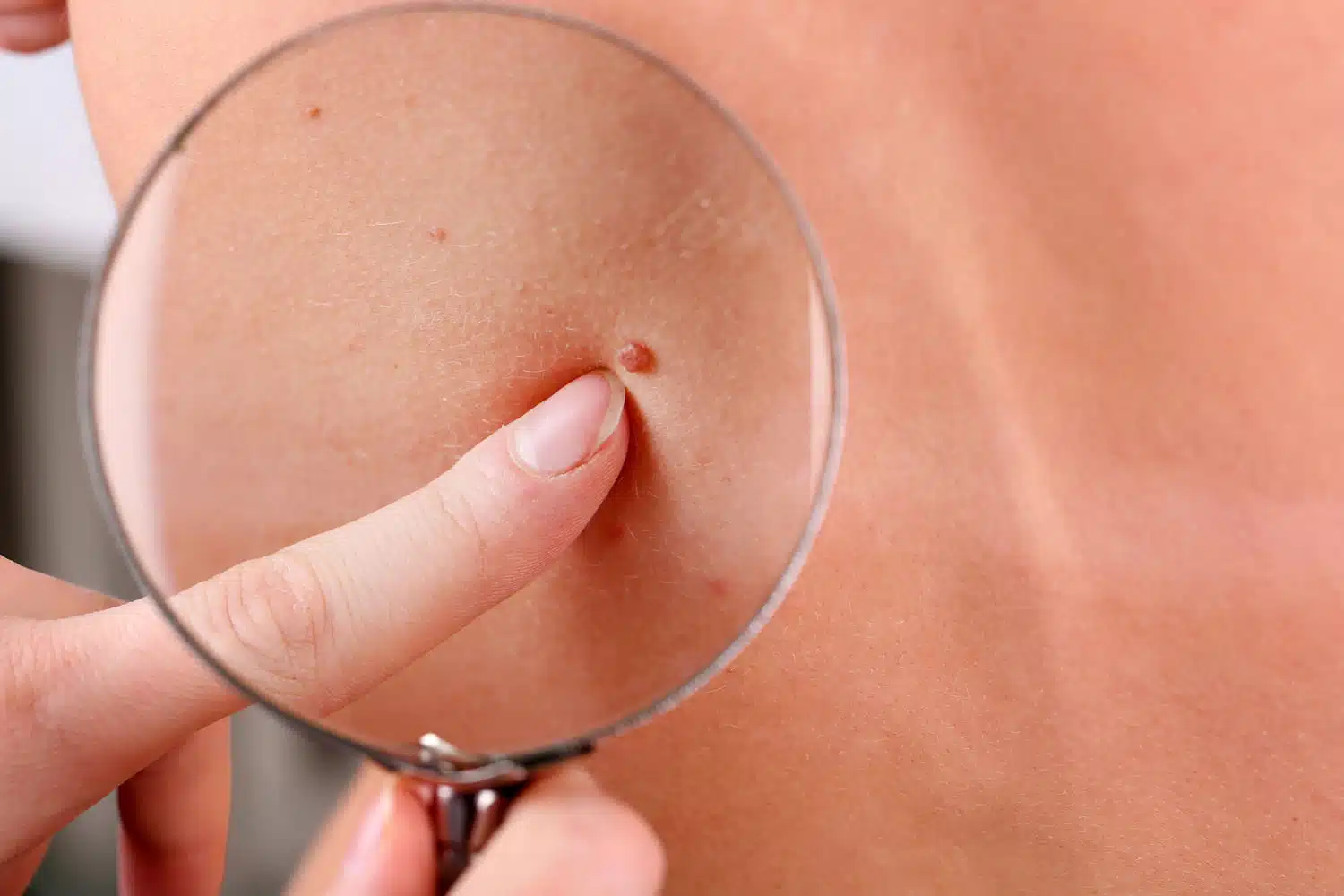
Is a mole a serious problem, doctor?
The vast majority of moles are benign. However, there is one caveat: some of them can develop into cancerous growths and become suspicious, in particular, they can develop into melanoma, a type of skin cancer.
That’s why it’s important to know how to watch for them. Just as we look for signs of a leak in a pipe or cracks in an old wall, we need to pay attention to the warning signs that a mole may be giving off.

Signs to look out for: the ABCDE rule
To identify a potentially dangerous mole, dermatologists use a simple but extremely effective method: the ABCDE rule.
A means asymmetry: one half is not like the other.
B means edges: uneven, poorly defined.
C stands for color: multiple colors in one mole.
D means diameter: more than 6 mm.
E is for evolution: a change in appearance, size, texture, or color.
Just one of these criteria may be sufficient to warrant a referral to a specialist. This is a golden rule to remember, just as we remember life-saving interventions.
The Sun and Moles: Relationships You Should Pay Attention To
The sun is a bit like that friendly but unpredictable friend: sometimes good, sometimes dangerous. Exposure to ultraviolet radiation is one of the main risk factors for the appearance of moles. That’s why it’s so important to use the right sunscreen and avoid prolonged exposure to the sun, especially between 12:00 and 17:00.
It is also worth paying attention to tanning beds, which increase the risk of melanoma. In France, use is strongly discouraged, or even prohibited for minors.
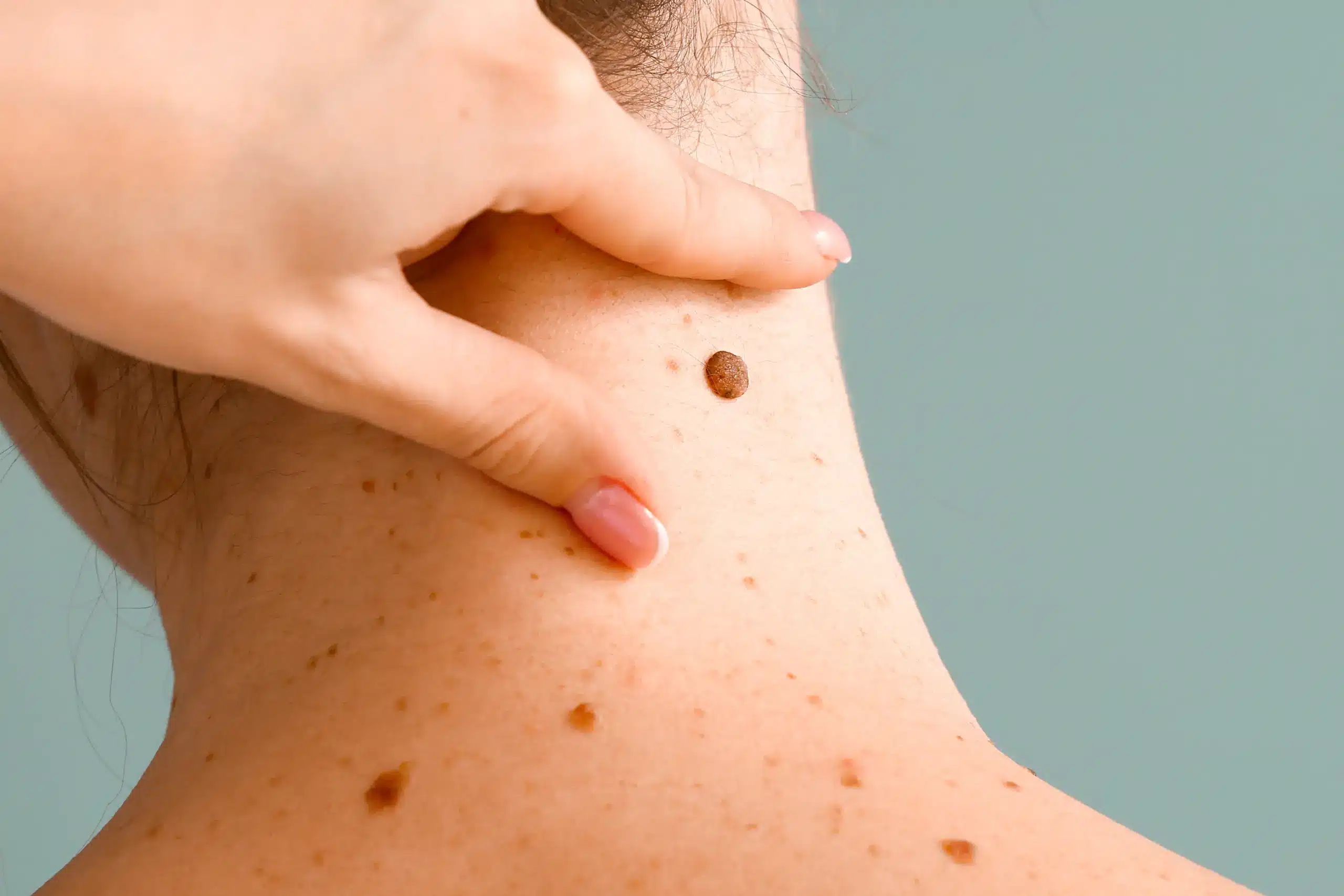
When should you see a dermatologist?
An annual visit to a dermatologist is recommended, especially if you have many moles, a family history of melanoma, or fair skin. Some dermatologists use dermatoscopy, a tool that allows for a detailed examination of the skin that works like a precision magnifying glass.
If you notice a sudden change in your mole, don’t delay. Prevention is better than cure!
In summary
Having moles is completely normal, but it does require some vigilance. Learn more about them, protect them from the sun, and don’t hesitate to seek advice if you have any concerns. Your skin is talking to you… you just need to learn to listen.