This homemade method combines gentle chemical reactions with the physical principles of hydraulic pressure to remove light to moderate blockages in sink drains. It’s ideal when water drains slowly due to a buildup of grease, soap scum, or organic matter.
🔹 STEP 1: Add salt to the drain 🧂
Technical purpose: Coarse salt or common salt acts as a mild abrasive that can help break down solid residue stuck to the pipe walls. Additionally, when combined with hot water, it helps dissolve grease.
Effect:
- Mechanical sanding of soft residues.
- It increases the melting temperature of fats, making them less viscous upon contact with heat.
🔹 STEP 2: Pour in liquid detergent 🧼
Technical purpose: The detergent acts as a surfactant, meaning it breaks the surface tension of grease and helps it separate from the pipe. This allows the residue to detach and flow more easily.
Effect:
- Emulsifies fats and oils.
- It reduces the adhesion of particles to the PVC or steel of the drain.
🔹 STEP 3: Add hot water ♨️
Technical purpose: Hot water liquefies fats and activates salt and detergent. It also slightly expands the pipe (if it’s plastic), which can help clear blockages.
Physical effect:
- It reduces the viscosity of the residues.
- Improves flow to deeper areas of the drainage system.
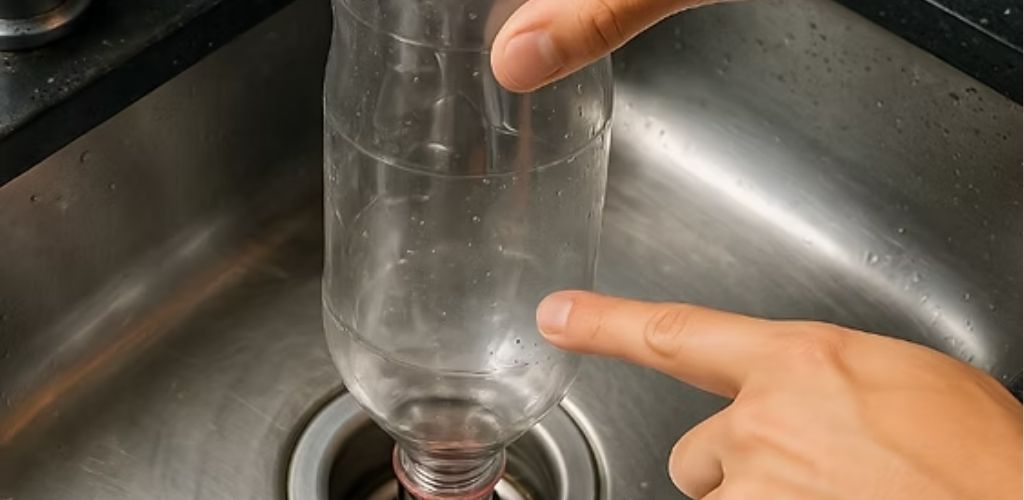
🔹 STEP 4: Place a full bottle of water upside down 🍼
Preparation: Fill a plastic bottle (ideally 1.5L to 2L) with water. Seal the mouth with your hand or a temporary cap.
Positioning: Place the mouth of the bottle directly over the drain hole, making sure it makes good contact (you can use a rag around it to prevent pressure leaks).
🔹 STEP 5: Squeeze the bottle hard! 💥
Technical purpose: This is where the physics of hydraulic pressure comes into play. By squeezing the bottle hard, you force the water into the drain, creating a sudden localized pressure. This pressure “burst” acts like a mini liquid plunger.
Technical effect:
- It forcefully displaces air and liquid towards the stopper.
- It creates a small shock wave that can break up loose debris.
- It generates negative and then positive pressure, which helps to loosen stuck debris.
🔍 Why does this method work?
- It does not use harsh chemicals.
- Take advantage of the synergy between heat, detergent, abrasion (salt) and hydraulic pressure.
- It is ideal for preventative cleaning or when the drain is slow but not completely blocked.
🛑 Limitations
- It does not work with solid plugs (such as cutlery, toys, or hardened grease in large quantities).
- It does not replace professional cleaning if the plug is very deep or in tight bends in the pipe.
- It requires a sturdy bottle; if it is too weak, it will not generate enough pressure.
✅ Conclusion
This trick combines DIY engineering with basic principles of chemistry and physics, making it incredibly useful for households without specialized tools. It’s ideal for regular sink maintenance or when you don’t have a plunger handy.