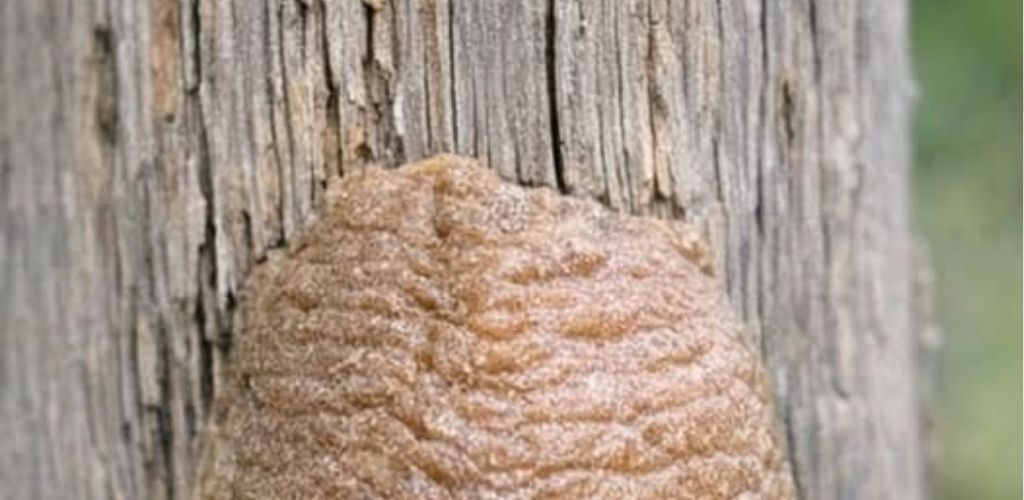
What Is This Hard Brown Foam-Like Structure on My Fence?
Have you discovered a твердый, пенообразный коричневый комок attached to a fence post in your backyard? At first glance, it may look like dried expanding foam, mud, or even insect damage. Many homeowners consider scraping it off immediately. However, before you remove it, it’s important to understand what it could be — because you might be looking at something beneficial for your garden ecosystem.
In most cases, this unusual structure is a praying mantis egg case, also known as an ootheca. It is completely natural and actually a positive sign for your yard.
How to Identify a Praying Mantis Egg Case (Ootheca)
A praying mantis egg case has a distinctive appearance:
• Hard, foam-like texture
• Light brown to dark tan color
• Oval or elongated shape
• Firmly attached to wood, fences, branches, or walls
• Approximately 1–3 inches long
The foamy material hardens after being laid, protecting dozens — sometimes hundreds — of mantis eggs inside. During spring, tiny mantises hatch and disperse into the surrounding area.
Why You Shouldn’t Remove It
Praying mantises are highly beneficial insects. They are natural predators that help control garden pests such as:
• Aphids
• Flies
• Mosquitoes
• Small caterpillars
• Beetles
By leaving the egg case in place, you support natural pest control and reduce the need for chemical pesticides. If the structure is indeed an ootheca, removing it would eliminate a future generation of helpful predators.
When Will the Eggs Hatch?
Typically, mantis eggs hatch in early to mid-spring, depending on your climate. Warmer temperatures trigger the process. After hatching, the tiny mantises quickly spread out to avoid competing with each other for food.
Here’s a quick overview:
Feature | Details
Appearance | Brown, foam-like capsule
Location | Fences, branches, shrubs, walls
Hatching Season | Spring
Benefit | Natural pest control
What If It’s Something Else?
While a praying mantis egg case is the most common explanation, occasionally similar-looking structures could be:
• Mud dauber wasp nests (usually tubular and made of mud)
• Expanding construction foam residue
• Fungal growth (rare, but possible in damp areas)
If the structure is smooth, symmetrical, and firmly glued to the surface with a hardened foam texture, it is most likely a mantis ootheca.
What Should You Do Next?
If it is not in a high-traffic area, the best approach is simple: leave it alone. Avoid spraying chemicals nearby. If you must move it (for example, during fence repairs), carefully cut the small piece of wood it’s attached to and relocate it to a shrub or tree in your yard.
For more backyard wildlife guides, check our related articles in the “Garden Pest Control” and “Natural Backyard Tips” sections.
Supporting Backyard Biodiversity
Finding a praying mantis egg case means your yard is part of a healthy ecosystem. Encouraging beneficial insects improves plant health and promotes sustainable gardening practices.
If you found this guide helpful, follow our page for more home and garden tips. Don’t forget to like and share this article so others can learn how to identify beneficial insects in their backyard.