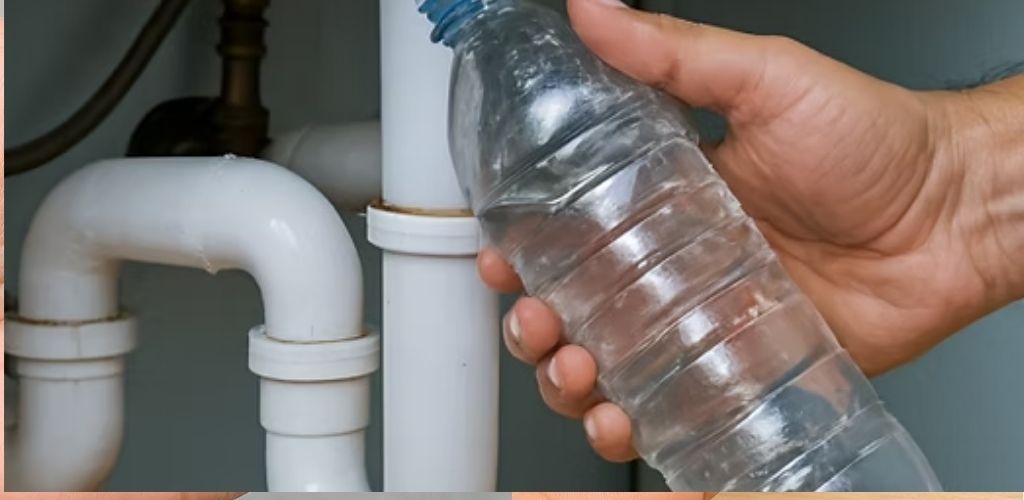
Sink and laundry traps are exposed to several factors that accelerate their wear and tear:
- Sudden changes in temperature
- Cleaning chemicals
- Constant vibrations
- old facilities
- Accidental blows
In most cases, the damage isn’t structural, but rather a small crack or weakened joint. That’s where this trick comes in.
The plastic bottle method: simple, fast, and effective
This procedure consists of creating a plastic thermal sleeve that fits perfectly to the diameter of the damaged tube, sealing it completely.
Materials needed
- A sturdy plastic bottle (preferably PET)
- Scissors or utility knife
- Hot air source (heat gun or powerful hair dryer)
- Protective gloves
Step-by-step instructions for repairing a siphon with a plastic bottle
- Cut the bottle to form a rectangular sheet.
- Wrap the damaged area of the siphon, making sure to cover the leak completely.
- Apply hot air evenly
- The plastic will contract and fit the tube perfectly.
- Let it cool for a few seconds
The result is a firm, airtight and durable seal, ideal for drain pipes.
Real advantages over buying new pipes
- Immediate money savings
- Repair in less than 5 minutes
- It does not require dismantling the sink
- Practical solution for emergencies
- Reduce plastic waste
In many homes, this trick has prevented technician visits and unnecessary purchases.
Is this method safe?
Yes, for drain pipes (not pressurized). It is not recommended for pressurized water lines, but it is perfectly suitable for:
- Laundry siphons
- Kitchen drains
- Drainage pipes
- Washing machine connections
Extra tip for greater durability
If you wish to further reinforce the repair, you can:
- Apply a second layer of plastic
- Use a thicker bottle
- Secure the ends with a metal clamp
This extends the lifespan of the arrangement for much longer.
A small gesture that makes a big difference
These kinds of DIY solutions not only save you money, but they also encourage the reuse of materials and reduce unnecessary consumption. In times where everything seems disposable, knowing how to repair things is invaluable.
Credits
This ingenious method was originally shared by @inovedicas, a content creator specializing in practical tricks and home remedies.