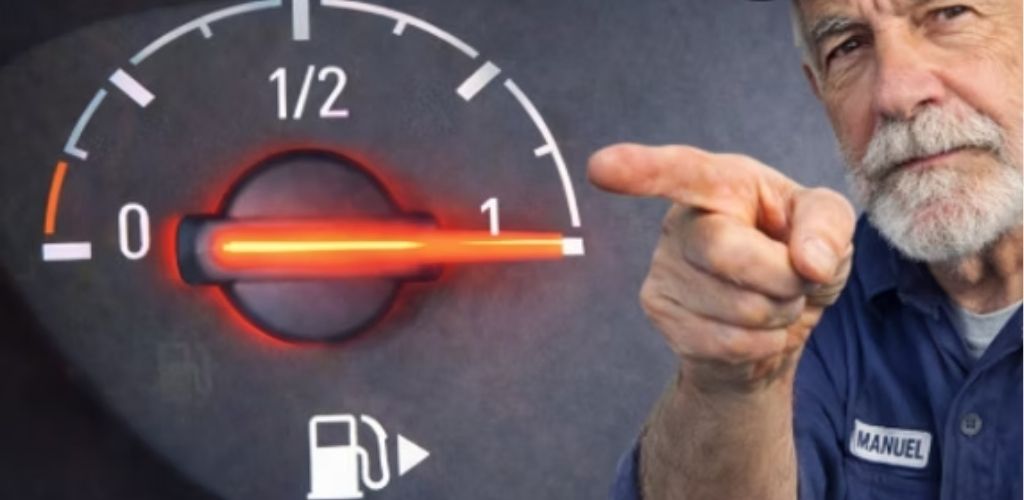
The myth that was born among mechanics and drivers
The idea comes from years ago, when many drivers believed that constantly filling the tank could:
- Damage the fuel system
- Generate excessive evaporation
- “Flooding” the engine
Today’s modern cars (electronic injection, EVAP systems, submerged pumps) work differently
And here’s the interesting fact:
Having a full tank is usually NOT harmful. In fact, in many cases it’s the opposite.
What really happens inside the fuel tank
The fuel pump is submerged inside the tank.
And what does the fuel do?
- Acts as a coolant
- Reduces internal wear
- Prevents the pump from running dry
When the driver is constantly driving on reserve:
- The pump gets hotter
- It can suck up sediment from the bottom
- The lifespan of the injection system is reduced.
In practical terms:
Always driving with low fuel can be expensive.
The only real mistake many people make when refueling
Here’s the detail that almost no one explains well.
It’s not bad to fill up the tank…
What can cause problems is overfilling after the first “click” of the gun.
That habit can:
- Saturate the canister
- Damage the vapor control system
- Generate a gasoline smell
- Turn on the check engine light
In other words, it’s not a full tank that damages the vehicle, but forcing in more fuel than necessary.
Does having a full tank make the car consume more fuel?
Yes, but in a minimal way.
A full tank weighs more, and that extra weight can:
- Slightly increase consumption
- To be almost imperceptible in daily use
It’s not something that justifies always driving on reserve.
In fact, the savings are so small that they often do not compensate for the wear and tear on the pump.
The ideal point recommended by many technicians
A fairly safe habit is:
- Refuel when the tank reaches ¼
- Avoid driving frequently on reserve fuel.
- Do not overfill after automatic shut-off
This balance helps to maintain:
- The pump is in good condition.
- The evaporation system is functioning correctly
- Stable engine performance
Something that almost no one mentions
In humid climates or during sudden temperature changes, an almost empty tank accumulates more air inside.
The result?
Condensation (water) may occur
Over time:
- Moisture appears in the fuel
- May affect injectors or combustion
With a fuller tank, that risk decreases.
A conclusion that shatters the myth
“Don’t drive with a full tank of gas” is not correct technical advice.
The truly intelligent thing to do is:
- Don’t always be on reserve
- Do not force extra fuel after clicking
- Maintaining a healthy fuel level
Sometimes the problem isn’t filling the tank… but doing it wrong.
And as with many automotive myths, what is repeated for years does not always coincide with what actually protects the vehicle.