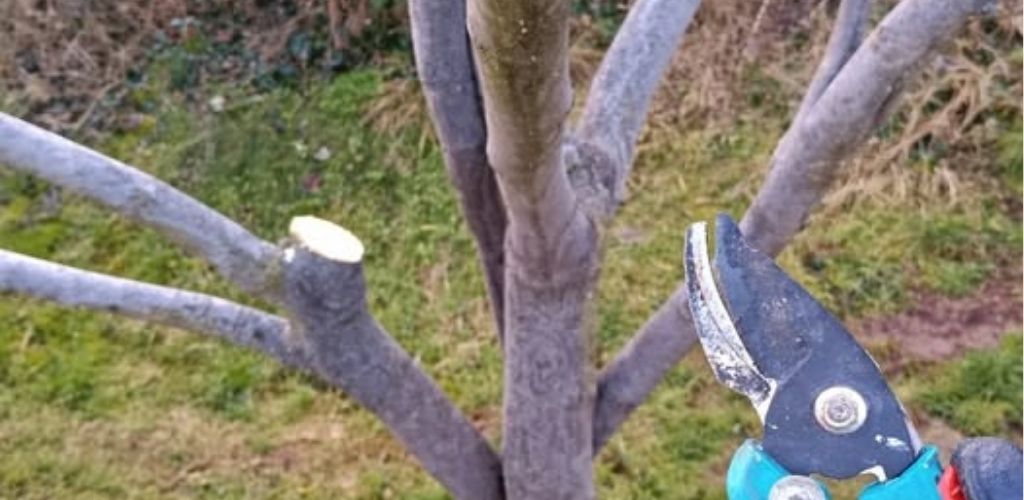
Many people believe that fig trees don’t need pruning because they grow naturally and produce fruit without intervention. However, if you want large, juicy, and abundant figs instead of small, dry ones, proper pruning makes a huge difference.
The ideal time to prune a fig tree is in late winter , just before new growth begins. At this stage, the plant is dormant, and pruning encourages strong and productive new growth in spring.
Before starting, it is essential to prepare clean and disinfected tools. This prevents the transmission of diseases between plants and ensures healthy cuts.
Which branches should you delete first?
Pruning should be done decisively, checking the tree branch by branch.
1. Remove branches that grow downwards
Branches growing downwards don’t receive enough light when leaves appear. Furthermore, they consume nutrients without contributing to the overall yield. These branches should be cut back to their base, not just trimmed.
2. Remove branches that are too horizontal or have a shallow angle
Branches that grow almost horizontally or at less than a 45-degree angle tend to bend excessively when laden with fruit. Fig wood is brittle and can break. Removing these branches prevents future breakage and makes garden maintenance easier.
Open the center of the tree to improve production
One of the most important secrets to achieving large figs is to allow light to reach all the branches .
3. Remove branches that grow inwards
Branches growing towards the center of the tree are shaded and produce small fruit or none at all. The center of the canopy should be open enough to allow air circulation and sunlight to pass through.
A simple rule:
The interior should be so clear that a bird could fly through it without touching the branches.
Ventilation prevents diseases and significantly improves fruit size.
Remove damaged or problematic branches
4. Remove dead branches or remains of old fruit
Dry debris can harbor fungi or infections. Although fig trees are hardy, removing this debris reduces risks.
5. If two branches compete, eliminate one.
When two branches grow too close together or overlap, they compete for resources. In these cases, it’s best to choose the stronger or better-oriented branch and remove the other.
How to treat young shoots
Many small shoots often appear at the tips of large branches.
Although young shoots are productive, it is not advisable to leave them all.
- Remove the ones that grow downwards
- Remove those that grow inwards
- Keep the ones that grow outwards
This directs the tree’s energy towards fewer, but more productive, branches.
You should also remove the shoots that grow from the base of the trunk, called suckers, as they only consume nutrients.
Tree shape: shrub or small tree
Fig trees can be cultivated in two ways:
- Like a shrub with several trunks
- Like a tree with a single main trunk
The final shape depends on how it is pruned during the first few years.
Many gardeners prefer the small tree shape because it makes harvesting easier, improves ventilation, and maintains an attractive ornamental appearance.
An important detail about the roots of the fig tree
Before planting a fig tree, you should know that it has a very aggressive root system.
Its roots seek moisture and can spread extensively, both in depth and laterally. If planted too close to a house, it can affect foundations or installations.
For safety, it is recommended to plant the fig tree at least 5 meters away from any building .
Tips and recommendations
- Always prune at the end of winter.
- Use sharp and disinfected tools.
- Don’t be afraid to remove branches: firm pruning improves production.
- Always prioritize the branches that receive the most sun.
- Keep the center of the tree open to allow air and light in.
- Regularly remove suckers and dead wood.
- If you live in cold areas, protect the base of the tree with mulch or cover.
Proper pruning of a fig tree not only improves its shape but also significantly increases the size, quality, and quantity of its fruit. With good light, ventilation, and a balanced structure, the tree will respond each season with more abundant and healthier harvests.