Why PVC Pipes Seem Impossible to Unstick: The Science and the Secret Trick
Before discussing the solution, it’s essential to understand why traditional pulling or twisting never works. PVC glue isn’t actually “glue” in the traditional sense; it is a solvent cement. Its primary ingredients—typically Tetrahydrofuran (THF), Methyl Ethyl Ketone (MEK), and Cyclohexanone—act as a chemical welding agent. When you apply the solvent, it softens the top layers of the plastic, allowing the molecules of the pipe and the fitting to merge into a single, solid piece. Once the solvent evaporates, the two parts become one.
The Professional Trick: Using Controlled Heat
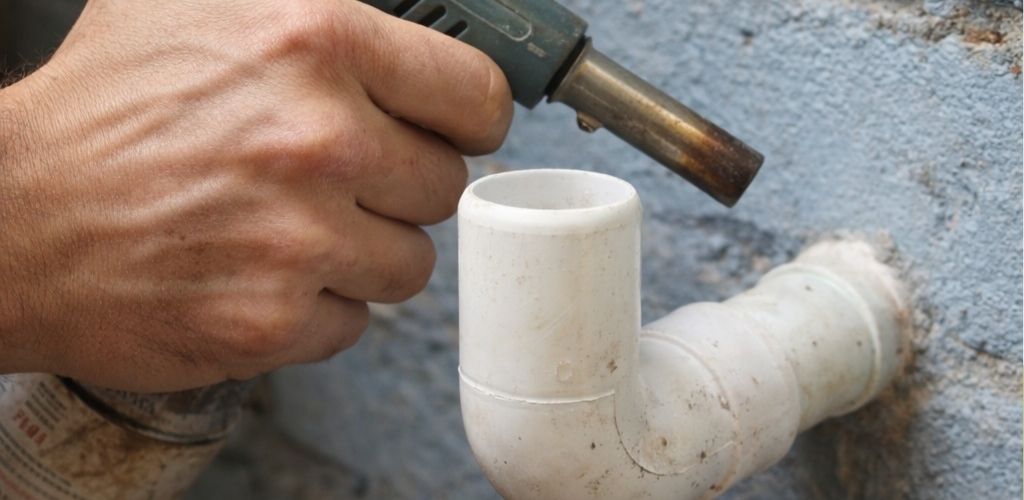
Because PVC is a thermoplastic, it becomes flexible when exposed to heat. This is the secret professionals use to reverse the “permanent” bond. By applying controlled heat to a joint, the plastic softens, the chemical weld loses its rigidity, and the inner pipe can be carefully deformed and removed. This method is a lifesaver when you need to salvage an expensive fitting or when the pipe is buried deep inside a wall.
Step-by-Step: How to Recover a PVC Fitting
If you have a glued joint that needs to come apart, follow this general procedure used by master plumbers:
- Apply Heat: Use a heat gun or a small torch (with extreme caution) to warm the outside of the fitting.
- Monitor Flexibility: Wait until the plastic becomes slightly pliable.
- Separate the Layers: Insert a flat-head screwdriver between the pipe and the fitting.
- Peel and Remove: Instead of trying to pull the whole pipe out, use pliers to peel the softened inner pipe away from the fitting walls in sections.
- Clean the Surface: Once the old pipe is out, use fine sandpaper to remove any leftover residue, preparing the fitting for a new connection.
| Method | Best For | Risk Level |
| Heat Extraction | Salvaging expensive fittings | Moderate (Risk of deformation) |
| Cutting & Coupling | Quick repairs in open spaces | Low (Very safe) |
| Internal Cutting | Pipes stuck inside walls | Moderate (Requires precision) |
| Total Replacement | High-pressure water lines | None (Safest option) |
When to Use This Method (and When to Avoid It)
While this trick is popular, it isn’t always the right choice. It is ideal for sanitary systems, such as drains, vents, and waste lines, where a slight imperfection in the fitting won’t cause a catastrophic failure. However, for high-pressure water lines, the precision of the joint is critical. If you overheat the fitting, you may warp its diameter, leading to leaks under pressure. In those cases, cutting the pipe and using a new coupling is still the gold standard for safety.
Risks Many Tutorials Don’t Mention
Success with this technique requires patience. If you apply too much heat too quickly, you will char the plastic or melt the fitting beyond repair. Furthermore, older PVC pipes can become brittle over time; trying to force them apart might result in the fitting cracking rather than softening. Always assess the value of the part versus the time spent. If the fitting costs only a few cents and is easily accessible, it is usually better to simply replace it.
The Wisdom of the Trade: Knowledge Beyond the Manual
This technique reveals a fascinating truth about technical trades: the best solutions often aren’t found in official manuals but in years of trial and error on the job site. Master plumbers have known for decades that if a material can be melted to join, it can be softened to separate. Understanding the logic of the materials you work with allows you to solve problems in five minutes that might otherwise require breaking down a wall. It’s about working smarter, not harder.
Did you find this plumbing hack useful for your next DIY project? We love sharing the hidden secrets of the trades that save you time and money. If you enjoyed this guide, please subscribe to our page, give this post a like, and share it with anyone currently facing a plumbing nightmare. Your support helps us keep sharing these expert tips!
Have you ever tried the heat-gun trick on PVC, or do you have another “secret” plumbing tip? Tell us your success stories (or your biggest DIY fails) in the comments below!