The Perfect “Revenge”: Why You Should Never Suggest a Wooden Fence to a Friend
Do you want to play a long game of “revenge” on someone? Forget about slashing tires or ruining business deals. If you want them to lose their nerves, time, and money while you remain the “supportive friend,” simply wait until they start building a house and casually suggest a wooden fence. To make it convincing, show them a stylish, eco-friendly photo of natural timber. Tell them it’s “organic,” “breathable,” and far superior to “boring” metal sheets. Claim they only need to paint it once every ten years. Then, sit back and watch as the elements take their toll.
The Harsh Reality of Timber in Changing Climates
The truth is that wood, once cut and installed as a fence, faces a constant battle against sun, snow, wind, and rain. Even with expensive protective coatings, the first signs of decay usually appear within two to three years. What starts as a “noble patina” quickly turns into the look of an old, rotting barn. UV rays and moisture are the ultimate enemies of dead wood. While a living tree thrives in the rain, a fence board begins a slow, inevitable march toward becoming firewood. Even high-end European stains often fail to stop the graying process, merely delaying the inevitable for a season or two.
Wood Maintenance: Traditional vs. Pro Methods
| Method | Effectiveness | Safety | Longevity |
| Standard Paint/Stain | Moderate | High | 2–3 years before peeling |
| Household Bleach | High (Visual only) | Low (Toxic/Corrosive) | Damages wood fibers |
| Oxalic Acid Solution | Superior | High (Biodegradable) | Restores original color |
| Industrial Oils | Moderate | Moderate | Requires annual re-application |
The 40-Year Secret: How They Keep Wood “New” Abroad
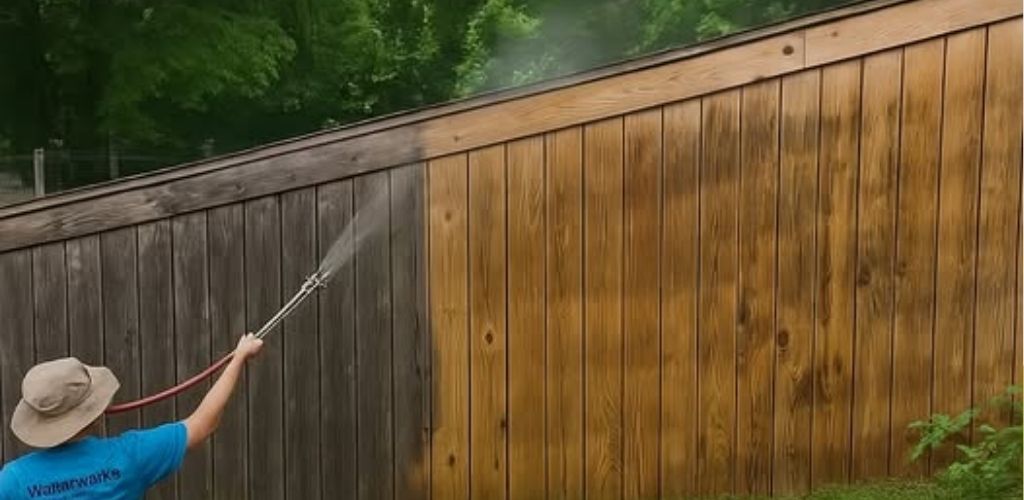
In some parts of the world, you’ll see wooden fences built in the 1980s that still look brand new. How is it possible that a 40-year-old fence looks like it was installed yesterday? While climate plays a role, the real secret isn’t a magical wood species—it’s a maintenance hack often sold as a “30-Second Cleaner.” This solution can turn a gray, weathered plank back into a bright, yellowish piece of timber that looks like it just came from the sawmill. You simply apply the liquid, wait half a minute, and the gray “dead” layer disappears without heavy sanding or expensive oils.
Why Bleach is a Disaster for Your Fence
Many DIY enthusiasts suggest using common household bleach (sodium hypochlorite) to clean wood. While it’s cheap and kills mold instantly, it’s a terrible choice for long-term care. Bleach destroys the lignin in the wood, making the fibers loose and brittle, which actually accelerates decay. Furthermore, it’s harsh on the lungs and can trigger allergies in children and pets. Professional restorers instead rely on a time-tested, 19th-century secret: Oxalic Acid. Unlike bleach, oxalic acid restores the natural pH and color of the wood without compromising its structural integrity.
The DIY Recipe: How to Restore Your Fence for Pennies
Oxalic acid is usually sold in crystal form and is surprisingly affordable. To create your own professional-grade wood restorer, simply mix 1 kg of oxalic acid crystals into 10 liters of warm (not boiling) water. Pour the mixture into a standard garden sprayer and apply it to your gray fence. Within 30 seconds, the wood will brighten significantly. Let it dry for a day or two, and you’ll have a clean, “new” surface ready for a fresh protective coat. This organic acid is biodegradable, won’t burn your lawn, and is much safer for your garden’s ecosystem than harsh industrial chemicals.
Conclusion: Old Knowledge for Modern Homes
It’s a mystery why this effective method was largely forgotten during the 20th century. Perhaps as private home construction took a backseat, so did the specialized knowledge of master carpenters. However, these old-school restoration techniques often work far better than “brand-name” chemistry that costs a fortune. By using a simple acid wash, you can keep a wooden fence looking beautiful for decades instead of years. So, if you did “accidentally” convince your friend to install wood, maybe show them this trick—once they’ve suffered just enough!
Did this wood restoration hack save your weekend project? We’re dedicated to bringing you the best DIY construction secrets and home maintenance tips to help you save money and build better! Please subscribe to our page for more expert guides, give us a like, and share this post with your fellow homeowners. Have you tried restoring old wood before, or do you have a secret recipe of your own? Let us know in the comments below—we love learning from your experiences!