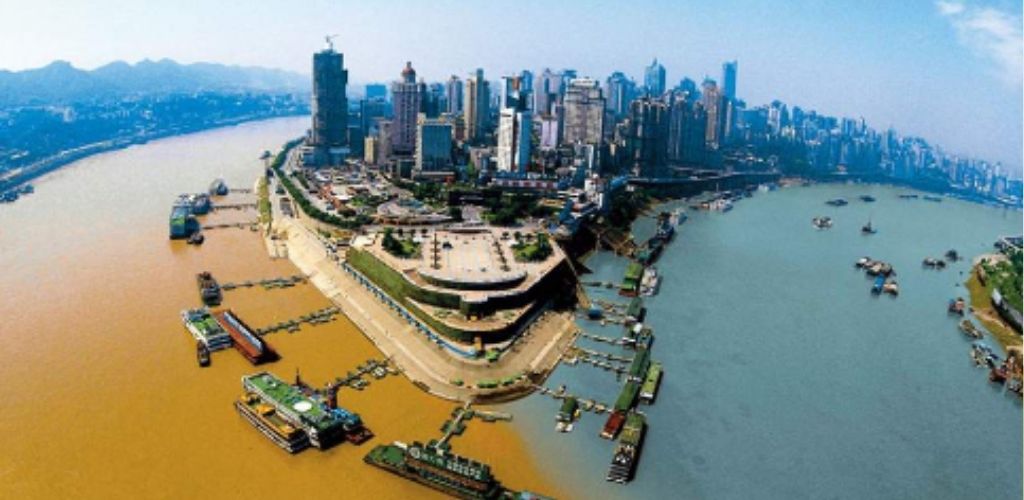
Nature’s Liquid Borders: Why Some Rivers Refuse to Mix When They Meet
Have you ever seen a photograph of two rivers flowing side by side, yet separated by a perfectly straight line of different colors? This stunning visual isn’t a digital trick; it is a fascinating natural occurrence explained by hydrology. Scientists point out that this “border” is caused by significant differences in the water’s composition. Each river possesses its own unique salinity, temperature, and density. These physical characteristics act like invisible walls, preventing the two massive bodies of water from blending immediately upon contact.
(Space for Advertisement Block)
The Science of the Halocline: Understanding Water Density
This specific phenomenon is professionally known as a halocline. A halocline typically occurs when two connected bodies of water have a stark contrast in their chemical properties—most notably their salt content. However, the term is often used more broadly to describe the visible boundary where two distinct water masses collide. Factors such as the speed of the current, the amount of sediment (silt) carried by each stream, and even the local climate play a role in how long these rivers remain separated before finally merging into a uniform flow.
World-Famous River Confluences You Must See
Across the globe, there are several iconic locations where tourists gather to witness this natural artistry. These spots offer a bird’s-eye view of how diverse our planet’s waterways truly are. From the deep jungles of South America to the high-tech cities of Asia, these confluences represent the raw power of nature’s chemistry. Seeing the sharp contrast between a “black” river and a “yellow” river is an experience that stays with a traveler forever.
Top Breathtaking River Confluences Around the World:
| Location | Rivers Meeting | Unique Visual Contrast |
| Chongqing, China | Jialing and Yangtze | Clear blue meets muddy brown |
| Devprayag, India | Alaknanda and Bhagirathi | Turquoise glacial water meets deep green |
| Manaus, Brazil | Rio Negro and Solimões | Black tea-colored water meets sandy tan |
| Passau, Germany | Danube, Ilz, and Inn | A rare meeting of three distinct colors |
| Geneva, Switzerland | Rhone and Arve | Vibrant blue meets milky grey |
| Utah, USA | Green and Colorado | Emerald green meets reddish-orange |
Exploring the Meeting of Three Rivers in Europe
One of the most geographically unique spots is found in Germany, where the Danube, the Ilz, and the Inn rivers all converge. This rare “triple confluence” is a masterpiece of European hydrology. The Inn, coming from the Alps, is a milky green; the Danube is a steady blue; and the Ilz, coming from a peat moor, is a deep, dark black. For a few kilometers, you can see all three colors flowing in a single channel, creating a liquid rainbow that serves as a major landmark for the region.
Why This Natural Phenomenon Captivates Travelers
The halocline and similar confluences are more than just scientific curiosities; they are major tourist attractions that draw thousands of visitors every year. People are naturally drawn to these clear boundaries because they challenge our perception of how liquids behave. Observing these sites from a high vantage point reveals the true scale of the earth’s water systems. It serves as a reminder that even though all water eventually leads to the sea, every river carries its own history, minerals, and identity along the way.
Stay Curious About the Wonders of Nature
The world is full of hidden natural “borders” just waiting to be explored. Understanding the science behind these beautiful sights only makes them more impressive. We are committed to bringing you the most fascinating facts and travel insights about our incredible planet. If you enjoyed this deep dive into the world’s most beautiful river confluences, please subscribe to our page, give this post a “Like,” and share it with your friends! Have you ever visited one of these amazing places? Share your photos or stories in the comments below—we’d love to hear about your adventures!