Is Your Rice Authentic? 6 Simple Home Tests to Ensure Food Safety
In recent years, global conversations about food purity have led many to question the authenticity of pantry staples, including the rumored existence of “synthetic” or “plastic” rice. While large-scale occurrences of such products are rare, being a conscious consumer is always a smart move. Understanding how to verify the quality of your grains not only provides peace of mind but also ensures that your family is consuming nutrient-dense, natural food.
Checking the integrity of your rice doesn’t require a laboratory. By using basic kitchen science, you can identify the physical and chemical properties of genuine grains. Natural rice is composed primarily of starch, which reacts in very specific ways to moisture, heat, and pressure. If your rice deviates from these patterns, it may be a sign of low quality or heavy processing.
The Quick Density and Fire Checks
The easiest way to start your investigation is the Water Immersion Test. Because natural rice is denser than water, a tablespoon of genuine grains will sink immediately to the bottom of a glass. If you notice grains floating persistently on the surface, it could indicate a lower density often associated with synthetic fillers. This is a non-destructive way to quickly scan a new bag of rice.
Another revealing method is the Combustion Test. Using a lighter or a match, carefully attempt to burn a few dry grains. Natural rice is a cereal; it will char, smell like toasted grain, and eventually turn into black ash. In contrast, any synthetic material containing plastic or heavy resins will emit a sharp, acrid chemical odor and may even melt or drip as it burns.
Observing Reactions to High Heat
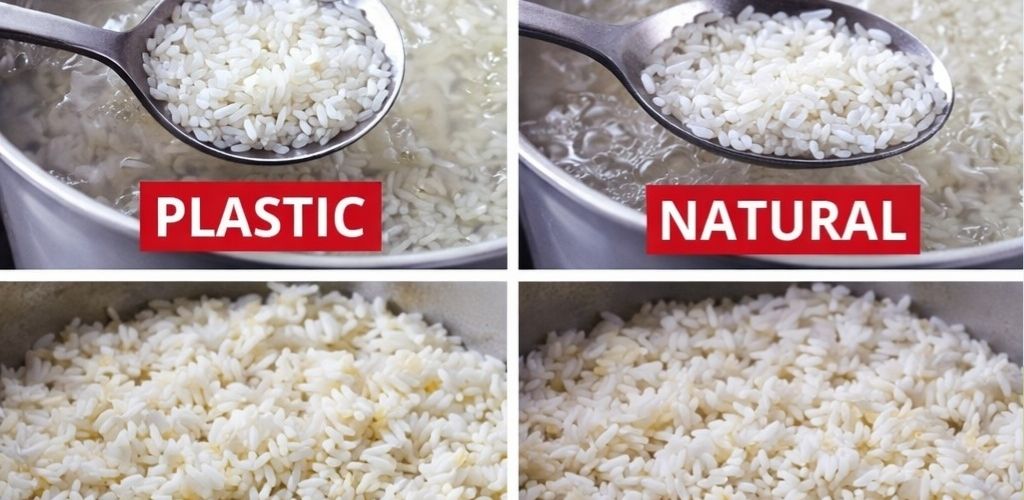
Cooking is where the true nature of the grain is revealed. When you perform the Boiling Test, pay close attention to the surface of the water. Natural rice releases starch, which creates a slightly cloudy or milky appearance in the pot. However, if a thick, plastic-like film or unusual residue forms on top of the boiling water, it is a significant red flag regarding the grain’s purity.
Quick Reference: Rice Quality Indicators
| Test Method | Natural Rice Result | Suspicious Result |
| Water Test | Sinks to the bottom | Floats on the surface |
| Hot Oil | Fries or pops slightly | Melts into a sticky mass |
| Crushing | Turns into white powder | Remains lumpy or resists |
| Fungus Test | Develops mold over time | Stays unnaturally “fresh” |
The Oil and Mechanical Strength Tests
For a more intensive check, try the Hot Oil Test. Drop a few grains into a frying pan with very hot oil. Genuine rice will begin to cook, expand, or even “pop” slightly, similar to how popcorn behaves. Because synthetic materials cannot withstand high frying temperatures without losing their structural integrity, fake grains will typically melt and form a sticky, congealed layer at the bottom of your pan.
You can also use physical force with the Mortar and Pestle Test. When you crush natural rice grains, they should break down into a fine, white, starchy powder. This is due to the brittle nature of dried starch. If the grains are difficult to crush, feel “rubbery,” or leave behind a weirdly colored residue instead of white powder, the composition of the grain is likely compromised.
The Biological Longevity Test
Perhaps the most definitive proof of natural origin is the Mold Growth Test. Nature eventually reclaims organic matter. To perform this, boil a small amount of rice and place it in a sealed container in a warm spot for several days. Authentic, organic rice will inevitably develop mold or signs of fermentation. If your cooked rice looks exactly the same after five days in the heat, it suggests the presence of powerful preservatives or inorganic materials.
By following these simple steps, you can navigate your grocery shopping with much more confidence. While the “plastic rice” scare is often exaggerated, these tests remain excellent tools for assessing the overall quality and freshness of the grains you buy. Always try to source your rice from reputable brands and trusted suppliers to ensure you are getting the best nutrition possible.
A Final Word on Food Integrity
In an era of complex food supply chains, being an informed cook is your best defense. These traditional “home lab” techniques empower you to take control of what goes on your dinner plate. Remember, healthy living starts with high-quality ingredients. By taking a few extra minutes to verify your staples, you ensure that every meal you serve is both delicious and safe for your loved ones.
Did you find these food safety tips useful? If you want to see more kitchen hacks, pantry guides, and health alerts in your feed, make sure to subscribe to our page! We appreciate every like and love it when you share our posts with your friends—help your community stay informed and eat safely. Have you ever noticed anything unusual about your rice? Share your experiences and questions in the comments below!