The Secret to Giant Tomatoes: Why Deep Planting is a Game-Changer for Your Garden
Many gardeners start the season with high ambitions, only to end up disappointed by frail plants and a meager harvest. The common mistake isn’t a lack of water or fertilizer—it’s the way the plant is put into the ground. Most people treat tomato seedlings like flowers, digging a shallow hole and leaving the root ball near the surface. This creates a weak foundation that struggles during the heat of summer and fails to support the weight of heavy fruit.
To achieve a professional-level harvest, you need to understand what happens beneath the soil. A shallow root system cannot effectively draw water from deeper, cooler earth during July and August. This makes your tomatoes entirely dependent on constant manual watering and highly susceptible to temperature fluctuations. When a tomato plant fights just to survive, it pours its energy into staying alive rather than producing the large, juicy fruits you desire.
Deep Planting: Building an Underground Powerhouse
The key to an incredibly strong plant lies in its natural ability to grow “adventitious roots.” These are roots that sprout directly from the stem wherever it touches moist soil. By burying a large portion of the stem, you essentially force the plant to build a massive, multi-tiered root system. When planting, don’t be afraid to remove the bottom leaves and bury the plant deep in the hole, leaving only about 15 centimeters of the top above ground.
While the plant may seem to stop growing upward for the first few days, don’t worry—it is busy investing all its energy into building an underground network. This massive root system eventually acts like a high-performance pump, pulling minerals and moisture from areas that shallow-planted tomatoes could never reach. Furthermore, a deeply anchored stem provides incredible stability, ensuring the heavy bushes won’t snap under the weight of a record-breaking harvest or a sudden summer storm.
The Trench Method: A Professional Trick for Shallow Soils
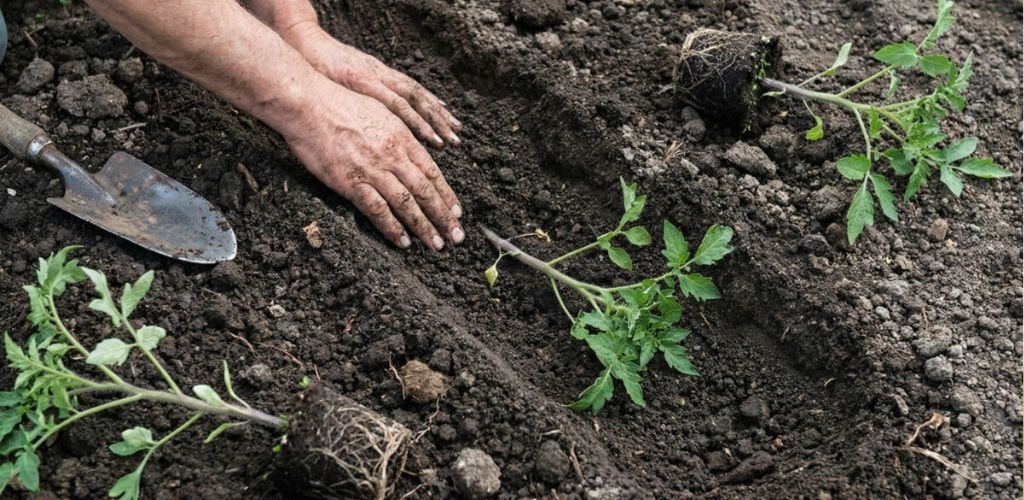
Sometimes, your garden soil might be too rocky or shallow to dig deep vertical holes. In this case, professional growers use “trench planting” or the sideways method. Instead of a vertical hole, dig a long, shallow trench. Lay the plant in the trench almost horizontally, carefully bending the top upward. This allows the entire length of the buried stem to produce roots while keeping the roots in the warmer, nutrient-rich top layer of soil.
Nature will do the rest of the work for you. Within 24 to 48 hours, the tip of the plant will naturally straighten itself toward the sun. This process creates a wide, horizontal base that is exceptionally resistant to drought. Because the roots are spread across a larger surface area, they can capture every drop of rain and every bit of compost you’ve added to the topsoil, leading to explosive growth and healthier foliage.
Tomato Planting Methods Comparison:
| Feature | Standard Planting | Deep/Trench Planting |
| Root Mass | Small, localized | Massive, multi-layered |
| Drought Resistance | Low (needs daily water) | High (taps deep moisture) |
| Nutrient Uptake | Limited to topsoil | Maximum (deep & wide reach) |
| Stem Stability | Requires heavy staking early | Naturally anchored & sturdy |
Optimizing Soil Quality and Sun Exposure
While tomatoes are adaptable, the quality of your soil determines the final flavor of your crop. The ideal foundation is a light, organic substrate with excellent drainage. Heavy clay soils trap too much water, leading to root rot and fungal diseases. If you have access to garden compost, mix it directly into the planting hole. Humus provides the nitrogen boost needed for the initial growth spurt and introduces beneficial microorganisms that improve soil structure.
Sunlight is the engine that drives tomato production. To get that sweet, authentic home-grown taste, your plants need at least six to eight hours of direct light daily. The sun is responsible for the production of sugars and the red pigment lycopene, a powerful antioxidant. Avoid placing your tomato patch in the shadow of buildings or large trees; a south-facing spot where the soil warms up quickly is always the best choice for a high-yield garden.
Smart Watering and Fungal Disease Prevention
Watering tomatoes is a science that many underestimate. The most common mistake is overhead watering with a hose. Wet leaves combined with summer heat create the perfect breeding ground for “late blight” (Phytophthora), a fungus that can wipe out your entire crop in days. Always deliver water directly to the base of the plant, preferably in the early morning. This ensures the plant is hydrated before the midday sun hits and allows the soil surface to dry slightly by nightfall.
Consistent moisture is critical for fruit quality. Sudden heavy watering after a long dry spell causes the skin of the tomatoes to crack. During extreme heat waves, you might need to water twice a day, but always check the soil moisture a few centimeters below the surface first. If the ground is still wet, skip the watering; waterlogged roots suffer from a lack of oxygen, which often shows up as yellowing bottom leaves.
The Art of Pruning and Final Care
If left to grow wild, a tomato plant will create a giant bush full of leaves but very little fruit. The technique of “suckering”—removing the small shoots that grow in the crotch between the main stem and the leaves—is essential. By removing these side shoots, you force the plant to direct all its energy and sugars into the developing fruit clusters. For indeterminate (climbing) varieties, it’s best to keep the plant to just one or two main stems for better air circulation.
As the season progresses, ensure your support system (stakes or cages) is deep in the ground to handle the increasing weight. By late August, you can “top” the plant by pinching off the growing tip to stop vertical growth and speed up the ripening of existing green tomatoes before the first frost. Combining deep planting, strategic pruning, and consistent nutrition will turn your garden into a tomato jungle that will be the envy of the neighborhood.
Did you find these tomato growing tips helpful? We want to help you achieve the best harvest of your life! If you want to see more gardening secrets and DIY tips, make sure to subscribe to our page, give this post a like, and share it with your fellow gardeners! What is your favorite tomato variety to grow? Let us know in the comments below!