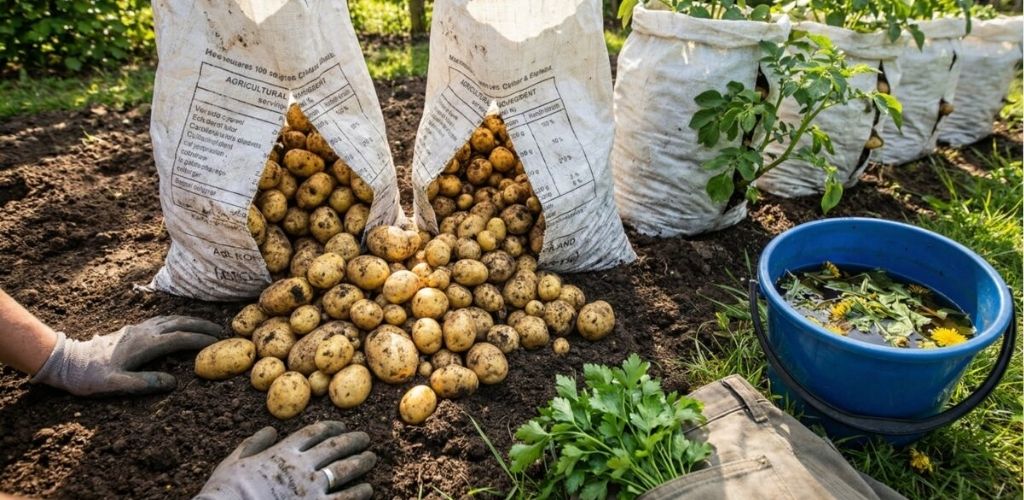
Growing Potatoes in Bags: The Secret to a Massive Harvest Without the Hard Labor
Every year, many gardeners struggle with heavy clay soil and an endless battle against weeds, only to find their final potato harvest isn’t worth the backbreaking effort. However, there is a revolutionary approach that can maximize the number of tubers in a minimal space without you ever needing to lift a heavy spade. Growing potatoes in bags hides a surprising secret that will completely transform your gardening season.
Traditional gardening often carries the constant risk of compacted soil. When the earth hardens, young tubers hit physical resistance, remaining small or becoming deformed. Furthermore, weeds spread uncontrollably in open ground, stealing precious moisture and nutrients. This results in the gardener spending more time hoeing than enjoying the growth of their plants. In a classic garden bed, it is also nearly impossible to ensure the ideal soil temperature in early spring, which is often the primary cause of seed rot.
How a Flexible Environment Boosts Tuber Production
Potatoes are not roots; they are modified underground stems (tubers) that require specific space for horizontal expansion. A bag provides the plant with a soft, pliable environment that offers no resistance. When the root system meets the boundary of the bag, the plant naturally responds by increasing the production of stolons—the shoots at the ends of which potatoes develop.
This process is far more intense in bags than in open ground. The plant feels “secure” and concentrates all its energy into fruit production instead of fighting through hard subsoil. Because the environment is contained, you have absolute power over what your vegetables consume. You can mix a “premium fuel” substrate consisting of high-quality compost, sand, and well-rotted manure, ensuring a perfect nutrient distribution that rain won’t wash away.
The Importance of Perfect Drainage and Aeration
One of the greatest enemies of root vegetables is standing water, which causes an immediate loss of oxygen. A growing bag with proper drainage holes functions as a perfect water management system. Excess moisture simply flows away, minimizing the risk of mold and bacterial rot. This is crucial during rainy weeks when potatoes in the ground often suffer from “wet feet.”
Thanks to the high porosity of the substrate, the roots have constant access to air. This factor dramatically speeds up the plant’s metabolism and accelerates its development by several weeks. Better aeration also means a healthier microbial life within the bag, which helps the plant stay resilient against common diseases.
Potato Growing Methods Comparison:
| Feature | Traditional Garden Bed | Growing in Bags |
| Soil Resistance | High (compacted earth) | Zero (soft substrate) |
| Weed Control | Constant manual labor | Virtually non-existent |
| Drainage | Depends on soil type | Excellent (controlled) |
| Harvest Ease | Hard digging required | Simply tip the bag over |
| Pest Risk | High (wireworms/slugs) | Minimal (isolated system) |
The Vertical Layering Technique for Triple Yields
The biggest “trick” to this method is the gradual addition of soil, known as “hilling” within a confined space. You start by filling the bag only one-third full and planting your seed potatoes. As soon as the plant grows about ten centimeters, you add another layer of substrate. This forces the stem to grow longer and produce multiple “floors” of stolons as it reaches for the light.
The result is a vertical plantation where potatoes form throughout the entire volume of the bag, not just in one horizontal plane. Growing potatoes in bags thus brings multiple times the yield from a single plant compared to traditional methods. By the time the bag is full, you have a concentrated tower of nutrients feeding dozens of developing tubers.
Protection Against Pests and Disease
Soil-borne pests like wireworms and nematodes are a nightmare for gardeners, ruining the appearance and quality of tubers. By using fresh, sterile substrate in bags, you eliminate this risk entirely. Since the soil is isolated from the surrounding ground, these pests simply cannot reach your crop. Your potatoes will remain smooth, clean, and free of unsightly insect tunnels.
This isolation also helps prevent the spread of potato blight from neighboring infected beds. If a disease outbreak occurs in your area, you can easily move your bags to a safer, more ventilated location. Additionally, the controlled environment allows for precise dosing of potassium—essential for starch formation—and wood ash, which can do wonders for the final flavor and size of the harvest.
Temperature Control and Urban Flexibility
Potatoes need stable warmth for optimal growth, which is often missing in the ground due to night-time cooling. The substrate in a bag warms up much faster in the sun than a massive garden plot. This warm soil wakes up dormant buds and stimulates faster cellular growth. If a late spring frost is forecasted, you can simply move the bags into a greenhouse or cover them with fleece.
If you live in an apartment or have a tiny yard, potatoes are no longer an unattainable luxury. Three or four bags on a balcony can provide enough fresh vegetables for the entire summer. This type of gardening is clean, aesthetic, and highly efficient. Once the harvest is over, you simply empty the bag, clean it, and store it for next year. Growing potatoes in bags combines plant biology with a modern need for efficiency—it’s the smartest way to garden today.
Are you ready to try the bag-growing method this season? We are dedicated to helping you achieve a lush, productive garden regardless of your space! If you want more innovative gardening hacks and DIY tips, make sure to subscribe to our page, give this post a like, and share it with your friends! What is your favorite potato variety to grow? Let us know in the comments below!