The Hidden Secret to Growing Stunning Orchids: Beyond Just Watering
Many people are unaware that orchids are among the oldest and most beloved flowers in the world. These exquisite plants continue to win over admirers with their unique shapes and diverse color palettes, exuding an aura of refined elegance. However, the most common question among indoor gardeners remains: how do you consistently get an orchid to bloom? To achieve professional results, we need to look closer at a specific growing trick that remains a mystery to most casual hobbyists.
While there are thousands of orchid species, the Phalaenopsis (or Moth Orchid) remains the most popular choice for homes and offices due to its elegant flair. Despite their beauty, these plants have a reputation for being somewhat temperamental. Growing them isn’t always a walk in the park, but there is a specific cultivation secret that can completely transform the health of your plant, making it look as vibrant as the day you bought it.
Why Traditional Soil Fails Your Orchids
To care for orchids properly, you must understand their unique biology. Most popular indoor orchids are epiphytes, meaning in nature, they grow on trees rather than in the ground. Planting them in standard potting soil is a common mistake that often leads to root rot. Instead, they require a medium that allows for maximum airflow. For optimal health, it is highly recommended to use a transparent glass or plastic container.
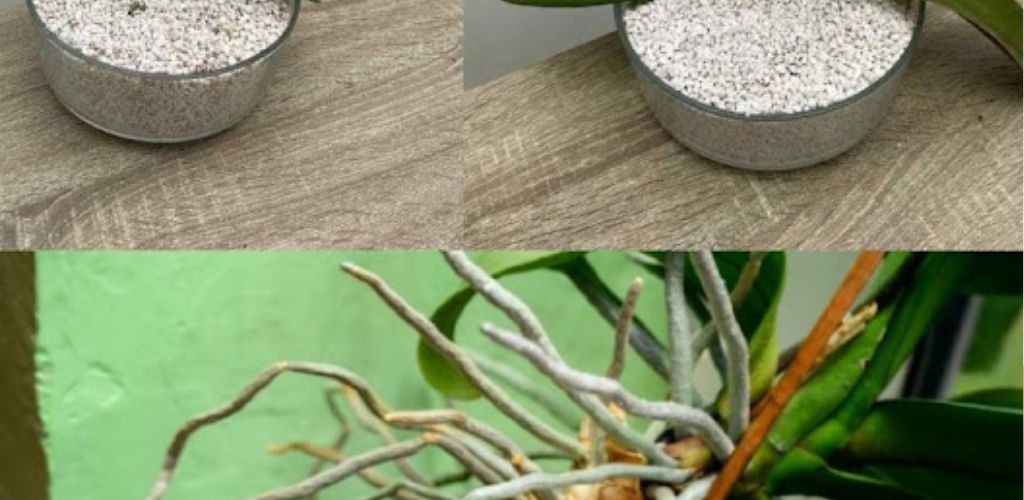
This transparency isn’t just for aesthetics; it allows for “root illumination.” You may have noticed a silvery-white covering on orchid roots—this specialized tissue helps the plant absorb moisture from the air and perform photosynthesis. By using a see-through pot, you can monitor the root color: vibrant green means they are hydrated, while silvery-grey indicates it’s time to water. This visibility ensures you provide the exact amount of hydration needed without drowning the plant.
The Professional’s Secret Ingredient: Perlite
Many enthusiasts are shocked to learn that a volcanic mineral is the key to orchid success. Instead of traditional dirt, professional nurserymen often utilize a substance called perlite. If you’ve ever seen small, white, lightweight balls in a potting mix that look like polystyrene, you’ve seen perlite. Unlike soil, perlite does not compact over time, which is the “hidden trick” to ensuring your orchid thrives during its entire growth cycle.
Because of its volcanic origin, perlite possesses exceptional thermal insulation properties, protecting the sensitive root system from sudden temperature fluctuations. More importantly, it encourages branches and new shoots to take root more effectively. It creates a stable environment where the plant feels secure enough to put its energy into producing those magnificent, long-lasting floral spikes rather than just struggling to survive in stagnant water.
Comparison: Traditional Potting vs. Perlite Method
| Feature | Standard Potting Soil | Perlite-Based Medium |
| Airflow | Low (Roots can suffocate) | High (Encourages root breathing) |
| Drainage | Holds too much moisture | Prevents water stagnation |
| pH Level | Can fluctuate over time | Neutral (Does not alter pH) |
| Longevity | Decomposes and settles | Inorganic and stays stable |
| Root Health | Higher risk of root rot | Promotes healthy root branching |
How Perlite Boosts Orchid Development
The primary reason perlite is so effective is its ability to prevent water from becoming stagnant. Stagnant water is the leading cause of death for indoor orchids, as it breeds bacteria and prevents the roots from “breathing.” Since perlite is porous and lightweight, it allows oxygen to reach the roots while maintaining just enough humidity to keep the plant happy. This mimicry of a soilless, airy natural environment is exactly what triggers a Phalaenopsis to feel healthy enough to bloom.
Furthermore, perlite is chemically neutral, meaning it won’t interfere with the specific fertilizers you use to encourage flowering. When you use this mineral, you’ll notice your orchids becoming quite leafy and robust right from the start. This structural support is essential for holding the weight of the heavy flower stems that orchids are famous for. It’s a simple upgrade to your potting routine that yields professional-grade results.
Final Tips for a Blooming Masterpiece
Mastering orchid care is about balancing light, water, and the right growing medium. By switching to a transparent container and incorporating perlite, you are already ahead of 90% of indoor gardeners. Remember to place your orchid in a spot with bright, indirect light—direct sunlight can scorch the leaves, while too little light will prevent blooming. With this volcanic “secret” in your gardening toolkit, you’ll be able to enjoy those elegant blossoms year after year.
Don’t let the delicate appearance of orchids intimidate you. Once you understand the importance of root aeration and the role of perlite, these exotic plants become much easier to manage. Give this method a try, and you will be amazed at the vibrant, healthy transformation of your floral collection!
Did this secret trick help your orchids finally bloom? We love sharing unique gardening insights to help your home go green! If you found this guide helpful, please subscribe to our page for more plant care tips, give us a like, and share this post with your friends and fellow flower lovers. Do you have a favorite orchid variety? Let us know in the comments below!