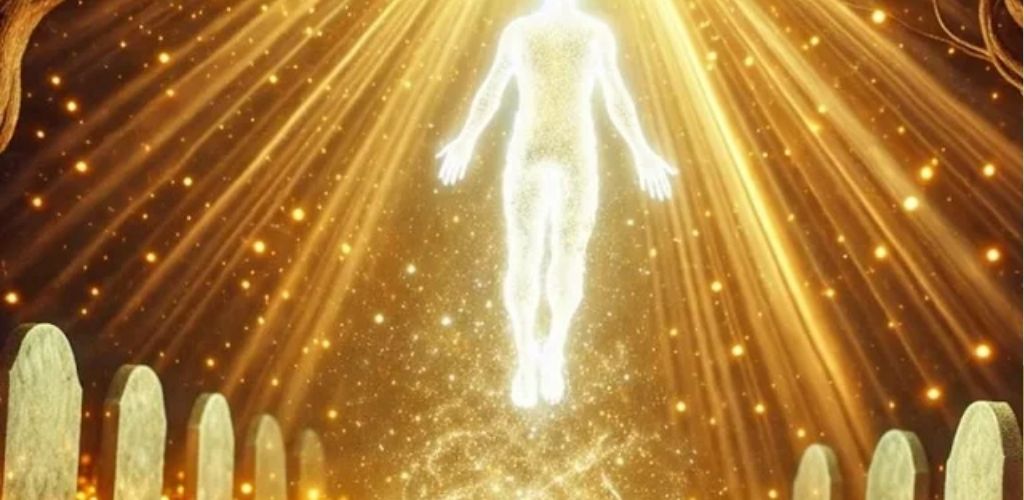
The Soul’s Journey After Death: How Long Does It Stay on Earth?
The question of what happens to the soul after the physical body ceases to function is perhaps the oldest mystery in human history. Whether we ponder it in moments of quiet reflection or during the painful process of losing a loved one, the inquiry remains: Does the essence of a person vanish instantly, or does it linger?
Across every civilization and era, humanity has sought to map this invisible journey. While modern science focuses on the biological end, spiritual traditions worldwide view death not as a final curtain, but as a profound transformation. This transition is rarely seen as an instantaneous jump; instead, it is described as a gradual process of letting go, moving from the physical realm into something new.
Death as a Process, Not a Moment
In almost every major spiritual path, death is understood as a transformative cycle rather than a sudden stop. Just as birth is an intricate process of entering the world, death is viewed as a deliberate withdrawal. The soul does not simply cease to be; it undergoes a period of adjustment, reflection, and preparation for the next stage of its existence.
This shared understanding offers immense comfort to those left behind. The sense that a loved one’s presence is still “felt” in the days following their passing is not dismissed as mere imagination. Instead, many cultures believe this is the soul receding slowly, like a tide leaving the shore, allowing both the living and the departed time to say their final goodbyes.
How Different Traditions View the Transition Period
Each major belief system provides a unique timeline for the soul’s departure. These perspectives offer a fascinating look at how different cultures perceive the “waiting room” between life and what comes next.
| Tradition | State of the Soul | Typical Timeframe |
| Christianity | Presence with God or Purgatorial preparation | Immediate to variable |
| Islam | Entering Barzakh (the barrier) | Until Judgment Day |
| Judaism | Period of purification and reflection | Up to 11–12 months |
| Hinduism | Transition from Preta (restless) to Ancestors | 10–30 days |
| Buddhism | The Bardo state between rebirths | Exactly 49 days |
| Indigenous | Guidance toward the spirit world | Often 4 days |
In the Christian faith, many believe in an immediate transition to be with Christ, while Catholic tradition emphasizes a state of preparation called Purgatory. In contrast, Islamic teachings describe Barzakh, a distinct middle realm where the soul remains aware of the living but is separated by an invisible veil until the day of resurrection.
The Importance of Rituals and Guidance
A common thread across Hinduism, Buddhism, and Indigenous traditions is the belief that the living play a crucial role in the soul’s journey. Rituals such as the Antyesti in Hinduism or the reading of the Bardo Thodol (Tibetan Book of the Dead) in Buddhism are designed to guide the soul. These ceremonies act as a map, ensuring the spirit does not become confused or “earthbound.”
It is often taught that deep attachments to physical places or unresolved business can delay a soul’s departure. This is why many cultures emphasize the importance of prayer, offerings, and forgiveness. By releasing our own grip on the departed, we help them find the peace and strength required to move toward their ultimate destination, whether that be rebirth, paradise, or union with the Divine.
Comfort for the Living: Sensing the Connection
For those in mourning, understanding these timelines can be a source of deep peace. If you feel the presence of a loved one weeks after they have passed, many metaphysical traditions suggest that you are experiencing the natural “thinning of the veil.” This lingering connection is a phase of transition, reminding us that love is a force that transcends biological limits.
Ultimately, the soul’s time in the vicinity of Earth is temporary—a bridge between two states of being. While the form of the relationship changes, the bond itself does not break. As the soul moves forward on its path, it leaves behind a legacy of love and memory that continues to influence the world. Death is not the end of the story; it is simply the beginning of a new chapter in a much larger journey.
Hat Ihnen dieser Einblick in die Reise der Seele geholfen? Wir laden Sie herzlich ein, unsere Seite zu abonnieren, diesen Beitrag zu liken und ihn mit anderen zu teilen, die in schweren Zeiten Trost suchen könnten. Ihre Unterstützung hilft uns, weiterhin tiefgründige Inhalte zu teilen!