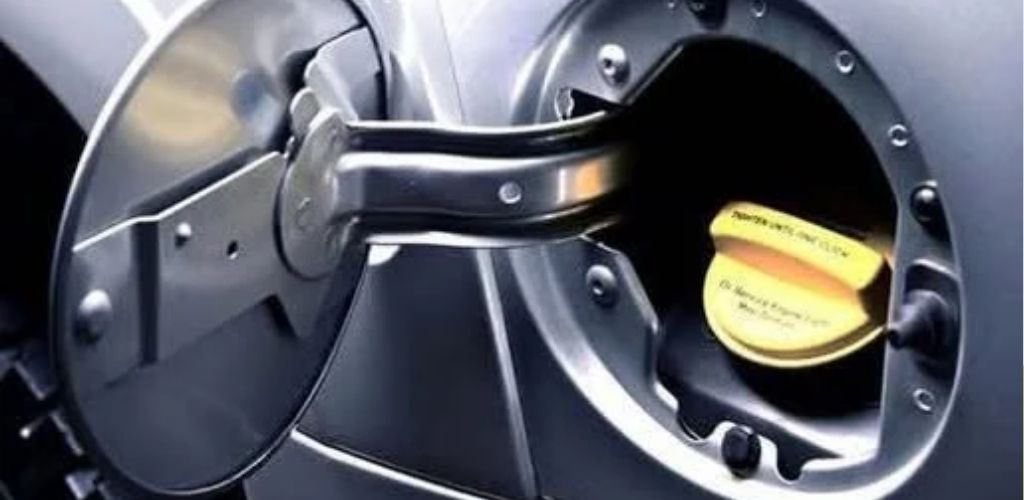
Weight Balance and Precision Engineering
In the early days of automotive manufacturing, engineers placed a high premium on weight distribution. Positioning the heavy fuel tank on the side opposite the driver (in right-hand traffic countries) helped balance the vehicle when only the driver was inside. While modern lightweight materials make this less critical today, these early considerations set the foundation for many long-standing design traditions.
Safety remains the ultimate priority. Engineers strive to place the fuel tank and filler neck in the most protected area, away from common impact zones. In the United States, for instance, statistics show that side-impact collisions occur more frequently on the left side due to two-lane road traffic patterns. Therefore, placing the tank on the right (passenger) side can be seen as a marginal safety advantage. However, these assessments vary by region and manufacturer.
Following the Path of Least Resistance
The physical route of the fuel filler neck often dictates the door’s location. This pipe must travel from the exterior cap to the tank, navigating a crowded undercarriage filled with the exhaust system, drivetrain, rear axle, and spare tire well. To avoid heat from the exhaust and to minimize manufacturing costs, designers typically run the filler neck straight down the side opposite the muffler.
This technical jigsaw puzzle means that if a car’s exhaust exits on the left, the fuel door will likely be on the right. Because different engine layouts require different exhaust routing, we end up with the variety we see at the pumps today. It is a matter of engineering efficiency over driver convenience.
The “Curb Theory” and Global Quirks
One of the most persistent explanations for fuel door placement is the “Curb Theory.” The logic is simple: the fuel door should be on the side away from the driver so that if you run out of gas on a busy road, you can refill the tank from the safety of the sidewalk (the curb) rather than standing in active traffic.
While this sounds logical, global differences complicate things. In countries with left-hand traffic (like the UK or Japan), this logic places the door on the left. In right-hand traffic countries (like the US or Germany), it should be on the right. However, manufacturers don’t always swap the tank side for export. Many Japanese brands like Toyota or Honda traditionally placed the tank on the left and kept it there even for the American market, resulting in a driver-side tank for US owners.
Why Standardization Remains a Dream
You might wonder why we don’t just pass a law to make every car the same. While it seems like a great idea for simplicity and rental car convenience, there are strong arguments against it:
| Factor | The Reality |
| Manufacturing Flexibility | Global vehicle platforms are used for both LHD and RHD markets. Forcing a side would increase production costs. |
| Design Sovereignty | Manufacturers protect their engineering freedom and resist unnecessary regulatory restrictions. |
| Safety Incentives | Since there is no proven statistical safety benefit of one side over the other, regulators have no reason to intervene. |
How to Never Forget Your Tank Side Again
Before you pull into the next station, use the nearly universal “cheat code” located right on your dashboard. Almost every car produced in the last 30 years features a small gas pump icon on the fuel gauge. Next to that icon, you will find a small arrow or triangle.
This arrow points exactly to the side of the vehicle where the fuel cap is located. It is a brilliant bit of subtle design that most drivers never notice until it is pointed out. Once you see it, you will never have to guess again, whether you are in your own car or a rental.
Next time you find yourself at the gas station, take a moment to appreciate the complex global industry that balanced safety, tradition, and cost to build your vehicle. That little arrow on your dashboard is your secret weapon against the chaos of the pump. It’s a harmless quirk in a world of increasing uniformity—a small reminder that our cars still have a few unique stories to tell.
Did this solve your gas station mystery? Subscribe to our page for more clever automotive hacks and insights! Like this post and share it with your friends so they never pull up to the wrong side of the pump again!