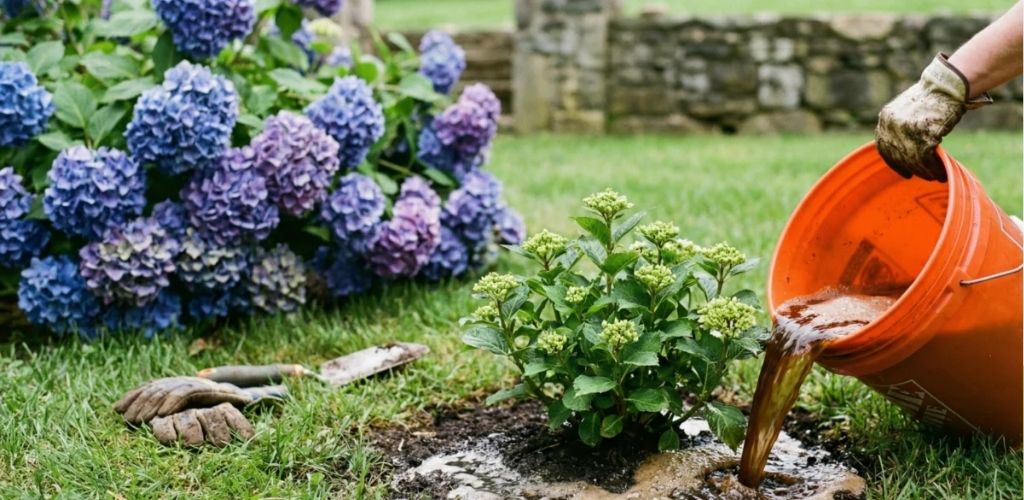
This month is the ultimate turning point for your garden—it determines whether your yard will be a vibrant explosion of color or a sea of dull green without a single blossom. By refining your approach to one common garden task, your April hydrangea care will reward you with unparalleled beauty. Many gardeners are unaware that right now, deep within the plant’s tissues, vital processes are unfolding that cannot be influenced once summer arrives.
Why the April Weeks are Crucial for Hydrangea Vitality
April represents the peak moment of rebirth and regeneration for hydrangeas following their winter dormancy. As soil temperatures begin to rise steadily, the root system is activated to intensely draw up nutrients. It is during this window that the plant “decides” how much energy to invest in lush green foliage versus the development of flower buds.
If the plant suffers from a lack of moisture or essential minerals during this time, its growth will stall significantly. A weakened hydrangea will spend the summer months merely trying to survive rather than producing the massive flower heads they are famous for. Every action you take in April has a much higher impact on the plant’s health than interventions made later in the season.
Mastering the Art of Spring Pruning
Pruning is perhaps the most debated topic among gardeners, and it is where the most irreparable damage occurs. The most frequent victim of incorrect cutting is the Hydrangea macrophylla (Bigleaf hydrangea), which blooms on “old wood.” If you prune this variety back to the ground in April, you are effectively cutting away all the buds the plant painstakingly developed during the previous autumn.
For these varieties, you must be extremely cautious. Focus only on “sanitary pruning”—remove only the dry, frost-damaged tips and the faded brown flower heads from last year. Always cut just above the first pair of healthy, green live buds that are visible on the stem. This ensures you leave the flowering potential intact while cleaning up the plant’s appearance.
A completely different rule applies to Hydrangea paniculata (Panicle hydrangea) or Hydrangea arborescens (Smooth hydrangea). These types bloom on “new wood,” meaning buds form on growth produced in the current season. For these, a strong April prune is actually desirable. Cutting them back significantly encourages the growth of sturdy stems and much larger, more vibrant flower clusters.
Hydrangea Fertilization: The Pillars of Success
Fertilization is the next pillar of success that cannot be overlooked. After a harsh winter, the soil is often depleted, and natural nitrogen levels are at their lowest. Hydrangeas are known for their “unquenchable hunger” for nutrients, making the first spring feeding a critical point in your gardening calendar.
It is ideal to use specialized fertilizers with controlled nutrient release, providing the plant with a steady food supply over several months. Nitrogen supports lush foliage in the first phase, while phosphorus and potassium ensure stem strength and future floral abundance. Always work the fertilizer gently into the soil around the root zone.
Hydrangea Care Quick Guide:
| Activity | Hydrangea Type | April Action |
| Pruning | Bigleaf / Oakleaf | Sanitary only (remove dead tips) |
| Pruning | Panicle / Smooth | Radical cut (stimulates new wood) |
| Fertilizing | All types | High-nitrogen + organic matter |
| Watering | All types | Deep soak during dry spring winds |
The Magic of Coffee Grounds for Deep Colors
If you are looking for an eco-friendly and inexpensive way to boost your plants, the answer is in your kitchen. Coffee grounds are practically a miracle elixir for these acid-loving shrubs. They contain valuable nitrogen, magnesium, and potassium, which are essential for the photosynthesis process.
Coffee grounds have a mild acidifying effect on the soil, which hydrangeas need to properly absorb micronutrients. Before use, always let the grounds dry thoroughly in the sun. Damp coffee can lead to mold growth in the garden bed, attracting unwanted fungal pathogens. In April, simply spread two to three handfuls of dry grounds around each bush and mix them lightly with the top layer of soil.
Managing Soil Moisture Without Root Rot
The name Hydrangea comes from the Greek word for water, indicating their high moisture requirements. In April, while the soil might seem damp from winter, spring winds can dry out the substrate surprisingly fast. Regular moisture checks are essential to maintain vitality.
Water early in the morning so the leaves have time to dry during the day, preventing powdery mildew. Direct the water stream to the roots and avoid wetting the flower buds or fresh leaves. Rainwater is the best choice because it lacks the calcium that raises soil pH and blocks iron absorption. However, be careful in heavy clay soils; if roots sit in stagnant mud without oxygen, they will begin to rot, causing leaves to yellow and wilt.
Mulching: Your Secret Weapon Against Dehydration
Following fertilization and watering, high-quality mulching is a step often underestimated in April. A layer of organic material acts as a perfect thermal and moisture insulator. It prevents rapid evaporation while protecting the roots from overheating during the first intense spring days.
For hydrangeas, shredded pine bark or peat is most suitable due to their acidic pH. This layer should be at least five to seven centimeters thick. Apply the mulch in a wide circle around the plant, but leave some breathing room directly at the base of the main stem to prevent rot. This layer will enrich the soil with humus as it decomposes and significantly reduce weed competition.
Protecting Young Buds from Late April Frosts
April weather is notoriously fickle, and nothing destroys the hope of a beautiful bloom like late-night frosts. Young hydrangea buds are full of water; a single dip below freezing can cause them to turn black and die. If the forecast predicts frost, take immediate action.
The best protection is a white non-woven garden fabric (fleece). Wrap the bush loosely and secure the fabric at the ground with stones or stakes. This material allows the plant to breathe while keeping the temperature underneath several degrees higher. Never use plastic foil, which can suffocate the plant or cause it to overheat as soon as the sun hits it. By protecting your plants now, you ensure they stay ready for their grand summer show.
If you found these gardening tips helpful, please subscribe to our page, give us a like, and share this post with your fellow garden lovers! Your support helps us grow and continue sharing expert advice for a more beautiful garden.