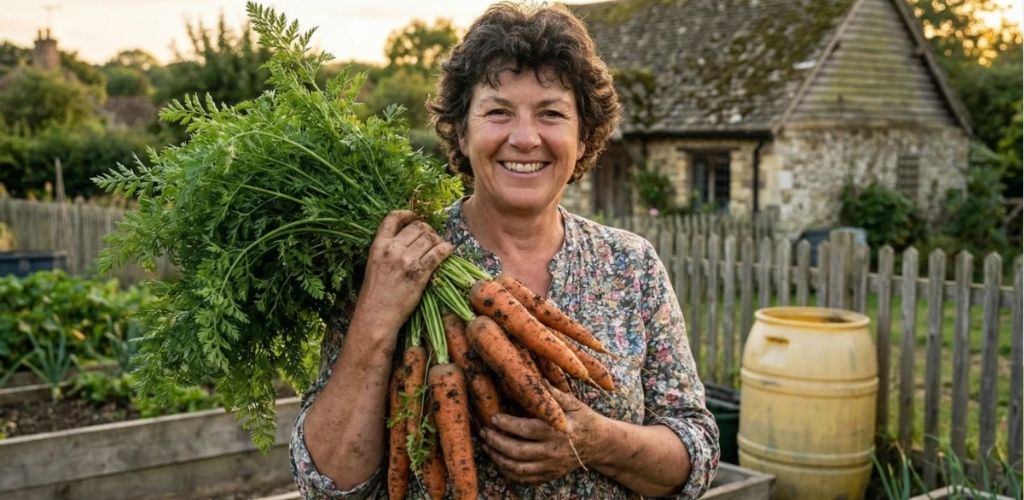
Many carrot growers know that frustrating feeling when, even two weeks after sowing, there are still no signs of life in the rows. However, there is a nearly forgotten trick for growing carrots successfully that will make your garden beds turn green in just a few days.
Carrots are a crop that typically requires an immense amount of patience because their germination is naturally slowed down by built-in defense mechanisms. While these mechanisms are vital in the wild, they represent an unnecessary obstacle for a gardener who desires quick results. The problem isn’t just uneven emergence, but also the weak vitality of young seedlings that often lose the battle against faster-growing weeds. If you understand the biology of the seed, you can “hack” this process and trigger a growth explosion.
Why Carrot Seeds Take Forever to Sprout
By nature, carrot seeds are coated in a high concentration of essential oils that act as a natural preservative. These oils prevent moisture from reaching the embryo until ideal survival conditions are met. In practice, this means the seed “sleeps” in the dry spring soil, waiting for heavy rains to gradually wash these oils away. If the spring is dry, the process stretches for weeks, and the plants emerge damaged or weak.
These essential substances, primarily terpenes, are vital for wild carrots but are a hindrance in a cultivated garden. Removing them prematurely is the key step that separates successful growers from those who are constantly waiting. Growing carrots becomes much more predictable when you take control of this preparation phase. While there are several methods to flush these oils, one stands out for its efficiency and zero cost.
The Genius “Buried Bag” Trick for Rapid Germination
About ten to twelve days before your planned sowing date, gather all the seeds you intend to use this season. Wrap them in a piece of clean gauze or thin linen, ensuring they have enough space inside to move freely. Tie the bundle securely and bury this little “seed pouch” in moist garden soil, ideally at a depth of 20 to 25 centimeters (about 8–10 inches). At this depth, the soil remains constantly moist, and the temperature is more stable than on the surface.
During these days, a quiet revolution takes place underground. The surrounding moisture slowly but surely draws the essential oils out of the seed coats. The seeds begin to absorb water, swell, and essentially prepare for an immediate start. When you carefully dig up the bundle after 12 days, you will see that the seeds are visibly larger and more vibrant. This process effectively replaces the first two weeks that the seeds would have otherwise spent sitting idly in a dry row.
Precision Sowing with the Starch Method
Many gardeners struggle because carrot seeds are tiny and dark, making them difficult to place accurately in the soil. This often results in overcrowded rows that require tedious thinning, which can damage the roots of neighboring plants. To solve this, take your pre-soaked seeds, place them in a bowl, and lightly dust them with ordinary potato or corn starch. The white powder immediately sticks to the damp surface, making the seeds stand out clearly against the dark soil.
Comparison of Sowing Methods:
| Method | Ease of Spacing | Germination Speed | Thinning Required |
| Traditional Dry Sowing | Difficult (seeds are tiny/dark) | 14–21 Days | High (labor-intensive) |
| “Buried Bag” + Starch | Very Easy (seeds are visible) | 3–5 Days | Minimal (saves time) |
The starch prevents the seeds from sticking together, allowing you to place them at precise intervals of two to three centimeters. This dramatically reduces the need for thinning later, saving you time and energy. Furthermore, the starch serves as a very mild initial energy source for beneficial soil bacteria in the immediate vicinity of the new sprout.
The Golden Rule of Watering and Natural Fertilization
The biggest mistake you can make after sowing carrots is heavy overhead watering with a can or hose. Water hitting the soil surface destroys its structure and, after drying in the sun, creates a hard, impenetrable crust. This crust acts like a concrete armor that delicate carrot sprouts cannot break through. To avoid this, water your furrows deeply before sowing and let the water soak in. Place the seeds in the moist bed and cover them exclusively with dry, fine soil—and do not water from the top again until they sprout.
To ensure your carrots are not only large but exceptionally sweet, they need a specific combination of nutrients. Successful carrot cultivation relies on potassium and phosphorus. You can create a powerful organic fertilizer by mixing:
- 10 grams of fresh yeast
- 1 teaspoon of sugar
- 1 liter of lukewarm water
- 3 tablespoons of wood ash (a premium source of natural potassium)
Let the yeast mixture ferment for two hours, add the ash, then dilute the concentrate 1:5 with water. Water your carrot rows with this mixture every three weeks for the best results.
Practical Tips for Giant, Flawless Carrots
The secret to long, straight carrots is the depth and fluffiness of the soil. If a root hits hard clay or a stone, it will immediately twist or fork. If you have heavy soil, mix in a generous amount of sand before planting to improve drainage. Additionally, watch out for the carrot rust fly. To prevent infestations, alternate your carrot rows with rows of onions; the strong scent of the onions will reliably repel the flies.
By using these proven procedures, you will achieve results incomparable to traditional “blind” sowing. A little planning with a bag in the ground and a bit of starch in a bowl will lead to a record-breaking carrot harvest this year. The resulting sweet taste and crunch of your home-grown carrots will be the best reward for your effort and patience throughout the season.
If you found these carrot-growing hacks useful, make sure to subscribe to our page for more expert gardening advice! Please give us a like and share this post with your fellow gardeners to help them boost their harvests too!