The Dual-Flush Mystery: Why Modern Toilets Have Two Buttons and How to Use Them Correctly
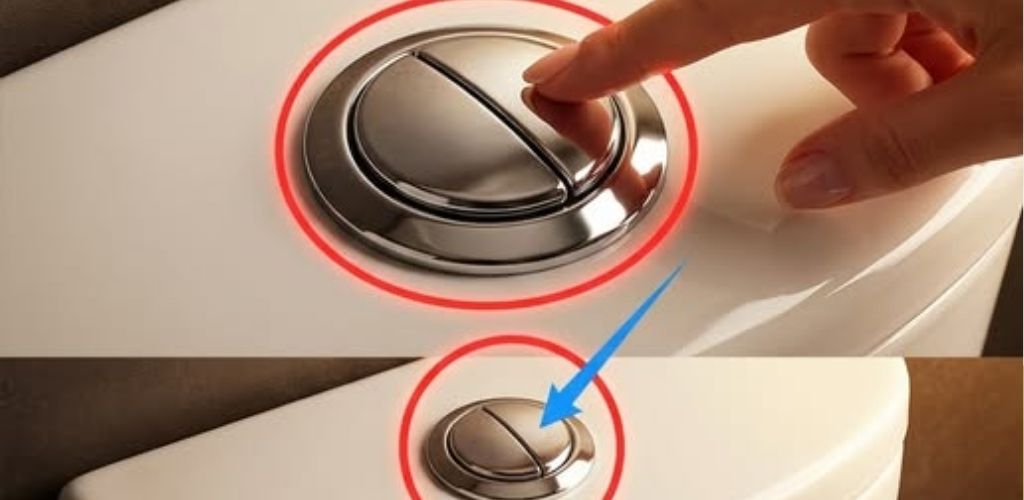
In almost every modern bathroom today, you will find a toilet equipped with two distinct buttons—one large and one small. While we see them every day, many people still treat them as just “two ways to flush,” often pressing whichever one is closer or more convenient. However, this design isn’t just a modern aesthetic choice; it is a sophisticated system engineered with a specific purpose that many users still underestimate.
Behind those two buttons lies a clever mechanism designed to change how we interact with our household resources. Understanding the mechanics of your toilet can lead to a more efficient home and a significantly lower utility bill. Let’s break down exactly why this system exists and how it functions to your advantage.
The Engineering of the Dual-Flush System
In a modern dual-flush toilet, each button is connected to its own valve and controls a specific volume of water. It isn’t a single tank of water being released in two different ways; it is two separate systems working in harmony. The large button is designed for a full flush, while the smaller button triggers a partial flush.
The primary goal of this invention is pure water conservation. In an era where sustainability is becoming a necessity rather than a luxury, the dual-flush system is one of the most effective tools in a standard household. By giving the user control over the volume of water used per flush, the system ensures that no resource is wasted unnecessarily.
Significant Savings for Your Home and the Planet
The difference in water volume between the two buttons is substantial. On average, the large button releases approximately 1.6 to 2.4 gallons (6–9 liters) of water. In contrast, the small button uses only about 0.8 to 1.2 gallons (3–4.5 liters). The logic is simple: solid waste requires the full force of the tank, while liquid waste only needs a fraction of that power.
Water Usage Comparison Table:
| Flush Type | Water Volume (Approx.) | Purpose |
| Small Button | 0.8 – 1.2 Gallons | Liquid Waste Only |
| Large Button | 1.6 – 2.4 Gallons | Solid Waste & Paper |
| Old Style Toilets | 3.5 – 5.0 Gallons | All Waste (Inflexible) |
When a family uses the dual-flush system correctly, the numbers are impressive. An average household can save up to 5,000 gallons (roughly 20,000 liters) of water per year. This translates to lower monthly bills and a positive impact on the environment without sacrificing any comfort or hygiene.
A Brief History: From Concept to Global Standard
The concept of the dual flush was first proposed by American designer Victor Papanek in 1976. However, it wasn’t until the early 1980s in Australia—a continent where water scarcity is a critical issue—that the technology was first successfully implemented and commercialized. The Australian company Caroma was the pioneer in making this system a household reality.
Today, dual-flush models have become the global industry standard. While these toilets were once slightly more expensive to install than traditional single-flush models, the rapid return on investment through water savings has made them the go-to choice for homeowners and contractors alike.
How to Use Your Toilet the Right Way
Using the system correctly is incredibly easy to remember once you know the “why” behind the buttons. Manufacturers often make the buttons easy to distinguish: the small button may be marked with a half-circle or a small drop icon, while the large button is clearly more prominent.
- Small Button: Use this for liquid waste. It provides enough pressure to clear the bowl while saving nearly 50% of the water.
- Large Button: Use this for “the heavy lifting.” It provides the full siphon power needed to move solid waste through the plumbing.
By making this small adjustment in your daily routine, you can reduce your bathroom water consumption by more than half. It is a simple habit that pays off every time you open your utility statement.
The Bottom Line on Bathroom Efficiency
Modern plumbing is no longer just about moving waste; it’s about doing so with maximum efficiency. The dual-flush toilet is a perfect example of how thoughtful design can solve a global problem one household at a time. If you’ve been pressing the big button out of habit, today is the perfect day to start using the “small” secret of your bathroom.
Your home is a collection of small systems that work together. When you understand how they function, you become a more responsible and cost-effective homeowner. So, next time you reach for the flush, remember: the small button is a big deal!
Did you know the history behind your toilet buttons? We love sharing practical home tips and environmental hacks! If you found this guide useful, please SUBSCRIBE to our page for more household secrets. Give us a LIKE if you’re a fan of saving money on your water bill, and SHARE this post with your friends so they can start flushing the right way too. Do you have a dual-flush toilet at home? Let us know in the comments below!