The Science of Soap and Thread: Why This Simple DIY Hack Actually Works
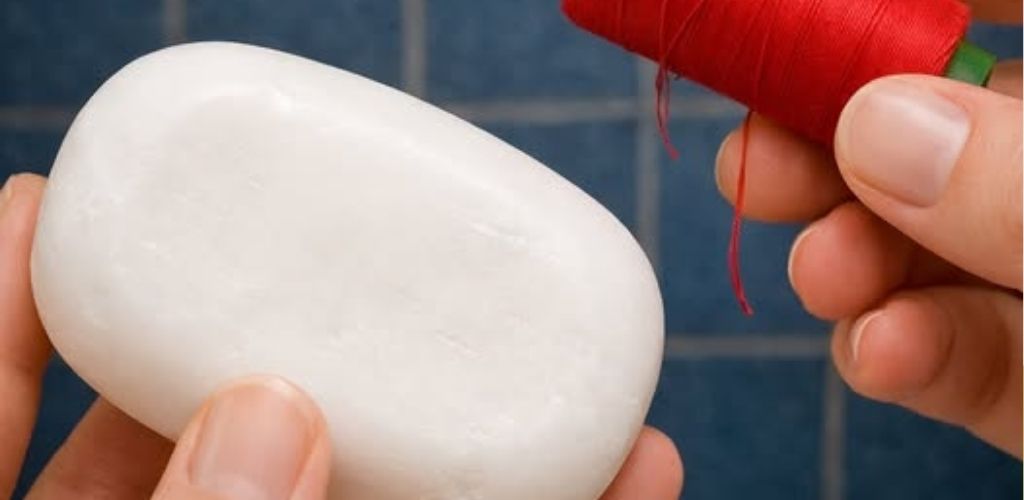
What might look like a simple “home hack” at first glance actually has a fascinating basis in physics. When you rub a piece of thread against a bar of soap, a key physical change occurs: the friction between the thread’s fibers is significantly reduced, causing them to compact together. This process prevents the end of the thread from fraying, effectively turning it into a firm, uniform point. By aligning the stray micro-fibers, you create a streamlined tip that glides through the eye of a needle with ease.
In practical terms, the soap functions as a “temporary binder.” It doesn’t permanently harden the thread like a resin or glue would, but it provides just enough structural integrity to make manipulation easier. This principle is remarkably similar to the one used in the production of waxed cords or even in professional woodworking, where lubricants are used to reduce friction and improve precision. This simple trick turns a frustrating task into a seamless part of your creative process.
Traditional Roots: From Ancient Wax to Modern Soap
It is a curious fact that in traditional tailoring—especially in old-world workshops—natural waxes like beeswax were used to achieve this exact same effect. Soap, in this sense, serves as an accessible and modern version of a technique with centuries of history. While professional tailors might still reach for specialized waxes to strengthen their thread for heavy-duty sewing, the average person can find the same functional solution right at their bathroom sink.
This type of everyday creativity is more than just efficient; it represents a sustainable mindset. In a world where many solutions seem to depend on buying a new gadget or specialized tool, these “life hacks” return us to a more practical logic. Using common household items in unconventional ways reflects a combination of keen observation, experimentation, and problem-solving skills that save time and reduce waste.
Optimizing Performance: When Does the Soap Trick Work Best?
Like any tool in your DIY arsenal, this method isn’t universal. It performs exceptionally well with cotton threads or synthetic blends that have a high tendency to fray. In these instances, the soap acts as a bridge that holds the fibers together. However, results may vary depending on the materials used. For example, solid traditional soap bars work much better than creamy or highly moisturizing soaps, which can leave the thread too soft or even greasy.
Practical Comparison of Threading Helpers:
| Method | Best For | Pros | Cons |
| Dry Thread | Large-eyed needles | No residue | Fraying is common |
| Soap Hack | Cotton/Poly threads | Accessible, effective | Possible residue on silk |
| Beeswax | Professional tailoring | Very strong bond | Harder to remove |
| Saliva | Emergency quick fix | Immediate | Unhygienic, weakens fiber |
Avoiding Common Mistakes: Less is More
When applying soap to your thread, moderation is key. If you apply an excessive amount, the soap can leave behind visible residues that might stain delicate fabrics or make the thread too slippery to hold. A light swipe across the edge of the bar is usually enough to achieve the desired effect. If you are working with dark or sensitive textiles, it is always wise to test a small section of the thread first to ensure the soap doesn’t leave a white mark once the project is finished.
Another important factor is the size of the needle. With extremely thick threads or needles with microscopic eyes, the physical limit of the materials becomes the primary obstacle. In these cases, even the most effective lubricating hack won’t work if the thread is physically wider than the opening. However, for 90% of household repairs and craft projects, the soap method remains the most reliable shortcut for frustration-free threading.
Beyond the Needle: Versatile Applications for Fiber Compaction
The principle of “compacting fibers to improve precision” extends far beyond the sewing kit. This logic can be applied to various household tasks and hobbies:
- Crafting & Jewelry: Inserting fine cords into small decorative beads.
- Home Repairs: Passing thin strings or ropes through tight spaces or narrow tubes.
- Gardening: Tidying up the ends of twine to make tying delicate plants easier.
- DIY Hardware: Temporarily organizing fine metal filaments or thin wires before connecting them (provided you have the necessary technical knowledge).
The Philosophy of Simple Solutions
This transfer of knowledge—taking an idea from one context and applying it to another—is what truly separates a curious trick from a professional-grade tool. By understanding the science of friction and fiber behavior, you can solve a variety of mechanical problems with zero additional cost. The next time you struggle with a fraying cord or a stubborn needle, remember that the solution might be sitting right on your soap dish.
It is these small, intentional adjustments to our habits that make DIY projects more enjoyable and less stressful. By mastering the behavior of the materials we work with daily, we become more capable and self-sufficient creators. Sometimes, the most high-tech solution isn’t a new machine, but a better understanding of the physics found in a simple bar of soap.
Did you find this science-based DIY hack helpful for your next project? We regularly publish innovative workshop tips, craft secrets, and sustainable home solutions to help you work smarter! Please SUBSCRIBE to our page, give us a LIKE, and SHARE this post with your fellow crafters and DIY enthusiasts. Do you have a favorite unusual use for household soap? Let us know in the comments below—we love hearing your creative ideas!