How to Protect Your Fruit Trees from Ants and Aphids Using a Simple Vinegar Hack
Fighting constant insect attacks on young tree shoots can drive any gardener to despair, often leading to the excessive use of harsh chemicals. However, there is a secret method that leverages the natural instincts of insects to make ants and aphids a thing of the past without damaging bark or leaves. By understanding how this fragrant barrier works, you can save your harvest before pests cause irreversible damage.
The Dangerous Alliance Between Ants and Aphids
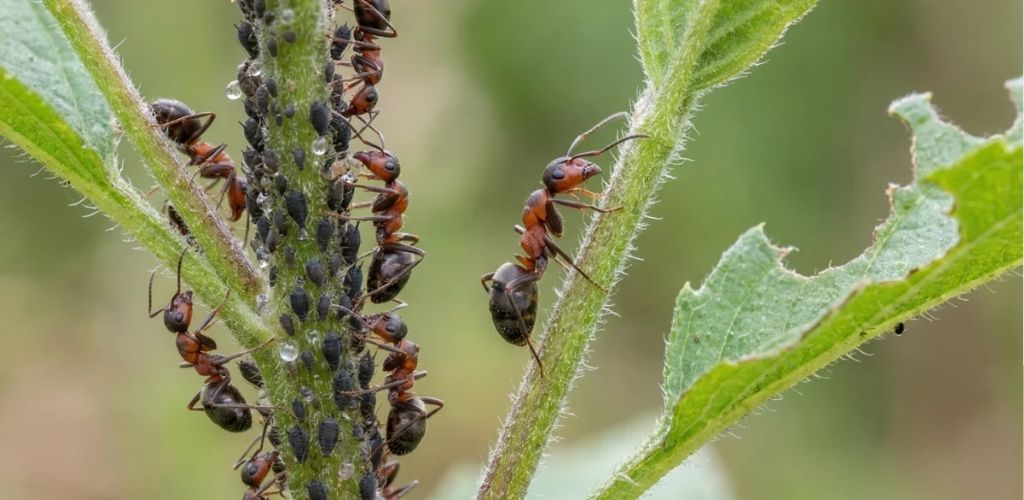
At first glance, ants might seem to be crawling harmlessly up a tree trunk, but the reality is far more calculated. These insects have formed one of the most effective pacts in the animal kingdom. Ants literally farm and protect aphids like their own livestock to harvest “honeydew”—a sugary liquid aphids excrete. Because this is a vital energy source, ants will fiercely defend aphids from natural predators like ladybugs. This results in an uncontrolled explosion of pests, leading to leaf deformation and the drying out of young branches.
Disrupting Pheromone Trails: The Key to Control
Ants do not move randomly; they follow sophisticated chemical navigation systems. Scout ants leave behind invisible scent trails that act as a highway for the rest of the colony. These pheromone paths are their greatest weakness. If you can disrupt this scent code or overpower it with a stronger aroma, the ant line will immediately break down. Without their protective “army” of ants, aphids are left vulnerable to natural predators that can resolve the problem ecologically.
Comparison of Protective Methods for Fruit Trees
| Method | Effectiveness | Plant Safety | Cost |
| Chemical Sprays | High (temporary) | Risk of residue | Expensive |
| Vinegar Barrier | Very High | Safe (on rags) | Low / Free |
| Sticky Bands | Medium | Potential bark damage | Moderate |
| Manual Removal | Low | Very Safe | High (Time) |
The Vinegar Barrier: A Simple Scent-Based Shield
Plain household vinegar is a powerful deterrent for ants due to its aggressive acidic scent. Acetic acid shocks their delicate sensory organs, forcing them to change direction immediately. However, it is vital to remember that vinegar can act as a herbicide if it touches leaves or green bark. This is why applying the solution to rags on the ground is much safer than spraying the tree directly. This technique ensures that ants and aphids in the garden stay separated while the plant remains safe from chemical burns.
DIY Recipe for a Long-Lasting Repellent
To prepare this natural repellent, you will need one liter of clean water and 200 milliliters of 9% white vinegar. The secret ingredient, often overlooked, is one tablespoon of common vegetable oil. The oil acts as a fixative, preventing the acetic acid from evaporating too quickly. It creates a fine film on the rags, keeping the barrier active even on windy days. Shake the mixture well before use to ensure the oil and vinegar are temporarily combined.
How to Set Up the Barrier Correctly
Prepare old cotton rags or thick towels and cut them into strips about ten centimeters wide. Soak them thoroughly in the vinegar and oil solution. Place these soaked rags on the ground in a circle around the base of the tree, maintaining a distance of 20 to 30 centimeters from the bark. This prevents the acid from seeping into the sap of young trees. Additionally, ensure there are no “bridges,” such as tall grass or low-hanging branches, that allow ants to bypass your barrier.
Did this vinegar trick help save your trees? We regularly share innovative organic gardening hacks, pest control secrets, and sustainable harvest tips! To stay updated and never miss a professional gardening guide, make sure to SUBSCRIBE to our page. Give us a LIKE if you support eco-friendly farming, and SHARE this post with your fellow gardeners. Have you tried using vinegar in your orchard before? Share your results in the comments below—we would love to hear from you!