How to Read Your Pepper Plant Leaves: Diagnosing Diseases and Boosting Your Harvest
Pepper plants are remarkably sensitive organisms that react quickly to environmental stress. Often, the leaves are the first part of the plant to reveal exactly what is missing or what has attacked them. Learning to “read” these visual signals—such as brown spots, yellowing, curling, or wilting—is the secret to saving your crop before it’s too late. While growing peppers can be a rewarding challenge, success requires a keen eye and timely intervention to ensure your plants stay healthy and productive.
Brown Spots: Identifying Fungal Infections and Blight
One of the most common threats to pepper plants is fungal blight. You can identify this by the appearance of brown spots that gradually enlarge until the entire leaf rots and falls off. These pathogens thrive in warm, humid conditions with poor airflow. To prevent a total loss, it is crucial to ensure proper spacing between your plants and to provide adequate ventilation. If you notice infected leaves, remove them immediately and dispose of them far from your garden to stop the spores from spreading through the wind or water splashes.
Yellowing Leaves: Is It a Nutrient Deficiency or Root Rot?
Yellowing leaves don’t always mean the same thing, so you must look closer at the patterns. If the leaves turn yellow and the plant suddenly wilts, you may be dealing with Fusarium wilt—a soil-borne fungus that attacks the roots and cuts off water supply. However, if the yellowing occurs specifically between the leaf veins, your plant is likely suffering from a magnesium deficiency. General yellowing coupled with stunted growth usually points to a lack of nitrogen. Regular feeding with a balanced organic fertilizer can quickly correct these nutritional imbalances and restore the plant’s deep green color.
Quick Diagnosis Guide for Pepper Leaf Problems
| Symptom | Likely Cause | Recommended Action |
| Brown Spots | Fungal Blight / Infection | Remove leaves, improve airflow |
| Yellowing between veins | Magnesium Deficiency | Apply Epsom salts or balanced feed |
| Curled, sticky leaves | Aphids / Pests | Use neem oil or soapy water spray |
| Holes in leaves | Caterpillars | Hand-pick pests or use netting |
| Sudden Wilting | Root Rot / Fusarium | Improve drainage, remove infected plant |
The Aphid Problem: Sticky Residue and Curled Leaves
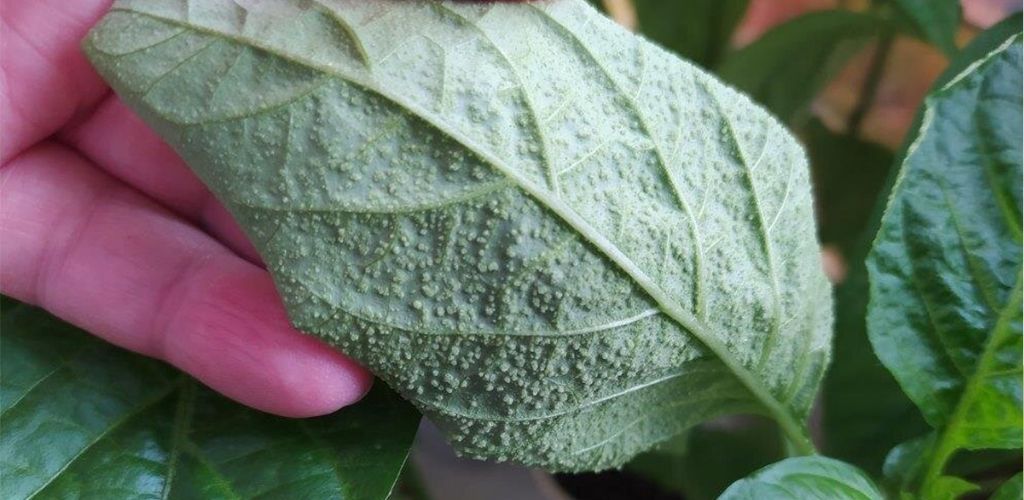
Aphids have a particular fondness for peppers, especially the tender new growth. You will typically find these tiny insects clustered on the underside of the leaves, where they suck the sap and excrete a sticky substance known as honeydew. This residue attracts ants and can lead to the growth of sooty mold. Infested leaves often curl and become distorted. To combat this, try natural sprays based on garlic, nettle, or a mild soap solution. Encouraging natural predators like ladybugs into your garden is also an excellent biological control method.
Caterpillars: The Silent Leaf Eaters
If you discover large holes in your leaves accompanied by small dark droppings, you have a caterpillar problem. These silent eaters can strip a young pepper plant in a matter of days. Cabbage moths and loopers are the most frequent culprits. Thoroughly inspect your plants, especially the undersides of the leaves and near the stems, to pick them off by hand. For long-term protection, using fine garden netting can prevent moths from laying their eggs on your crop in the first place, keeping your foliage intact.
Take Action Fast to Protect Your Yield
Your pepper plants are always communicating with you; you just need to know what to look for. Whether it is yellowing, browning, or wilting, catching these signals early allows you to intervene before the damage reaches the fruit. Consistent monitoring, proper watering at the base of the plant, soil aeration, and biological pest control are the four pillars of a healthy pepper harvest. By staying proactive, you ensure that your garden remains a source of fresh, vibrant, and delicious peppers all season long.
Did this guide help you save your peppers? We regularly post professional gardening tips, organic pest control hacks, and harvest-boosting secrets! To stay updated and master your home garden, make sure to SUBSCRIBE to our page. Give us a LIKE if you prefer organic growing methods, and SHARE this post with your fellow gardeners who might be struggling with their crops. Have you noticed any of these signs on your plants recently? Tell us about it in the comments below—we are here to help!