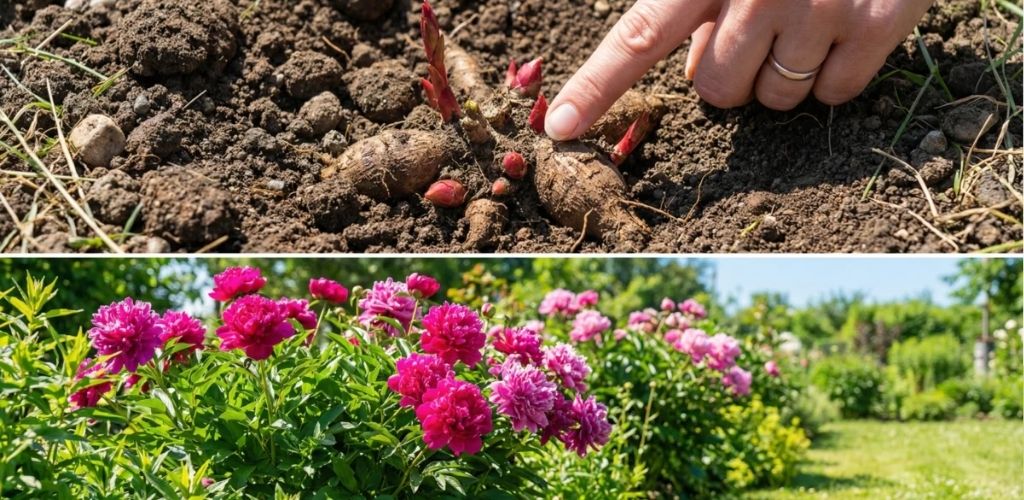
Peony Spring Care: The Secret to Explosive and Giant Blooms
Many gardeners watch with anticipation as the first red shoots of peonies emerge from the soil, only to be disappointed later by small, underdeveloped buds. However, there is a strictly guarded secret to spring nutrition that forces the plant into a floral explosion without the need for expensive, harsh chemicals. Peonies are among the most demanding perennials, often punishing any mistake in timing. Their root system requires a massive impulse after its long winter dormancy to nourish those iconic, heavy stems.
Why Your Peonies Stagnate After Winter
The biggest mistake gardeners make is waiting for the warm days of May to start their maintenance. By then, it is already too late. The decisive window for spring peony care occurs the very moment those first shoots break through the earth. If the plant does not find sufficient oxygen and nitrogen in the soil during this critical period, it switches to “survival mode.” Instead of investing energy into flowers, it focuses solely on leaf production, robbing you of a full season of beauty.
Oxygen Shock: The Starter for Spring Growth
As soon as the snow vanishes and the soil surface dries slightly, it is time to aerate. Winter precipitation often compresses the earth, creating an airtight crust that literally suffocates the roots. Gentle loosening of the soil around the bush is the first step toward success. However, extreme caution is required; young buds on the rhizomes are as fragile as glass in early spring. Even minor damage can result in the loss of an entire flower for the season.
Essential Peony Spring Maintenance Checklist
| Task | Timing | Benefit |
| Soil Loosening | Early March/Post-thaw | Increases oxygen and speeds up soil warming |
| Weed Removal | Ongoing | Eliminates competition for vital trace elements |
| Nitrogen Boost | First Shoots | Encourages rapid cell division and stem growth |
| NPK Balance | Mid-Spring | Strengthens cell walls to support heavy flower heads |
| Ash Treatment | Early Spring | Acts as a natural antiseptic and pH balancer |
Fertilization Strategy Based on Soil Temperature
Peonies have a specific metabolism that shifts with every degree Celsius. Effective care requires an intelligent approach to nutrition rather than simply scattering generic granules. If the spring remains cold with frequent morning frosts, ammonium nitrate is your best ally. Nitrogen in this form is absorbed even at low temperatures when other fertilizers remain dormant in the ground. Dissolving fifteen grams in ten liters of lukewarm water acts as an accelerator, “kicking” the root system into immediate action.
Transitioning to Complex NPK Nutrition
Once the sun warms the garden beds and temperatures stay above freezing, peonies require a balanced cocktail. At this stage, nitrogen alone is insufficient; phosphorus and potassium must enter the game. A balanced NPK fertilizer strengthens cell walls, ensuring stems can carry the weight of the blooms without snapping. Phosphorus is crucial for bud initiation, while potassium acts as a shield against diseases and significantly increases the intensity of the flower’s fragrance.
Advanced Tips for Aristocratic Flowering
To achieve truly massive exhibition-sized flowers, try the “bud thinning” trick. Leave only the main, largest bud on each stem and carefully remove the smaller side buds. This directs all the plant’s energy into a single head. Additionally, a monthly drench with a 1:10 milk-to-water ratio provides calcium to strengthen tissues, preventing petals from falling prematurely during windy weather. Finally, always apply fertilizers into small “feeding pits” about 20cm away from the center to ensure nutrients reach the absorption roots directly.
Are you ready to see your peonies reach their full potential this year? We regularly share professional horticulture secrets, DIY garden hacks, and seasonal guides to help your landscape thrive! If you want to transform your garden into a floral masterpiece, SUBSCRIBE to our page! Please give this article a LIKE if you found these tips helpful, and SHARE it with your fellow gardening enthusiasts. Do you have a secret peony tip of your own? Tell us about your garden successes in the comments—we love hearing from our community of growers!