The Golden Treasure in Your Backyard: Why Dandelions Are More Than Just Weeds
You might consider it a tireless enemy of your perfectly manicured lawn, but in reality, a biological marvel is growing right under your windows. These humble yellow heads contain a power that has healed modern ailments for centuries—and all these dandelion benefits are available to you completely free of charge. In the past, the common dandelion (Taraxacum officinale) was a revered herb, collected with great respect by ancient herbalists for its cleansing properties. Modern times, however, have demoted it to a mere weed that we try to eliminate with expensive chemicals and endless mowing.
A Natural Pharmacy: From Root to Flower
This dismissive attitude robs us of one of the most accessible sources of vitamins A, C, and K, which are essential for our natural immunity. Furthermore, dandelions contain unique bitter compounds that stimulate digestion and help the liver flush out accumulated toxins. The root, leaves, and flowers themselves represent a comprehensive pharmacy that we can utilize from early spring until late autumn. Understanding the value of this plant is the first step toward transforming your garden into a source of genuine health.
Homemade Dandelion Honey: A Remedy for Respiratory Health
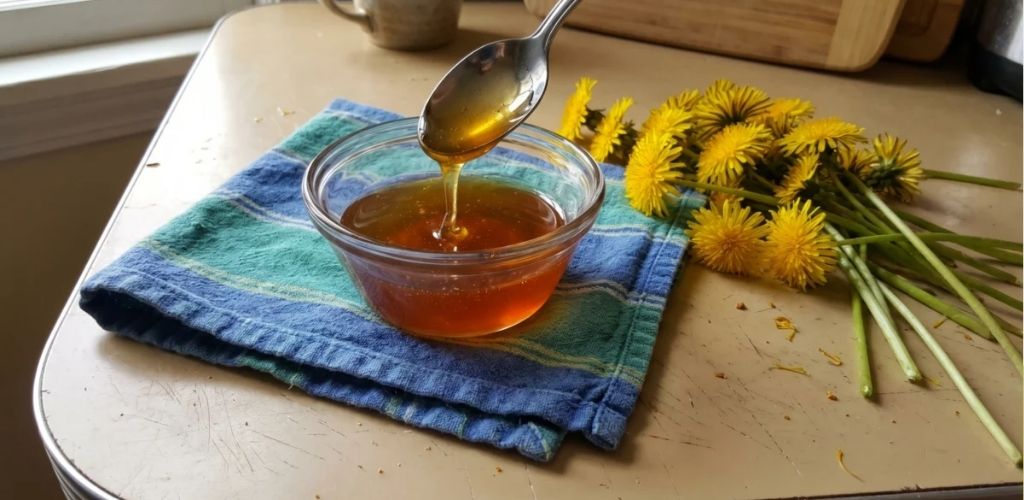
Dandelion honey, which is technically a thick syrup, is among the most popular traditional recipes passed down from our grandmothers. Its primary strength lies in respiratory support; it can soothe an irritating cough and facilitate the clearing of mucus. You should plan your flower harvest on a sunny morning when the heads are fully open and contain the most precious pollen. Avoid areas near busy roads to ensure your syrup doesn’t contain heavy metals from exhaust fumes.
Health Profile of Dandelion Components:
| Plant Part | Key Nutrients | Primary Health Benefit |
| Leaves | Vitamin A, C, Potassium | Diuretic and kidney support |
| Root | Inulin, Bitter compounds | Liver detox and digestion |
| Flowers | Antioxidants, Pollen | Respiratory relief and skin care |
| Sap (Latex) | Enzymes | Natural wart treatment |
Step-by-Step: Preparing the Dandelion Elixir
To prepare a single batch, you will need exactly 400 flowers. After harvesting, spread them out on white paper so any small insects can safely crawl out. Place the flowers in a large pot, add two liters of clean water, and simmer on low heat for about thirty minutes. Once cooked, let the infusion steep—ideally until the next day—to ensure maximum extraction of all medicinal components. Strain the liquid and mix it with 1.5 kilograms of sugar, adding organic lemon slices and fresh lemon juice.
Cooking with Dandelions: Culinary Creativity
Dandelions in the kitchen offer much more than just sweet syrups. Young leaves harvested before flowering have a slightly bitter taste reminiscent of arugula, making them a perfect addition to any spring salad. You can also try dandelion pesto by blending young leaves with pumpkin seeds, garlic, parmesan, and high-quality olive oil. For a unique delicacy, try fried dandelion flowers coated in a batter of egg and polenta with fragrant herbs—this unusual treat will surprise your guests with its tenderness and original appearance.
Natural Skincare and Pain Relief Salves
Your skin will appreciate the regenerative abilities of this plant in the form of a homemade cream for dry and stressed skin. Melt coconut oil and let fresh dandelion flowers infuse in it at a low temperature for several hours. Once strained and cooled, whip the oil into a fluffy foam that absorbs immediately. For those suffering from joint and muscle pain, a dandelion salve made from dandelion-infused oil and beeswax provides relief. Massaging this balm improves circulation and brings quick relief from chronic pain due to the plant’s anti-inflammatory properties.
The Milky Sap: A Natural Remedy for Warts
You surely remember the white milky liquid that leaks from a dandelion stem immediately after it is picked. This liquid, called latex, is considered in folk medicine to be one of the most powerful remedies against warts. Regularly applying this fresh sap directly to a wart several times a day will cause it to gradually dry up and fall off. It is a painless and purely natural alternative to more drastic medical treatments. However, be careful not to get the sap in your eyes, as it can cause irritation.
Organic Fertilizer for a Thriving Garden
If you are still hesitating whether to leave the dandelions on your lawn, know that you can prepare the best nutrition for your other plants from them. Soak whole plants, including the roots, in a barrel of water and let them ferment for three to four weeks. The resulting extract, which should be stirred regularly, contains a massive amount of potassium and trace elements necessary for the growth of tomatoes or peppers. This organic fertilizer is much gentler on the environment than industrially produced granules.
Eco-Friendly Home Decor and Dandelion Wine
Beyond health and beauty, dandelions can be used to beautify your home. By boiling the flowers in a small amount of water, you get a delicate yellow dye safe for coloring fabrics or Easter eggs. Dandelion wine is another specialty made from the sweet flowers, raisins, sugar, and wine yeast. This golden drink is known as a strengthening tonic, taken in small doses to boost the body after a long illness. The dandelion truly proves to be one of the most versatile plants in our flora.
Are you ready to stop fighting dandelions and start using them for your health? We regularly share hidden natural secrets and DIY wellness tips to help you live a more sustainable life! If you found this guide helpful, please SUBSCRIBE to our page, give us a LIKE, and SHARE this post with your friends and family. Have you ever tried making dandelion honey or using the leaves in a salad? Tell us about your experiences in the comments—we’d love to hear your stories!