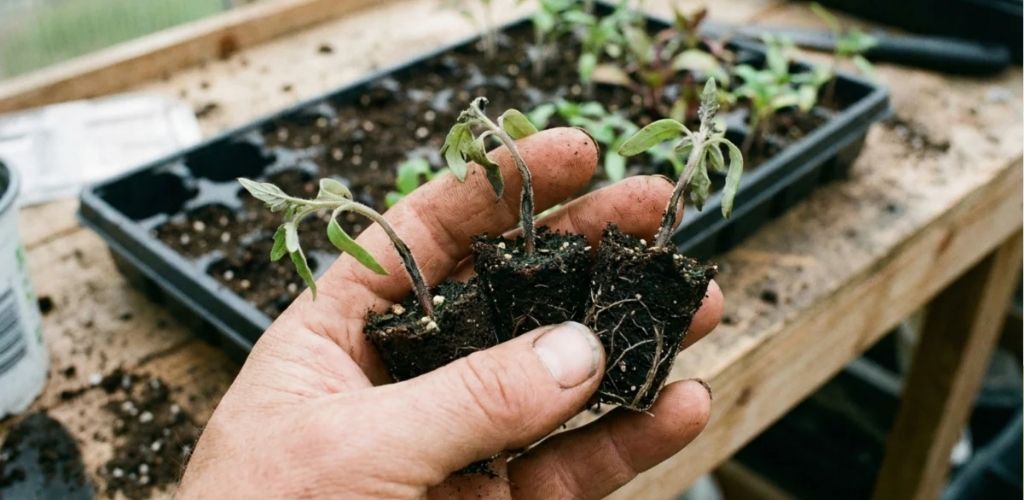
Saving Your Seedlings: How to Defeat the “Black Leg” Disease Permanently
Many gardeners experience moments of despair when their promising spring plantings suddenly begin to decline without an obvious cause. There is a hidden enemy that quietly eliminates young plants right at the soil line, destroying a whole season’s effort in a single night. Effective seedling protection requires understanding the subtle signals a plant sends before it finally collapses. By identifying these early warnings, you can intervene and save your garden from a silent disaster.
Why Your Seedlings are Dying in Silence
The dreaded condition known as “Black Leg” (or damping off) is actually a complex attack by fungal pathogens lurking in the substrate. This infection causes a gradual browning followed by a complete blackening of the lower stem near the root collar. At this critical point, the tissues soften rapidly, leading to a characteristic narrowing. The moment the stem loses its mechanical support, the plant simply breaks and falls to the ground as if it were cut down. While most common in cabbage species, it frequently strikes tomatoes and peppers as well.
Seedling Protection Starts with Sterile Soil
Using soil from your own garden exposes your seedlings to a high risk of infection from the start. Soil disinfection is a necessary step that should never be skipped. An effective method is heat-treating the substrate in your oven. Spread the soil on a metal tray in a layer about five centimeters thick and moisten it slightly with a sprayer. Place it in an oven preheated to 70–90°C for exactly thirty minutes. This creates a sterile environment free from mold spores and insect larvae, forming the first pillar of seedling protection.
The Antiseptic Shield: Potassium Permanganate and Soda
If you lack time for heat treatment, chemical disinfection can be a safe alternative. A weak, pale pink solution of potassium permanganate is a time-tested helper for sanitizing soil before sowing. For plants already in the ground, a homemade solution of baking soda can be a lifesaver. Dissolve one teaspoon of soda in half a liter of boiled water and gently spray the soil surface. Soda changes the pH of the substrate to alkaline, an environment where most fungal pathogens cannot survive.
Comparison of Protective Soil Treatments:
| Method | Target | Application | Benefit |
| Oven Heating | Mold spores, larvae | 30 mins at 80°C | Total sterilization |
| Baking Soda | Fungal pathogens | Foliar/Soil spray | Shifts pH to alkaline |
| Activated Charcoal | Toxins & moisture | Powdered on surface | Absorbs impurities |
| Potassium Permanganate | Surface bacteria | Seed soak/Soil drench | Fast-acting antiseptic |
Mastering Irrigation to Prevent Mold Growth
Water is life, but for young seedlings, it can become their greatest enemy. Overwatering and stagnant water at the roots are direct invitations for Black Leg to develop. Always water with warm water to avoid thermal shock and improve absorption. Ideally, use “bottom watering” by pouring water into a tray beneath the pot. This allows the soil to soak up only what it needs while keeping the surface and the critical root collar area relatively dry, significantly reducing the risk of infection.
A Rescue Mission with Sand and Ash
If you notice Black Leg has already appeared, isolate the affected plants immediately. Remove diseased individuals along with the surrounding substrate to prevent spores from spreading. Cover the remaining soil surface with a layer of dry, cooled sand at least 1.5 centimeters thick to wick moisture away from the stems. Additionally, dusting the area with wood ash provides potassium for stronger tissues while acting as a natural antiseptic. Remember, a healthy seedling with a thick, sturdy stem is the only guarantee of a rich summer harvest.
Do you want to see your garden flourish without the fear of sudden plant loss? We regularly share expert horticultural hacks and secret DIY remedies to help your garden reach its full potential! If you found these tips helpful, please SUBSCRIBE to our page, give us a LIKE, and SHARE this post with your fellow gardeners. Have you ever fought the dreaded “Black Leg” in your seedlings? Tell us about your success stories in the comments—we love hearing from you!