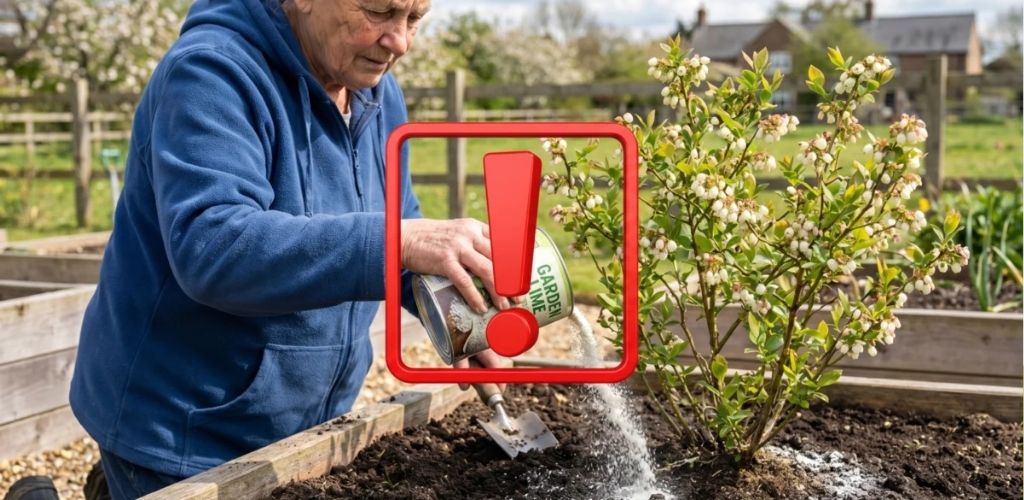
Why Your Blueberry Bushes are Dying: The Silent Mistake Most Gardeners Make
Do you dream of bowls filled with deep blue berries, but your bushes wither year after year and refuse to bear fruit? Often, the problem isn’t a lack of care, but rather a subtle step that most growers take in good faith. Discover how improper blueberry fertilization can destroy entire plants within months and the emergency rescue procedure you must adopt immediately to save your harvest.
Why Traditional Gardening Methods Fail for Blueberries
Many gardeners mistakenly believe that universal advice applies equally to all fruit trees and shrubs in the garden. This huge error is behind the rapid death of otherwise healthy and vital plants. The biggest stumbling block is the mindless spreading of wood ash or lime directly at the roots. While these substances are purely natural, they are characterized by an extremely strong alkaline reaction.
Their presence in the soil rapidly spikes the pH value, which is absolutely devastating for acid-loving plants. The natural environment for these shrubs requires strictly acidic soil with a pH in the narrow range of 4.5 to 5.5. Without this acidity, the plant enters a state of biological stress that leads to total failure.
The Fatal Consequences of High Soil pH
As soon as the pH value tips over the safe limit, a disaster occurs in the underground part of the plant. Although the surrounding soil may be literally overflowing with valuable nutrients, the root system suddenly cannot absorb them at all. This phenomenon is technically called nutrient blocking and primarily affects important trace elements.
The plant suffers most from a critical lack of iron, which becomes completely insoluble in an alkaline environment. The bush gradually fades, loses its vitality, and cannot adequately nourish existing fruit. If you do not intervene in time, an extremely weakened individual will not even survive the mildest winter frosts.
Blueberry Nutrient & pH Guide:
| Soil Condition | pH Range | Effect on Blueberry Plants |
| Strictly Acidic | 4.5 – 5.5 | Ideal: Optimal growth and heavy fruiting. |
| Slightly Acidic | 5.6 – 6.5 | Warning: Slow growth, yellowing leaves (Chlorosis). |
| Neutral/Alkaline | 7.0+ | Danger: Root death and plant failure. |
Expert 3-Step Spring Fertilization Schedule
The cornerstone of success is the rapid delivery of nitrogen in a form that acidifies the soil even further. This is why experienced gardeners reach almost exclusively for ammonium sulfate. To guarantee a steady supply of nutrients without shocking the root ball, follow this timed three-phase system:
- Phase 1 (Late April/Early May): Apply as the first buds wake up to jumpstart growth.
- Phase 2 (Early June): Apply during intensive flowering to support fruit set.
- Phase 3 (Late June): The final nitrogen dose as the bushes focus energy on berry sizing.
When to Stop Nitrogen and Switch to Winter Prep
While spring months require rich nutrition, the second half of summer demands a completely different approach. You must strictly stop applying nitrogen preparations by mid-July at the latest. Late nitrogen delivery would trick the plant into pushing out new, fragile shoots that won’t have time to mature and woody-up before the first frost.
Freezing weather would then irretrievably destroy them, creating an entry point for dangerous fungi. Late in the summer, shift your focus exclusively to providing potassium and phosphorus. These minerals strengthen the cell walls and prepare the root system for the upcoming dormant period.
Natural Hacks for Long-Term Soil Acidity
Beyond commercial fertilizers, you can maintain optimal soil acidity using materials from your surroundings. The best friend of these fruit shrubs is undoubtedly a thick layer of pine bark mulch. Fallen needles from nearby coniferous forests or high-quality pure acidic peat also work wonders.
Many successful growers also use cooled coffee grounds from their home coffee makers. They serve as an extremely gentle source of nitrogen and naturally help maintain a low pH around the roots. Also, remember to water exclusively with soft water; hard tap water contains calcium that will slowly neutralize your acidic soil over time. Rainwater is the perfect, free solution for thirsty blueberries.
Want more expert gardening tips to transform your backyard into an oasis? If this guide helped you save your blueberries, make sure to SUBSCRIBE to our page for more pro-tips! Please give us a LIKE and SHARE this post with your fellow gardeners. Do you have your own secret for the biggest berries? Let us know in the comments – we love hearing your success stories!