The Ultimate Yeast Elixir: How to Transform Your Garden with Homemade Cucumber Fertilizer
Do you dream of a garden overflowing with crunchy, vibrant vegetables, yet find your plants stubbornly refusing to grow? This common frustration can be elegantly solved with the best homemade fertilizer for cucumbers, which costs literally just a few cents to produce. By using a common kitchen staple, you can immediately jumpstart extreme growth and secure the bountiful harvest you’ve always wanted. Understanding the biology of your soil is the first step toward becoming a master gardener.
Why Young Seedlings Often Stagnate After Planting
Many gardeners enthusiastically purchase expensive seedlings in the spring, transplanting them into beds with high hopes. However, reality often brings disappointment as young plants stop growing, their leaves turn a sickly yellow, and stems remain thin and brittle. This is usually caused by transplant shock—a condition where the root system cannot adapt quickly enough to new, often cold soil. Without a healthy root environment, the plant simply cannot absorb the life-sustaining nutrients it needs to thrive.
How Ordinary Yeast Works as a Biological Powerhouse
When soil lacks beneficial bacteria, plants begin to starve. This is where ordinary baker’s yeast comes into play. Yeast is a biological treasure for any utility garden, packed with B-vitamins, amino acids, and essential trace elements. These single-celled fungi do more than just bake bread; they revive exhausted soil by stimulating the rapid development of fine feeder roots. A stronger root system allows the plant to suck up significantly more moisture and nutrients from its surroundings.
Benefits of Yeast Fertilizer for Your Garden:
| Feature | Impact on Plant | Long-term Result |
| B-Vitamins | Stress Resistance | Faster recovery from transplanting |
| Amino Acids | Cell Development | Thicker, stronger stems |
| Soil Activation | Organic Breakdown | Naturally available plant food |
| Root Stimulation | Better Hydration | Increased resistance to summer heat |
Step-by-Step Guide to Creating the Yeast Concentrate
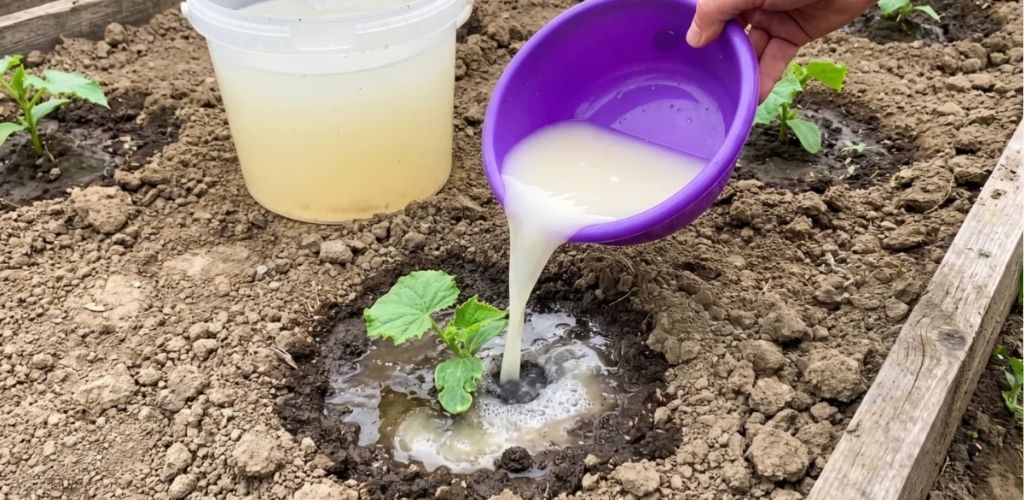
Creating this powerful growth elixir requires no chemical expertise—just a few items from your pantry. Start with exactly one liter of pleasantly warm water (ideally around 30°C). Be careful not to use hot water, as high temperatures will kill the beneficial yeast cells. Add one full tablespoon of dry yeast and one tablespoon of sugar. The sugar provides the “fast energy” needed to wake up the dormant fungi. Stir the mixture thoroughly with a wooden spoon until everything is completely dissolved.
The Fermentation Phase and Proper Dilution
Place your sweet mixture in a dark, warm spot for about two hours. Once you see a thick, light foam forming on the surface, you know the yeast is active and the concentrate is ready. Crucial Safety Rule: Never pour this concentrated liquid directly onto your plants, as it could burn delicate roots. You must first dilute this one-liter mixture into five liters of clean, settled water. From this resulting mixture, take one liter and dilute it again into a 10-liter watering can of lukewarm water before heading to the garden.
Optimal Timing for a Stable and Healthy Harvest
Yeast fertilizer is a potent stimulator and should be used sparingly. Applying it too often can lead to massive leaf growth with no actual fruit. For the best results, use this treatment three times per season:
- Post-Transplant: Two weeks after planting to overcome environmental stress.
- Flowering Phase: When the first blossoms appear to boost fruit set.
- Peak Harvest: During mid-summer to provide the extra energy needed for continuous production.
This simple combination of yeast, water, and sugar can spark a biological revolution in your soil. By following this method, you will enjoy large, crunchy cucumbers and the true satisfaction of a successful harvest.
Are you ready to see your garden explode with growth? Let us know your results in the comments! If you found this organic gardening tip helpful, please SAVE this post and SHARE it with your fellow growers—help us spread the word about sustainable, affordable gardening. Don’t forget to SUBSCRIBE to our page and give us a LIKE for more daily gardening secrets! 🥒🌿